

14 Apr
Fire Safety in ACM Cladding – NFPA 285 and Façade Design Explained
Why Fire Safety in ACM Façades Is a System-Level Challenge
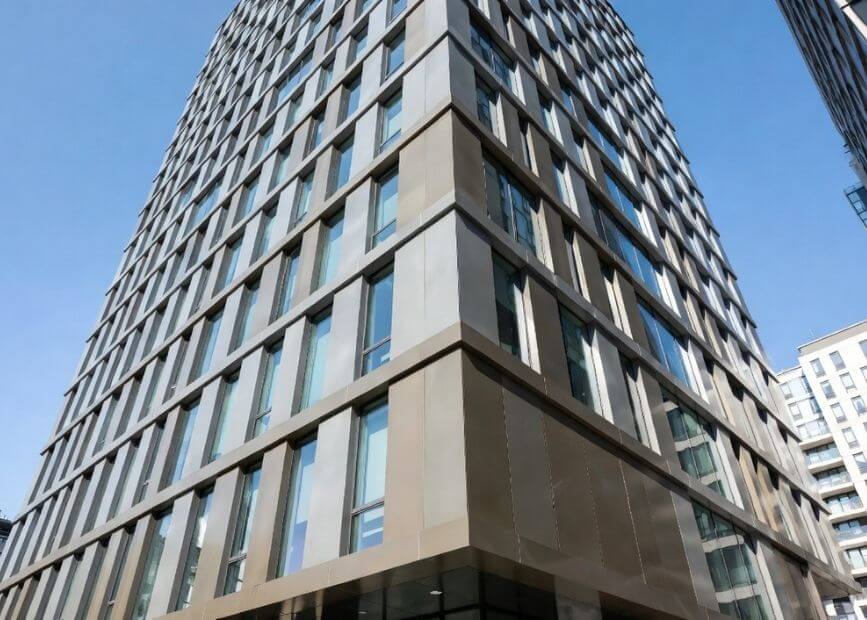
Modern façades combine aesthetics, performance, and structural function, but ACM cladding fire safety is determined by how the entire system behaves under fire exposure.
Architects and contractors often ask a practical question early in design – when is NFPA 285 required and how can a façade system meet it without limiting design intent. In multi-story construction, this decision directly affects material selection, detailing, and approval pathways.
At ALUMAX Composite Materials Co., Ltd., Aluwell® systems are developed with a focus on system-level performance. The objective is not only to supply panels, but to support façade solutions that align with code compliance and real construction conditions.
Why ACM Fire Safety Depends on the Entire Wall System
Fire performance is driven by assembly behavior
A façade does not fail or pass fire tests as an isolated material. It performs as a system.
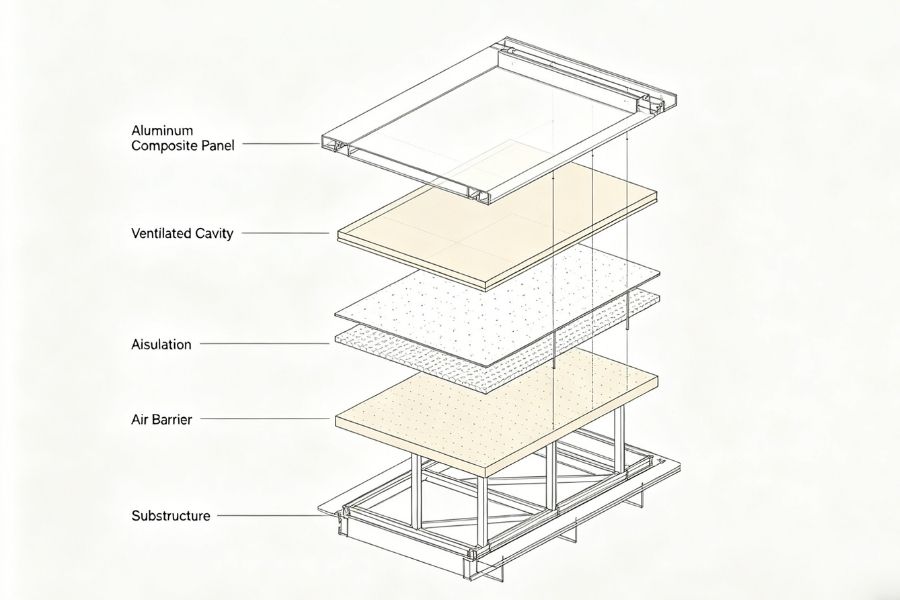
A typical assembly includes:
ACM panels
Substructure and attachment systems
Insulation layers
Air and water barriers
Ventilated cavities
Fire stopping components
Each layer influences heat transfer, flame spread, and smoke movement.
For example, increasing cavity depth improves ventilation but can also accelerate vertical fire spread if fire barriers are not correctly positioned. This interaction is why fire safety cannot be evaluated at the panel level alone.
NFPA 285 – The Key Standard for ACM Cladding Compliance
What NFPA 285 actually tests
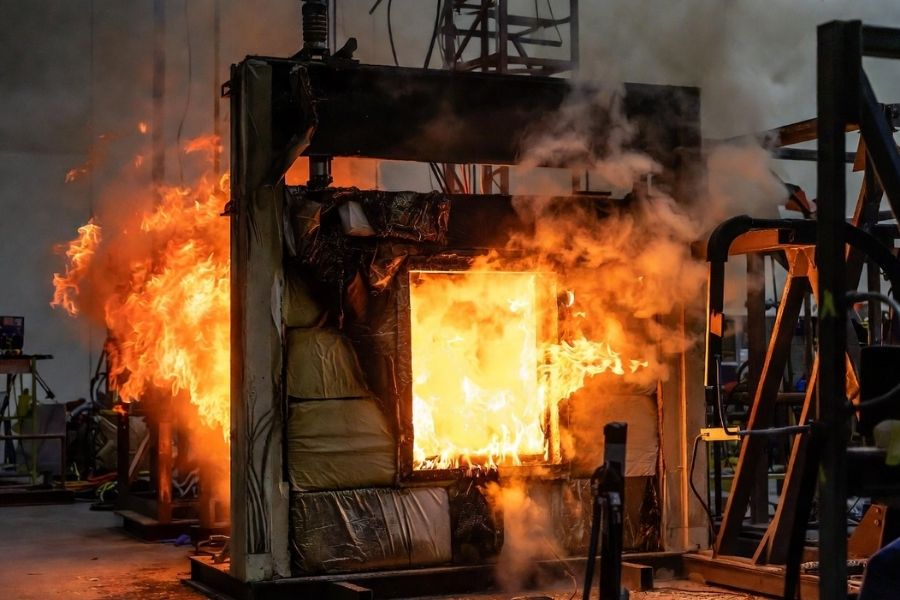
NFPA 285 is the primary standard used to evaluate fire safety in ACM cladding systems for multi-story buildings in the United States.
The test uses a full-scale wall assembly, simulates fire from a window opening or external source, and measures vertical and lateral flame propagation. It excludes active suppression systems to represent worst-case conditions, ensuring that the façade system itself provides passive fire protection.
When NFPA 285 is required
In most multi-story buildings where combustible components are present in the exterior wall, NFPA 285 compliance is mandatory.
This typically applies to rainscreen façades with ventilated cavities, wall systems with combustible insulation, and buildings above low-rise thresholds defined by code.
Why material ratings are not enough
A panel with a Class A rating under ASTM E84 may still fail NFPA 285 if the system allows fire to spread through open cavities, inadequate fire stopping, or heat-conductive substructures. This is why system-level testing is the final benchmark for façade safety.
Choosing Fire-Rated ACM Panels – Why Core Material Matters
The role of core composition
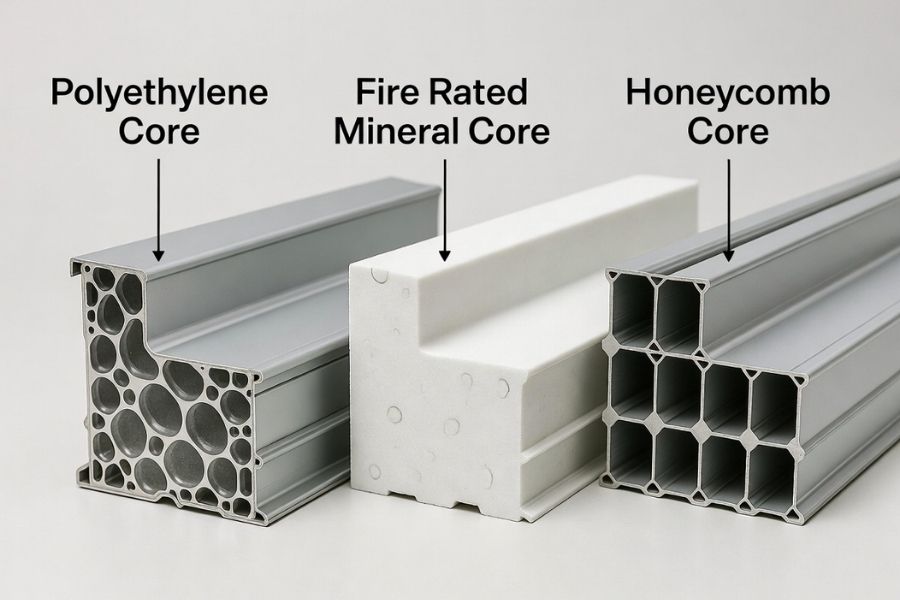
The internal core of an ACM panel determines its fire behavior.
Standard ACM panels use polyethylene cores and are combustible
Fire-rated ACM panels use mineral-filled cores that reduce flammability
Non-combustible systems such as aluminum honeycomb panels do not contribute to fire load
Two panels with identical finishes can perform completely differently under fire exposure. The difference lies entirely in the core.
Performance beyond fire resistance
For façade applications, fire performance must be balanced with durability, including UV resistance, moisture protection, structural rigidity, and fabrication flexibility. High-performance coating systems help maintain long-term façade stability.
Aluwell® systems are developed to meet these combined requirements, ensuring that fire-rated performance does not compromise architectural quality.
How Ventilated Cavities Affect Fire Spread in Façade Systems
The chimney effect explained
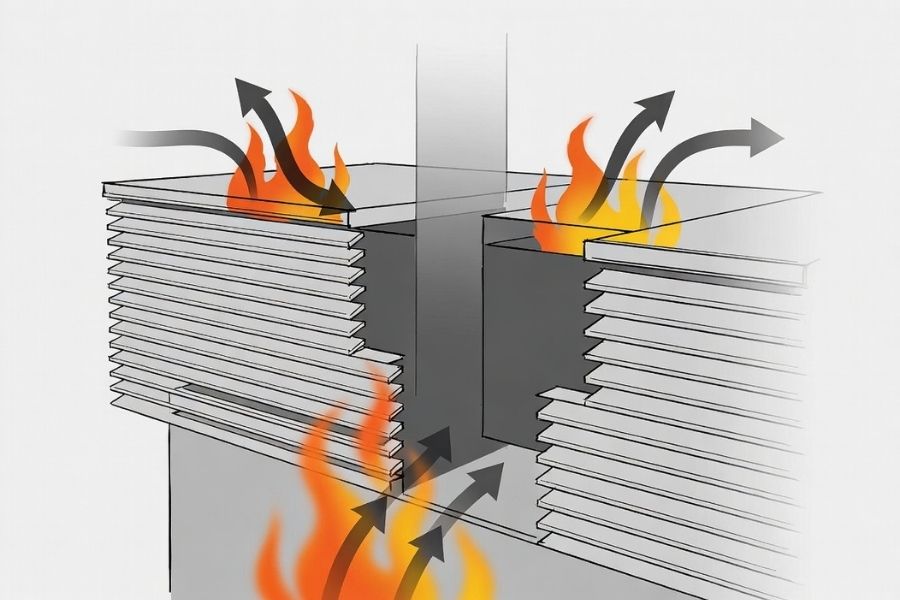
Ventilated cavities improve moisture control and thermal performance. However, under fire conditions, they can act as vertical channels. Hot gases rise rapidly, creating a chimney effect that accelerates flame spread between floors.
Controlling fire within cavities
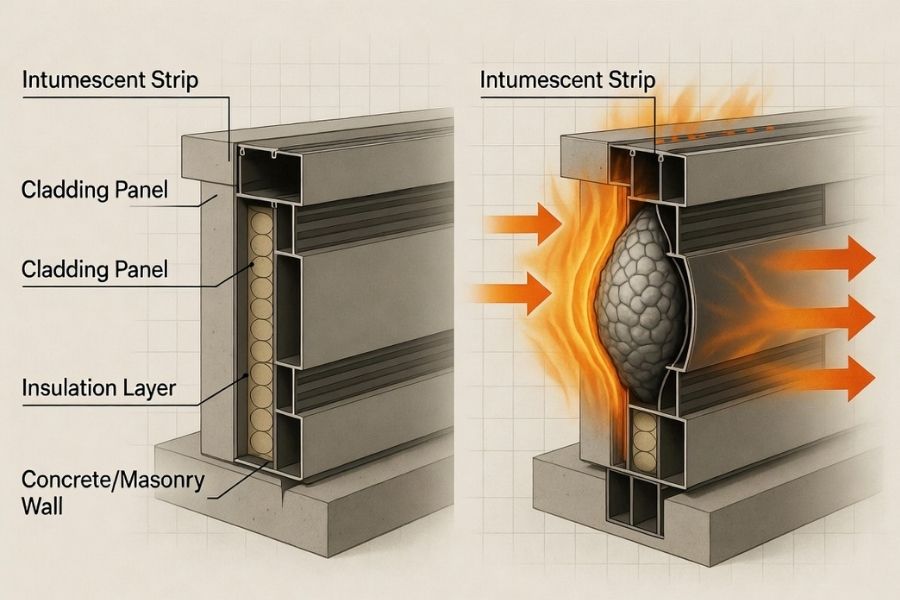
To manage this risk, façade systems rely on intumescent fire barriers, horizontal fire stopping at slab edges, and compartmentalized cavity design. When exposed to heat, these materials expand and seal the cavity, preventing vertical fire movement.
Design trade-off
A larger cavity improves ventilation but increases fire risk, while a smaller cavity improves fire resistance but may reduce façade performance. This balance must be addressed during design.
When Testing Is Not Enough – Engineering Judgment and Annex B
Why engineering evaluation is necessary
Testing every façade variation is not feasible. Projects often involve unique combinations of materials and configurations. Licensed fire protection engineers evaluate whether modified systems remain compliant with NFPA 285.
The role of Annex B
The latest update to NFPA 285 includes Annex B, which standardizes engineering judgment practices. This allows design teams to adapt tested systems to project-specific conditions while maintaining compliance.
Façade Design Decisions That Impact Fire Performance
Key design variables
Several design choices directly influence ACM cladding fire safety, including cavity depth, insulation type, attachment systems, joint detailing, and fire barrier placement.
Example decision logic
Using mineral wool insulation improves fire resistance but increases cost. Increasing cavity depth improves airflow but requires stronger fire stopping strategies. Concealed fixing systems may alter heat transfer behavior.
Integrating design and engineering
Effective façade design requires coordination between architects, engineers, contractors, and material suppliers. Through a collaborative design approach, Aluwell® supports project teams in aligning material systems with fire safety strategies.
Real-World Application – A Typical NFPA 285-Compliant Façade Strategy
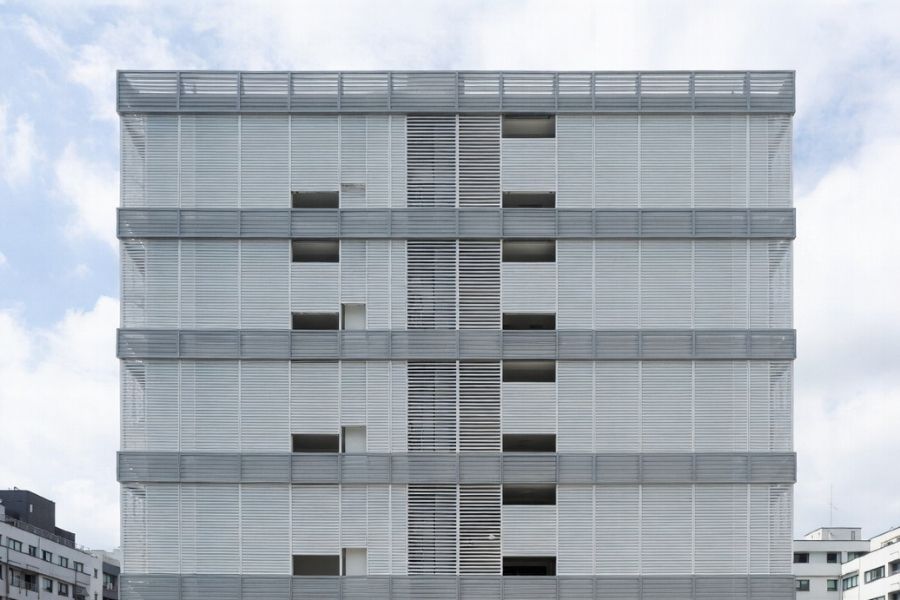
In a multi-family building with a ventilated rainscreen façade, the design team needed to achieve both architectural flexibility and NFPA 285 compliance.
The project included a mid-rise structure with light-gauge steel framing, continuous insulation, and a ventilated cavity system. Key risks included vertical fire spread through cavities, heat transfer across attachment systems, and fire exposure around window openings.
The solution combined fire-rated ACM panels with mineral-filled cores, horizontal fire barriers at each floor, intumescent materials around openings, and non-combustible insulation. The system achieved compliance through a combination of testing and engineering evaluation while maintaining the intended façade design.
How to Ensure ACM Cladding Meets Fire Safety Requirements
To ensure compliance, project teams should verify third-party NFPA 285 test reports, confirm that the tested assembly matches the project design, engage fire protection engineers when needed, and ensure that installation follows approved details.
For retrofit projects, the entire façade system must be reassessed. Structural support, attachment methods, and fire stopping design must all be reviewed, and compliance must be revalidated before installation.
From Material to System – Supporting Real Façade Performance
Fire-safe façades depend on both material performance and construction execution. With integrated capabilities in design support, processing, and system development, Aluwell® contributes to customized panel solutions, modular fabrication, and pre-installation verification to reduce on-site risks and improve project accuracy.
Conclusion – Designing ACM Façades for Long-Term Fire Safety
Fire safety in ACM cladding systems is achieved through system design, validated testing, and coordinated execution. Architects and contractors must understand system-level behavior, meet code requirements such as NFPA 285, and evaluate design trade-offs early in the project.
By combining material expertise with system-level understanding, Aluwell® supports façade solutions that balance architectural creativity with long-term safety performance.
FAQ
Do all aluminum composite panels provide the same fire performance?
No. Panels may appear similar, but their core materials determine fire behavior. Standard ACM panels use polyethylene cores and are combustible, while fire-rated ACM panels incorporate mineral-filled cores that significantly reduce flammability and slow flame propagation in façade systems, making them suitable for regulated building applications.
Why is NFPA 285 required for multi-story buildings?
NFPA 285 evaluates how an entire wall assembly performs under realistic fire conditions. It measures vertical and lateral flame spread through cavities and façade layers. For multi-story buildings, this test ensures that the system meets life safety requirements under worst-case scenarios, not just controlled material-level conditions.
Can a Class A or B1 rated panel be used in high-rise façades?
Not necessarily. These ratings only describe surface burning characteristics under small-scale tests. High-rise façades require system-level compliance. Even a Class A or B1 panel must be part of a tested or engineered assembly that meets NFPA 285 to ensure safe performance in real fire conditions.
What role does the ventilated cavity play in fire safety?
Ventilated cavities improve moisture control and thermal performance but can accelerate fire spread. They create vertical airflow paths that intensify the chimney effect during a fire. Proper fire barriers, cavity compartmentalization, and material selection are required to limit flame propagation and maintain façade safety.
What is engineering judgment and when is it used?
Engineering judgment is applied when exact test data is unavailable. Licensed fire protection engineers evaluate whether a modified wall system complies with NFPA 285 by comparing it to tested assemblies. Using Annex B guidelines, they assess differences and confirm whether the system maintains equivalent fire performance.
How can architects verify that a façade system is compliant?
Compliance is verified through third-party NFPA 285 test reports or certified engineering evaluations. The documentation must match the project’s wall assembly, including materials, cavity depth, and installation details. Material-only test reports are insufficient for façade approval in multi-story construction.
Can existing ACM façades be upgraded to meet fire safety standards?
Yes, but not through simple panel replacement. The entire system must be reassessed, including structural support, attachment methods, and fire stopping design. A new engineering evaluation is required to confirm compliance, and installation must follow updated façade and fire safety requirements.
How long do fire-rated ACM systems maintain their performance?
Fire-rated ACM systems typically maintain performance for 20 to 30 years when properly installed. Long-term durability depends on material quality, coating systems, and environmental exposure. Periodic inspection is recommended to ensure that fire barriers and façade components remain effective over time.