

12 Jun
How Expansion Joints Improve ACM Facade Performance
Why Expansion Joints Matter in ACM Facades
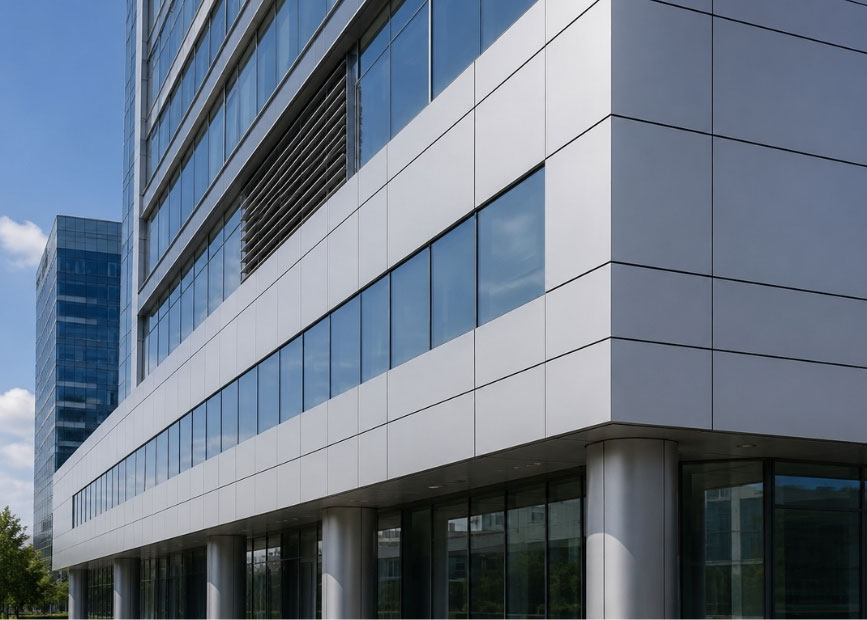
Many ACM façade problems are often blamed on panel quality, coating performance, or fabrication accuracy. In reality, movement-related stress is frequently the underlying cause of issues such as oil canning, panel distortion, sealant failure, and water infiltration.
Aluminum composite panels are exposed to daily and seasonal temperature changes, wind pressure, and structural movement throughout their service life. If these forces are not properly accommodated, stress gradually accumulates within the façade system.
This is why ACM expansion joints are a critical part of façade engineering. Properly designed expansion joints allow controlled movement within the cladding assembly, helping maintain appearance, weather resistance, and long-term durability.
For architects, façade consultants, contractors, and developers, understanding the relationship between movement and façade performance is essential when designing reliable building envelope systems.
What Are Expansion Joints in ACM Cladding Systems?
An expansion joint is a deliberately designed separation within an ACM cladding system that allows movement without transferring excessive stress into panels, fasteners, subframes, or sealants.
Unlike decorative reveals, façade movement joints serve a structural and functional purpose. They provide space for thermal expansion, contraction, wind-induced movement, and building deflection while maintaining the integrity of the cladding system.
Typical ACM expansion joints may include:
Horizontal movement joints
Vertical movement joints
Perimeter movement joints
Building separation joints
Panel-to-panel movement joints
In many ACM façade systems, expansion joints work together with sealants, backer rods, gaskets, and rainscreen cavities to create a durable and weather-resistant building envelope.
Why ACM Panels Need Room to Move
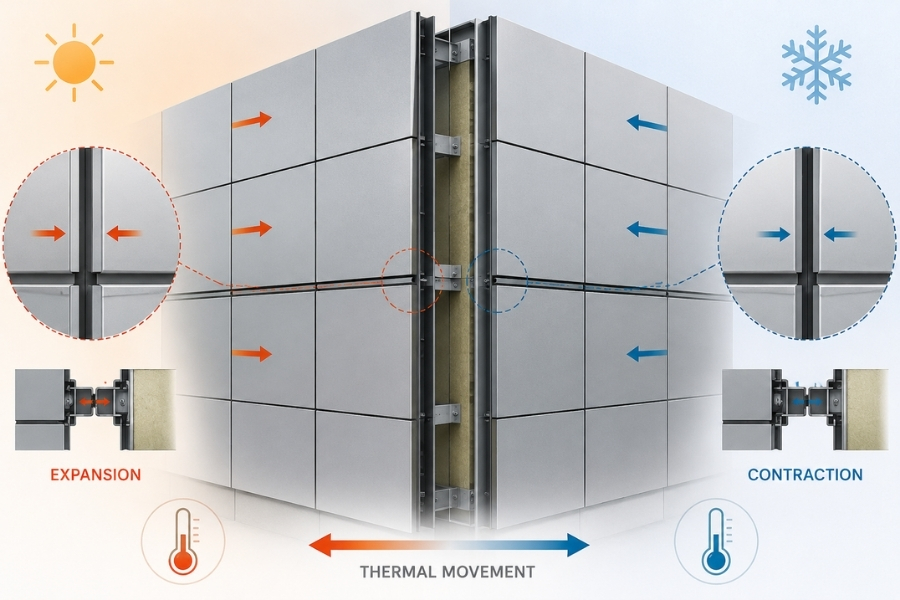
Although ACM panels appear rigid after installation, they continuously respond to environmental and structural forces.
Understanding these movement sources is the foundation of effective movement joint design.
ACM Thermal Expansion
Thermal expansion is the primary reason expansion joints are required in aluminum composite panel systems.
As temperatures rise, aluminum skins expand. When temperatures fall, they contract. A façade exposed to direct sunlight may experience significantly higher surface temperatures than the surrounding air, particularly when dark colors are used.
Large-format ACM panels measuring several meters in length can experience noticeable dimensional changes throughout seasonal temperature cycles. Without adequate movement accommodation, thermal stress may build within the façade assembly.
ACM panels rarely fail because of heat itself. Most movement-related issues occur when thermal expansion is not considered during design, fabrication, or installation.
Wind-Induced Movement
Wind loading continuously affects exterior cladding systems.
High-rise buildings experience repeated positive and negative pressure cycles that generate movement within the façade. Although individual movements may be small, years of cyclic loading can gradually increase stress within joints and attachment systems.
Properly designed façade movement joints help absorb these forces while protecting the cladding assembly from premature fatigue.
Structural Deflection
Buildings naturally move under load.
Concrete structures undergo shrinkage and creep. Steel structures may deflect under changing loads. Floor slabs can experience slight movement over time.
Expansion joints allow ACM systems to adapt to these changes without forcing stress into panels or connection points.
Seismic and Dynamic Movement
In seismic regions, façade systems must be capable of accommodating building movement during seismic events.
Transportation vibration, mechanical equipment, and other dynamic forces may also contribute to long-term movement. Expansion joints help improve façade resilience by providing controlled movement capacity within the system.
What Happens When ACM Expansion Joints Are Not Properly Designed?
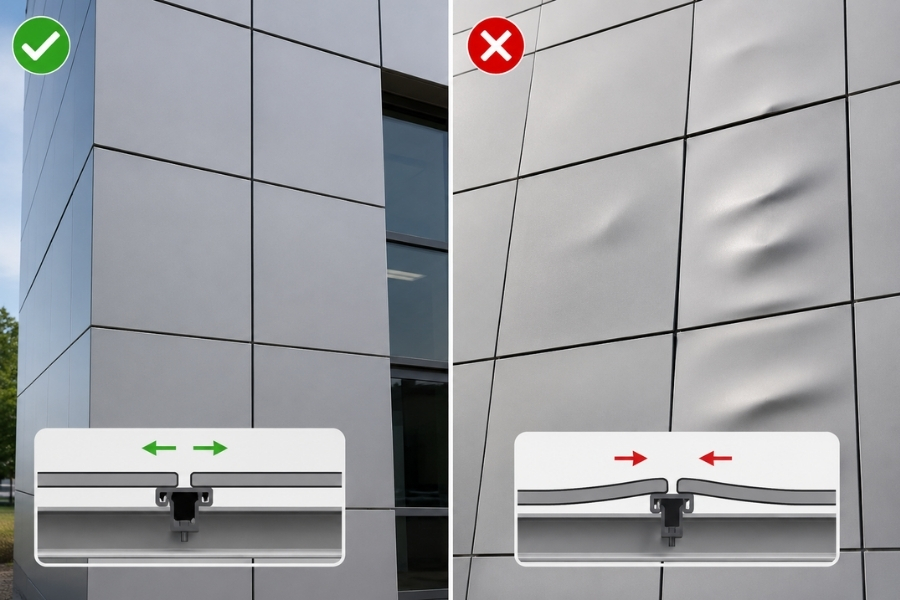
When movement is restricted, stress begins accumulating throughout the façade system.
Over time, this can negatively affect both appearance and performance.
Oil Canning
Oil canning refers to visible waviness that may appear on metal panel surfaces.
Although several factors contribute to oil canning, restricted thermal movement can increase internal stresses that make surface irregularities more visible. Large-format panels are particularly susceptible when movement accommodation is inadequate.
Panel Buckling
As thermal stress increases, panels may begin to deform outward or inward.
Panel buckling often occurs when expansion forces exceed the movement capacity of the installation system. Proper ACM expansion joints help relieve these stresses before deformation occurs.
Fastener Stress
When movement is restricted, thermal forces are often transferred directly into fasteners and attachment systems.
Over time, this can contribute to loosening, fatigue, or premature wear of mechanical connections.
Sealant Failure
Sealants are designed to accommodate movement within specific limits.
If joint widths are insufficient or movement exceeds design expectations, cracking, separation, and adhesion failure may occur. Once sealants fail, weather resistance can quickly deteriorate.
Water Infiltration
Water infiltration is often a secondary consequence of failed movement joints.
Moisture entering the façade assembly may affect insulation performance, increase maintenance requirements, and shorten the lifespan of supporting components.
How Expansion Joints Improve ACM Facade Performance
Expansion joints do far more than simply create gaps between panels.
They actively improve the long-term performance of ACM cladding systems by reducing stress and protecting critical components.
Improved Panel Flatness
One of the most visible benefits of ACM expansion joints is improved panel appearance.
By allowing thermal movement to occur naturally, expansion joints help reduce stress-related distortion and support flatter, more visually consistent façade surfaces.
Better Weather Resistance
Expansion joints help maintain the performance of sealants, gaskets, and weather barriers.
When movement is properly accommodated, joints remain functional for longer periods, reducing the likelihood of water penetration and weather-related deterioration.
Longer Service Life
Every façade system experiences environmental loading throughout its lifespan.
Reducing stress accumulation helps extend the service life of ACM panels, attachment systems, sealants, and supporting structures.
Reduced Maintenance Costs
Movement-related failures often result in expensive repairs.
By controlling stress within the façade assembly, expansion joints help reduce maintenance requirements and lower lifecycle costs.
Where Expansion Joints Are Most Critical in ACM Facades
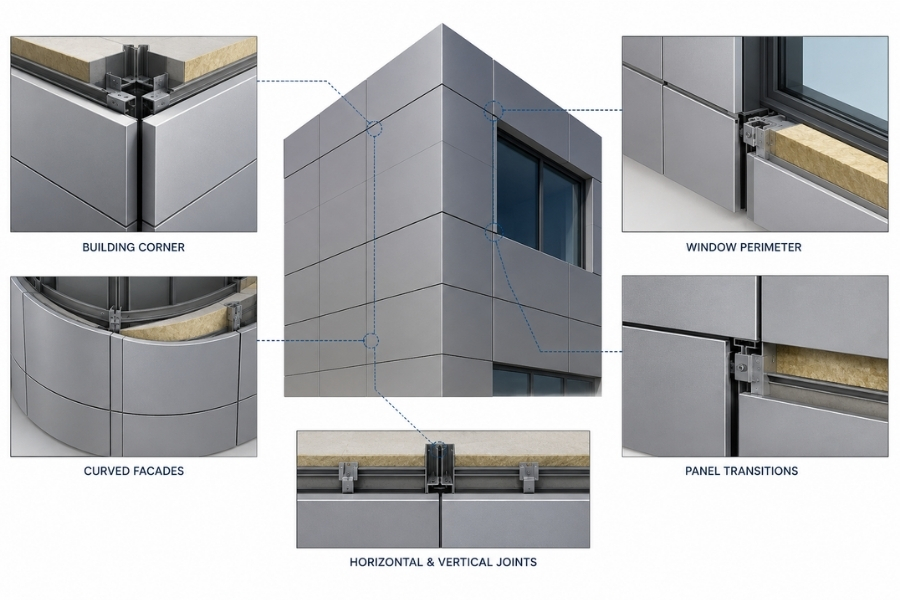
Not all areas of a façade experience movement in the same way.
Certain locations require particular attention during design and installation.
Panel-to-Panel Joints
Panel-to-panel joints experience daily thermal movement and represent the most common movement zones within ACM cladding systems.
Proper detailing helps prevent distortion, sealant failure, and alignment issues.
Building Corners
Corners are often subject to stress concentrations because movement may occur in multiple directions.
Expansion joints help reduce stress transfer between adjacent façade elevations.
Curved Facades
Curved and shaped ACM installations introduce additional fabrication and installation challenges.
Because geometry can restrict movement, proper expansion joint design becomes even more important for maintaining long-term performance.
Window and Door Perimeters
Openings interrupt the continuity of the façade system.
Movement joints around windows and doors help accommodate differential movement between ACM panels and surrounding building components.
Building Movement Transitions
Large structures often contain building movement joints within the primary structure itself.
The ACM façade must be designed to accommodate these movements without compromising weather resistance or visual continuity.
Engineering Considerations for ACM Expansion Joint Design
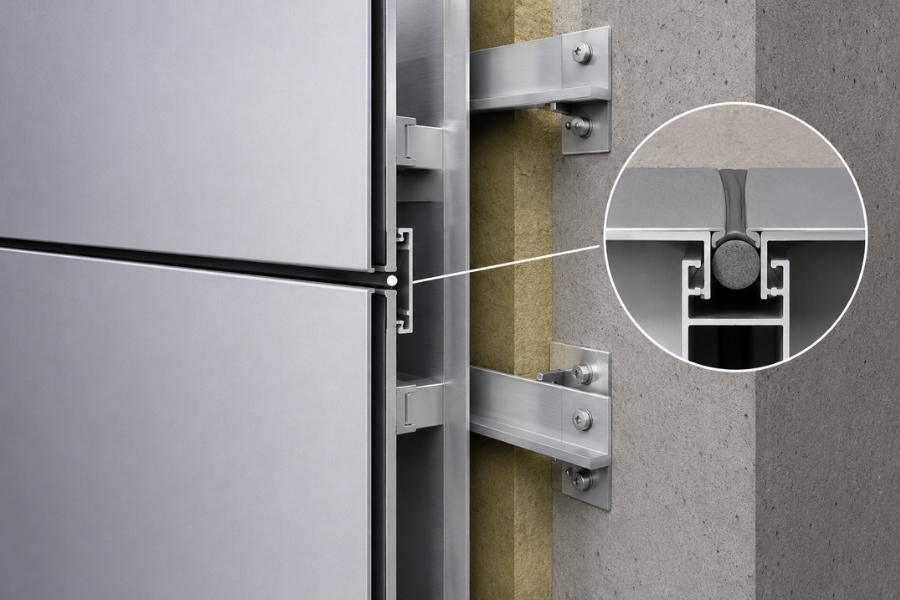
Effective movement joint design requires more than simply leaving a gap between panels.
Several engineering variables influence the required joint configuration.
| Design Factor | Impact on Expansion Joint Design |
|---|---|
| Panel Size | Larger panels generally require greater movement allowance |
| Temperature Range | Wider temperature swings increase expansion potential |
| Building Orientation | Sun-exposed elevations often experience greater thermal movement |
| Subframe Material | Different materials expand at different rates |
| Installation Method | Wet-seal and dry-joint systems accommodate movement differently |
| Building Height | Taller buildings may experience greater structural movement |
During ACM fabrication, panel dimensions, routing geometry, fixing methods, and subframe coordination should all be evaluated together with movement joint design.
Addressing these considerations during the design stage is far more effective than attempting to correct movement-related issues after installation.
Best Practices for ACM Expansion Joint Design
Successful ACM expansion joint design typically follows several key principles:
Account for expected thermal movement during design
Avoid over-constraining panel fasteners
Use sealants and gaskets compatible with anticipated movement
Consider solar exposure and façade orientation
Coordinate panel dimensions with joint layout
Provide effective drainage and moisture management
Follow project specifications and manufacturer recommendations
Include periodic joint inspections within façade maintenance programs
Early coordination between architects, contractors, façade consultants, and manufacturers can significantly reduce the risk of movement-related failures.
Conclusion
Expansion joints are a fundamental part of ACM façade engineering rather than a minor construction detail. They allow façade systems to accommodate ACM thermal expansion, structural movement, wind loading, and long-term environmental stresses without compromising appearance or performance.
When properly designed, ACM expansion joints help reduce oil canning, prevent panel buckling, improve weather resistance, and extend the service life of the entire cladding assembly. They also support better panel flatness, protect attachment systems, and reduce long-term maintenance requirements.
For architects, contractors, developers, and façade consultants, understanding movement accommodation is essential to achieving durable and reliable façade performance.
At Aluwell®, we support project teams with high-quality aluminum composite panel solutions and practical technical guidance throughout façade design, fabrication, and installation. By considering movement joint design, panel dimensions, thermal expansion, and project-specific environmental conditions early in the process, building teams can achieve more reliable and longer-lasting ACM façade systems.
FAQ
Do ACM panels always require expansion joints?
Most ACM façade systems require some form of movement accommodation. The exact configuration depends on panel size, climate, installation method, and building conditions.
Are expansion joints the same as panel joints?
Not necessarily. Some panel joints are primarily aesthetic, while expansion joints are specifically designed to accommodate movement.
Can expansion joints reduce oil canning?
They can help reduce stress-related distortion that contributes to visible surface waviness, particularly on large-format panels.
How do hot climates affect expansion joint design?
Higher temperatures and greater solar exposure increase thermal movement, making proper joint sizing and detailing more important.
What happens if ACM joints are too small?
Insufficient joint width can increase stress within the façade system and contribute to buckling, sealant failure, and alignment issues.
Do dry-joint ACM systems use expansion joints?
Yes. Dry-joint systems still accommodate movement, although they typically rely more on mechanical detailing and rainscreen design principles.
Do expansion joints improve weather resistance?
Yes. Properly designed joints help maintain the integrity of sealants, drainage systems, and weather barriers.
How often should expansion joints be inspected?
Inspection frequency depends on project conditions, but movement joints should be reviewed as part of routine façade maintenance programs.