
12 Jun
Understanding Subframe Systems Behind ACM Facades
When discussing aluminum composite material (ACM) facades, most attention is usually given to panel finishes, colors, joint layouts, and architectural appearance. However, the long-term performance of an ACM facade depends just as much on the support structure hidden behind the panels.
A properly engineered ACM subframe system provides the structural framework that supports the cladding, transfers wind loads, maintains panel alignment, accommodates thermal movement, and creates the ventilated cavity required for rainscreen performance. Without an appropriate facade support system, even high-quality ACM panels can experience installation challenges, visual inconsistencies, or premature performance issues.
For architects, facade consultants, contractors, and project owners, understanding how subframe systems work is essential when specifying ACM facades for commercial, institutional, and high-rise projects.
What Is a Subframe System in an ACM Facade?
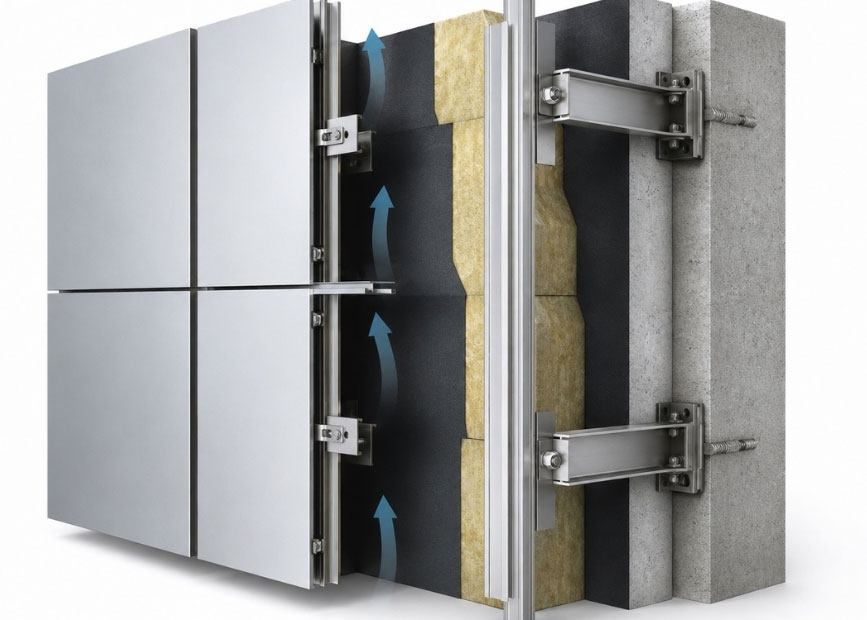
A subframe system is the carrier framework installed between the building structure and the ACM panels. Rather than fastening aluminum composite panels directly to the wall, a support structure consisting of brackets, rails, clips, and fasteners creates a secure mounting system that connects the cladding to the building.
The subframe system serves multiple purposes simultaneously. It provides structural support, creates a drainage and ventilation cavity, compensates for construction tolerances, and allows the facade to accommodate thermal movement.
Modern ACM rainscreen systems typically rely on this support framework to achieve both structural reliability and long-term weather resistance. The subframe therefore becomes a critical component of the overall building envelope rather than simply an installation accessory.
While different manufacturers may use different attachment methods, the engineering principles remain largely the same. The carrier system must safely transfer loads, maintain alignment, and support the intended performance of the facade throughout its service life.
Why ACM Facades Need a Subframe System
Many building owners assume ACM panels can simply be attached to an exterior wall. In reality, the subframe system performs several critical functions that directly influence facade performance.
Structural Load Transfer
ACM panels are non-structural cladding elements. They are designed to provide weather protection and architectural appearance rather than structural stability.
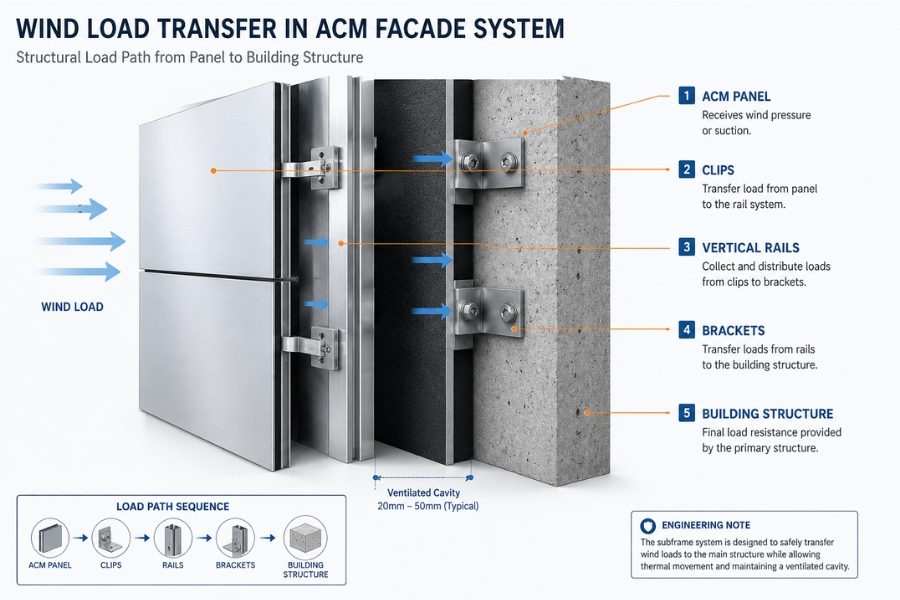
Environmental forces such as wind pressure and wind suction must be transferred through the cladding support structure into the primary building frame.
A typical load path follows this sequence:
ACM Panel → Clips → Rails → Brackets → Building Structure
This load transfer process becomes increasingly important on taller buildings where wind loads can be substantial. Subframe engineering therefore plays a major role in facade safety and reliability.
Panel Alignment and Flatness Control
Few buildings are perfectly plumb or level.
Concrete walls, structural steel framing, and sheathing systems often contain dimensional variations. If ACM panels were installed directly onto these surfaces, inconsistent joint lines and uneven panel faces would quickly become visible.
Adjustable brackets and rails allow installers to compensate for substrate irregularities and maintain a consistent facade plane.
In many commercial projects, poor support structure alignment contributes more to visible facade defects than the ACM panels themselves.
Ventilation and Moisture Management
Modern ACM facades frequently utilize ventilated rainscreen principles.
The subframe creates a drained and ventilated cavity behind the panels. This cavity allows airflow while providing a path for moisture to escape.
Although ACM panels significantly reduce water penetration, no cladding system can completely eliminate moisture exposure. The ventilated cavity helps manage incidental water and reduces the risk of trapped condensation.
Thermal Movement Accommodation
Aluminum naturally expands and contracts when temperatures change.
Large facade surfaces may experience significant thermal movement during seasonal temperature fluctuations or daily solar exposure.
A properly designed ACM subframe system allows this movement to occur without overstressing the panels or fasteners. Failure to accommodate movement may contribute to joint failure, panel distortion, or visible oil canning.
Main Components of an ACM Subframe System
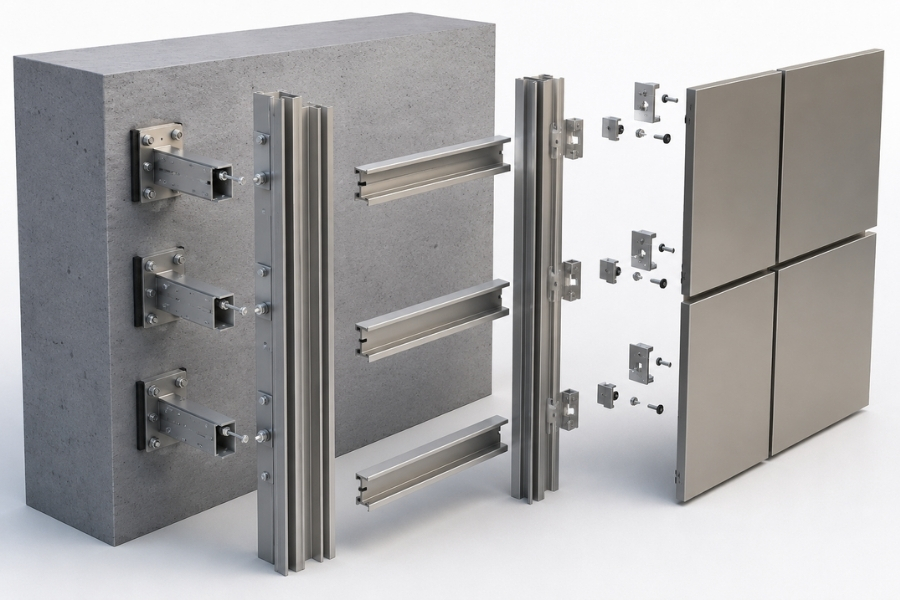
Most ACM support systems contain several common elements regardless of manufacturer or attachment method.
Brackets
Brackets connect the carrier system to the building structure.
They transfer loads while providing adjustment capabilities that help installers compensate for wall irregularities.
Bracket design must consider structural loads, corrosion resistance, and long-term durability.
Vertical Rails
Vertical rails serve as the primary structural members within many ACM support systems.
They transfer loads from the panels to the brackets while maintaining alignment across the facade.
Vertical rail systems are particularly common in ventilated rainscreen designs because they allow uninterrupted airflow through the cavity.
Horizontal Rails
Some facade systems incorporate horizontal rails to support specific panel layouts or architectural requirements.
Horizontal framing members may be used alongside vertical rails depending on panel dimensions and project-specific engineering requirements.
Clips and Fasteners
Clips secure ACM panels to the support framework.
Depending on the system design, clips may be visible or concealed.
Fastener selection is important because corrosion, vibration, and thermal cycling can affect long-term performance. Material compatibility should always be considered to reduce the risk of galvanic corrosion between dissimilar metals.
Thermal Break Pads
Thermal bridging occurs when conductive materials create a path for heat transfer through the wall assembly.
Thermal break pads help reduce this heat transfer while improving overall energy performance.
As building energy standards continue to evolve, thermal breaks are becoming increasingly common within facade support systems.
Aluminum vs Steel Subframe Systems
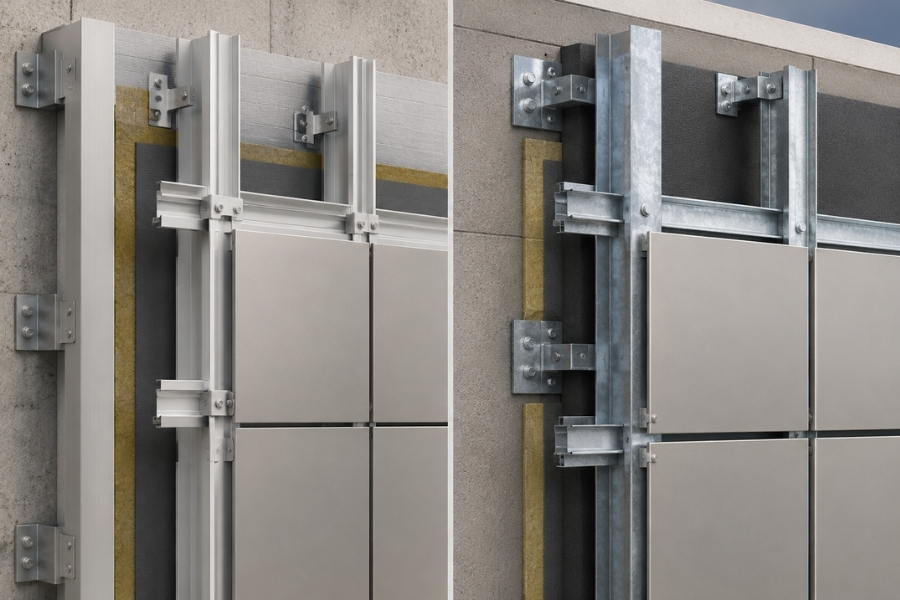
Material selection influences structural performance, corrosion resistance, installation efficiency, and lifecycle costs.
Aluminum Subframe Systems
Aluminum is widely used in ACM support structures because it offers a strong combination of durability and weight reduction.
Common architectural alloys include:
6063-T5
6063-T6
6061-T6
These alloys provide excellent corrosion resistance and can be extruded into a variety of profile shapes including channels, angles, T-sections, and box profiles.
Advantages of aluminum subframe systems include:
Lightweight construction
Good corrosion resistance
Easier handling during installation
Reduced maintenance requirements
Compatibility with ACM panels
These characteristics make aluminum an attractive choice for commercial buildings, high-rise projects, and coastal environments.
Steel Subframe Systems
Steel support systems continue to be used where higher structural capacity is required.
Galvanized steel systems may offer:
Higher load-bearing capability
Lower material costs
Strong structural performance
However, steel systems typically require greater attention to corrosion protection and may increase installation weight.
Which Material Is Better?
The answer depends on project requirements.
For coastal projects and architecturally sensitive applications, aluminum subframes are often preferred because of their corrosion resistance and reduced weight.
For projects requiring exceptionally high structural capacity, steel may provide advantages.
Building height, wind exposure, maintenance expectations, and environmental conditions should all be evaluated during material selection.
How Subframe Systems Support ACM Rainscreen Performance
One of the most important functions of a facade support system is supporting rainscreen performance.
Creating a Ventilated Cavity
The cavity between the ACM panels and the weather resistant barrier allows air circulation behind the cladding.
This airflow helps remove moisture and reduce condensation risks within the wall assembly.
Supporting the Drainage Plane
In most ACM rainscreen systems, the drainage plane exists at the weather resistant barrier rather than at the panel surface.
The subframe system creates the separation required to allow water to drain safely away from the building envelope.
Protecting the Weather Resistant Barrier
The weather resistant barrier, often referred to as a WRB, serves as the primary defense against water infiltration.
The ACM panels and support structure protect the WRB from direct environmental exposure while allowing the wall assembly to remain breathable.
Improving Long-Term Durability
By controlling moisture and improving ventilation, the support framework contributes directly to long-term facade durability.
Proper cavity design helps reduce corrosion, minimizes moisture accumulation, and supports overall building envelope performance.
Common Problems Caused by Poor Subframe Design
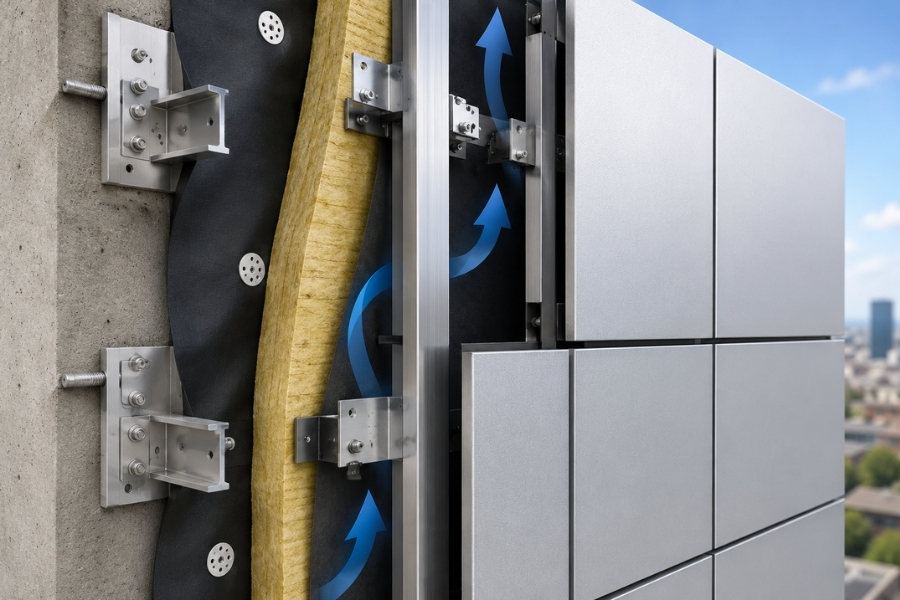
Many facade performance issues can be traced to deficiencies within the support structure rather than the ACM panels themselves.
Panel Misalignment
Poor bracket placement or inadequate adjustment can result in inconsistent panel spacing and irregular joint lines.
These visual issues often become more noticeable on large-format facades.
Oil Canning Amplification
Oil canning is influenced by multiple factors, including panel dimensions, material thickness, and installation quality.
An uneven carrier system can amplify the visual appearance of oil canning by introducing unintended stresses into the panels.
Water Infiltration Problems
Insufficient cavity depth, poor drainage detailing, or improper integration with the weather resistant barrier can compromise moisture management.
Water infiltration risks increase when drainage paths become blocked or ventilation is restricted.
Corrosion Issues
Material incompatibility can create galvanic corrosion between dissimilar metals.
This issue is particularly important in coastal and industrial environments where aggressive environmental conditions accelerate corrosion processes.
What Architects and Contractors Should Review Before Specification
Selecting an ACM subframe system involves more than choosing panel dimensions and finishes.
Project teams should evaluate:
Building height
Wind load requirements
Panel size and weight
Fire safety requirements
Environmental exposure conditions
Corrosion protection strategies
Thermal movement allowances
Installation tolerances
Early engineering coordination helps prevent conflicts between architectural design goals and structural requirements.
Contractors frequently discover substrate irregularities during installation. Addressing these conditions during the design phase often reduces installation delays and improves final facade quality.
Why Early Coordination Matters
Successful ACM projects require coordination between panel design and support structure engineering from the earliest project stages.
Panel dimensions, joint layouts, attachment methods, thermal movement strategies, and rainscreen requirements all influence subframe design decisions.
At Aluwell®, project teams regularly find that early evaluation of both ACM panel specifications and support system compatibility helps improve installation efficiency while reducing long-term performance risks.
Considering the facade as a complete system rather than a collection of individual components often leads to better architectural results and more predictable project outcomes.
Conclusion
Although ACM panels are the most visible part of a facade, the subframe system is the hidden structure that enables the entire assembly to function effectively.
From load transfer and panel alignment to moisture management and thermal movement accommodation, the performance of an ACM facade depends heavily on the quality of its support framework.
Understanding how ACM subframe systems work allows architects, contractors, developers, and building owners to make better specification decisions and create facade systems that deliver long-term durability, safety, and architectural value.
A well-designed ACM facade is never just about the panels. It is the result of careful coordination between the cladding, the carrier system, and the building structure behind it.
FAQ
What is the purpose of a subframe system in ACM facades?
A subframe system supports ACM panels, transfers loads to the building structure, maintains alignment, creates a ventilation cavity, and helps manage moisture. It is a critical component of the overall facade support system.
Can ACM panels be installed directly onto walls?
Most commercial ACM facades should not be installed directly onto walls. A support framework is generally required to provide alignment adjustment, structural support, drainage space, and thermal movement accommodation.
What is the difference between aluminum and steel subframes?
Aluminum subframes are lighter and more corrosion resistant, while steel systems often provide higher structural capacity. The best choice depends on project requirements, environmental exposure, and budget considerations.
Do ACM rainscreen systems require a ventilation cavity?
Yes. A ventilated cavity allows airflow behind the panels and helps manage moisture. This cavity is a fundamental component of most ACM rainscreen systems.
How does a subframe system affect thermal expansion?
The carrier system allows ACM panels to expand and contract without excessive stress. Proper movement accommodation helps prevent panel distortion and joint failures.
What causes ACM panel misalignment?
Misalignment may result from uneven substrates, poor bracket adjustment, inaccurate rail positioning, or installation tolerances that were not properly managed.