

20 Mar
ACM vs Fiber Cement - Which Is Better for Façade Design
Introduction
Selecting façade materials is a critical decision in architectural design. It affects not only the visual outcome of a building, but also long-term performance, maintenance strategy, and system reliability.
Fiber cement siding is widely used due to its cost balance and durability. At the same time, aluminum composite panels (ACM panels) are increasingly specified in commercial and institutional projects where design precision and façade system performance are required.
Understanding the difference between ACM vs fiber cement helps project teams make more informed material decisions.
ACM vs Fiber Cement - What Are They Made Of
The performance difference between these materials begins with their composition.
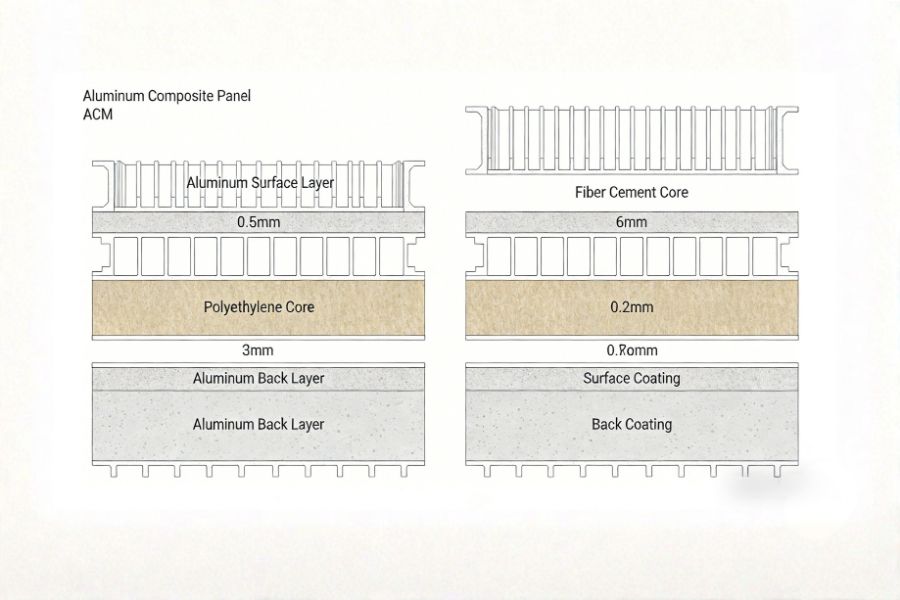
Fiber cement is made from Portland cement, sand, water, and cellulose fibers. It is produced as rigid boards, where the organic fiber component introduces potential moisture sensitivity if edges or surfaces are not fully sealed.
Aluminum composite panels (ACM panels) consist of two aluminum sheets bonded to a core material, which may be polyethylene or fire-retardant mineral-filled compounds. This creates a stable, non-porous panel system.
From an engineering standpoint, fiber cement behaves as a cement-based board, while ACM cladding panels function as a lightweight metal composite system.
Key Differences Between ACM and Fiber Cement
ACM vs Fiber Cement - Quick Comparison
| Performance Factor | ACM Panels | Fiber Cement |
|---|---|---|
| Material Type | Metal composite panel | Cement-based board |
| Water Absorption | Non-porous | Can absorb moisture at edges |
| Design Flexibility | High – bendable and formable | Limited – mostly flat boards |
| Color Consistency | High with PVDF coating | Moderate, depends on paint |
| Maintenance | Low | Requires repainting over time |
| Installation System | Rainscreen and cassette systems | Face-fixed or lap siding |
| Fire Performance | FR and A2 options available | Non-combustible |
Design Flexibility and Appearance
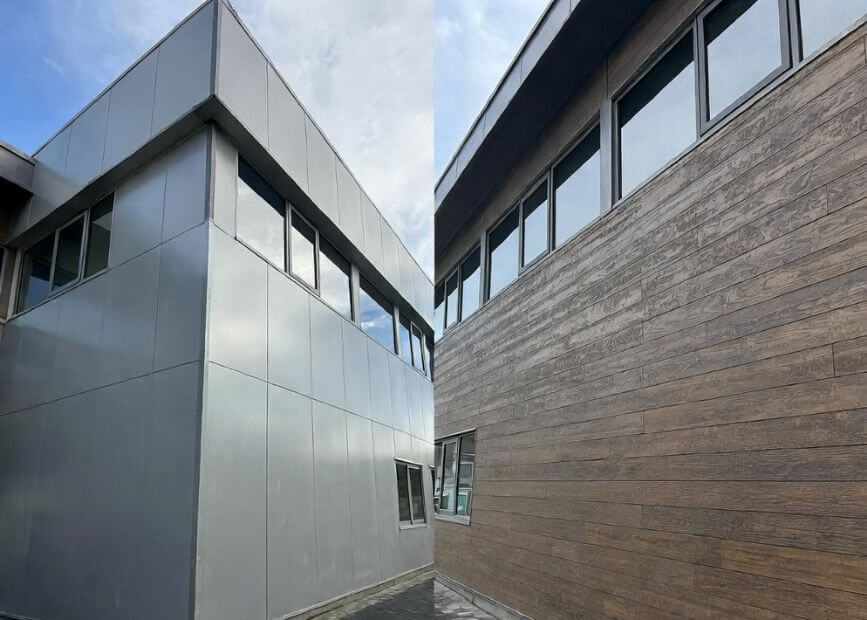
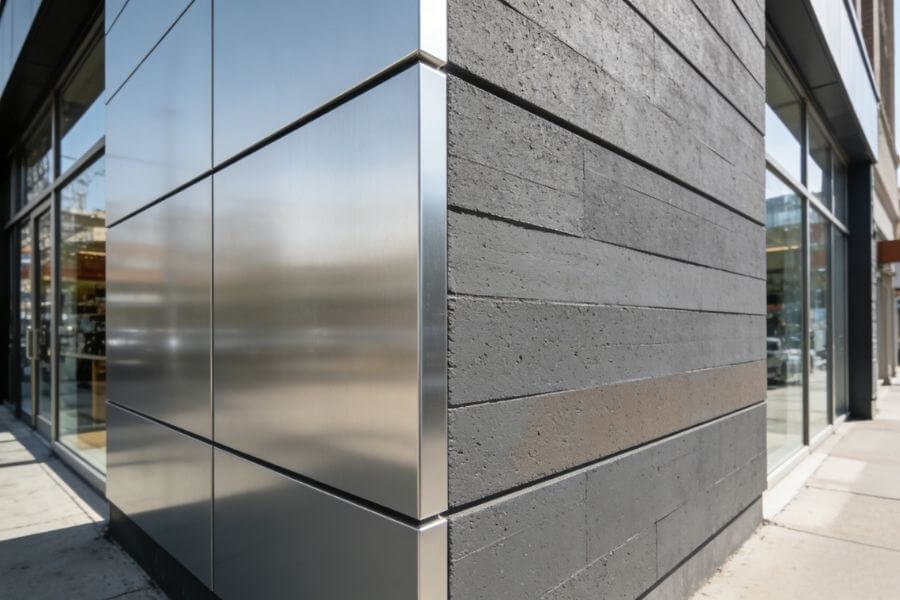
Fiber cement siding is typically available in smooth or wood-textured finishes. While suitable for many projects, the range of colors and finishes is relatively limited.
ACM panels provide significantly greater control in architectural façade design, including a wide color range, controlled gloss levels, metallic and textured finishes, and custom color matching for brand-driven applications. This is particularly important in commercial buildings where visual consistency across large façade areas is required.
Fabrication and Design Possibilities
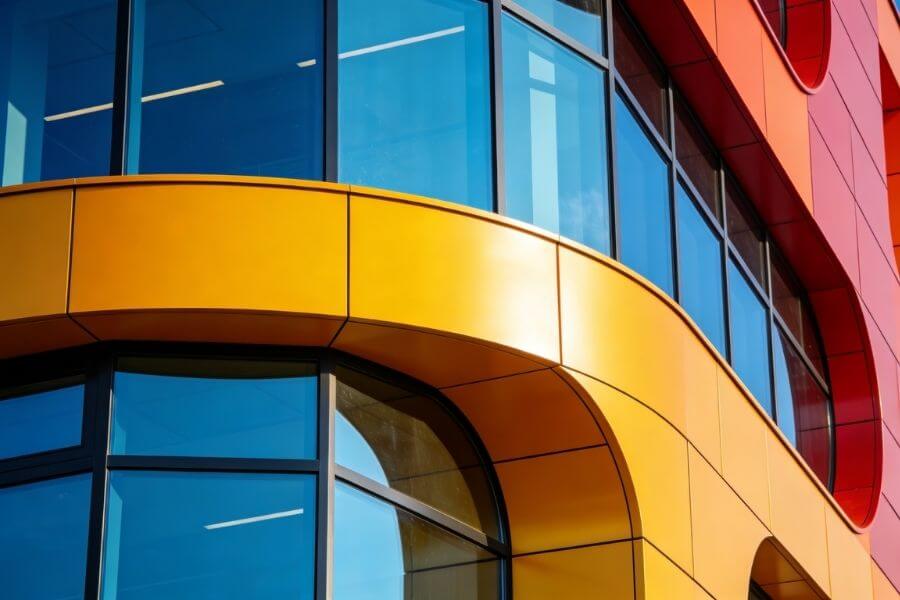
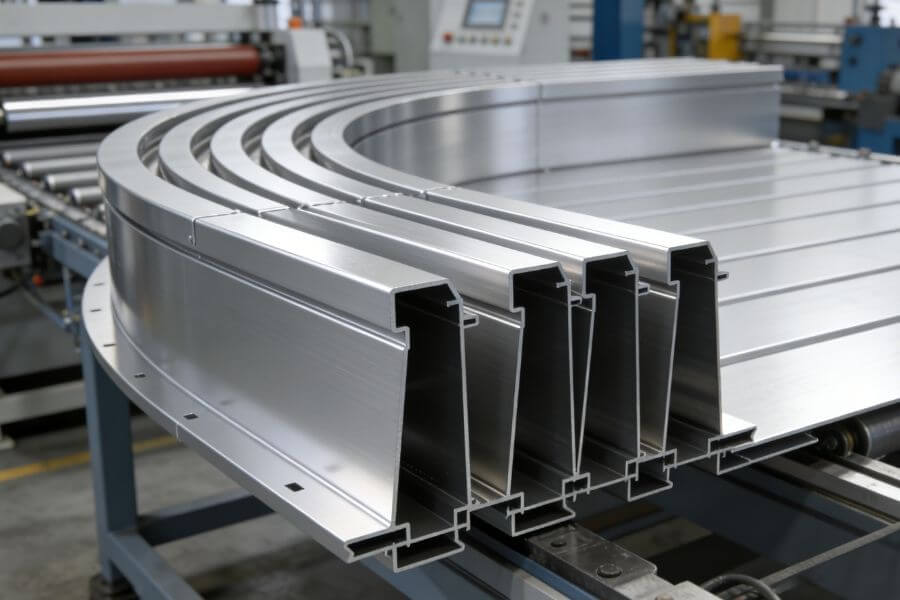
Fiber cement panels are rigid and brittle. Fabrication is limited to flat applications, and complex forms require additional framing or segmentation.
ACM panels support advanced fabrication methods such as folded cassette panels, curved surfaces, sharp edge returns, and integrated façade elements. This allows designers to achieve complex façade geometry while maintaining clean surface quality.
Durability and Weather Performance
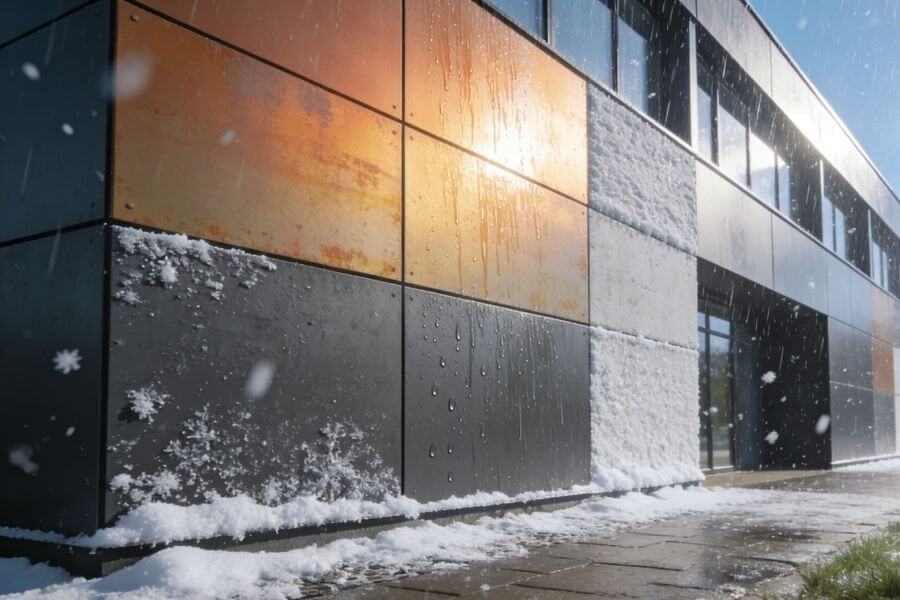
Fiber cement performs well under standard conditions, but exposed edges or damaged coatings can allow moisture penetration. Over time, this may lead to swelling, cracking, or coating failure.
ACM panels are non-porous and do not absorb water. This eliminates risks associated with freeze-thaw cycles and moisture-related expansion. Aluminum surfaces resist corrosion, and PVDF coatings provide long-term UV resistance, supporting stable performance in exterior cladding systems.
Maintenance and Long-Term Performance
Fiber cement siding relies on paint systems for protection and appearance. Over time, UV exposure leads to fading, requiring repainting to maintain surface integrity.
ACM panels use factory-applied coatings that are chemically bonded to the aluminum surface. This provides long-term color retention, resistance to chalking, and reduced maintenance requirements, making ACM a low-maintenance façade material.
Fire Resistance and Safety Standards
Fiber cement is inherently non-combustible and widely used in fire-rated applications.
ACM panels can achieve different fire performance levels depending on the core material. Fire-retardant ACM panels and A2-grade ACM panels meet strict building code requirements when properly specified as part of a façade system.
Installation and Façade System Design
Fiber cement siding is typically installed using face-fastening or overlapping systems, which may limit design precision and expose joints.
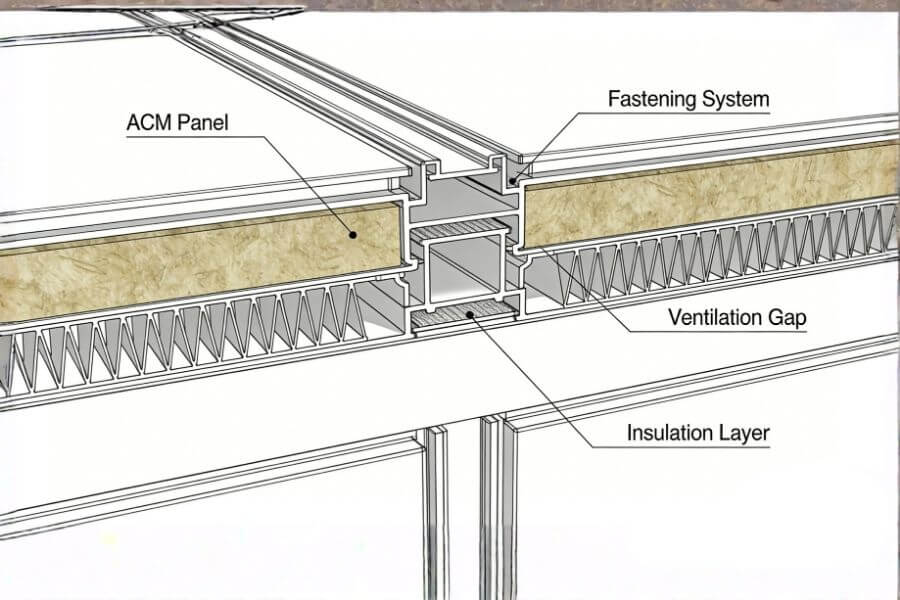
ACM panels are commonly integrated into ventilated rainscreen systems, cassette panel systems, and curtain wall assemblies. These systems improve moisture control, thermal performance, and installation accuracy while maintaining clean façade lines.
ACM in Real Architectural Applications
In commercial façade projects, ACM is often selected for its ability to maintain consistency across large building surfaces.
For example, in retail and corporate buildings with façade areas exceeding 10,000 square feet, consistent color, panel flatness, and installation accuracy are critical. ACM panels allow precise color matching, stable surface performance under UV exposure, and reliable fabrication for cassette-based systems.
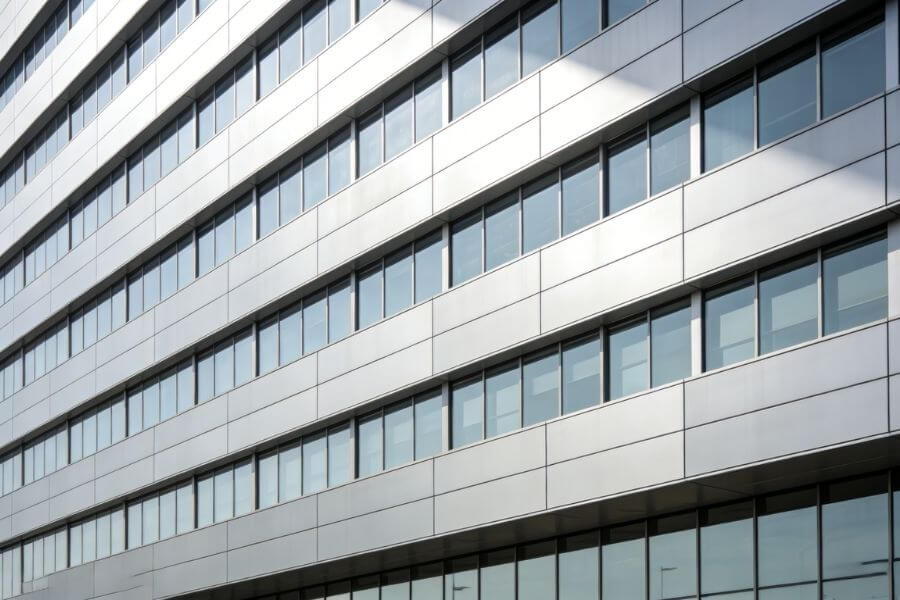
Aluwell® ACM panels are used in such applications to support consistent appearance, controlled tolerances, and efficient installation across large-scale façade systems.
Beyond Materials - Thinking in Façade Systems
Material selection alone does not determine façade performance.
In practice, building envelopes are defined by façade system design, including panel layout, joint detailing, substructure coordination, and installation sequencing. Materials that support system-based design provide greater control over long-term performance and visual consistency.
Design Support and Project Coordination
In façade construction, coordination between design, fabrication, and installation is essential.
With ACM façade systems, project teams can optimize panel layout, control joint spacing, integrate panels with curtain wall systems, and maintain fabrication accuracy. Aluwell® ACM panels are manufactured with consistent thickness and coating quality, supporting reliable performance in complex architectural applications.
When to Choose ACM or Fiber Cement
Fiber cement may be suitable when the project has strict cost constraints, requires a simple cladding solution, or allows periodic repainting.
ACM panels are preferred when the façade requires precise color control, large-scale visual consistency, complex panel geometry, reduced maintenance, and integration into engineered façade systems.
Conclusion
Both fiber cement siding and ACM panels are widely used in building envelopes.
Fiber cement provides a practical solution for cost-driven projects with straightforward design requirements.
ACM offers greater flexibility in design, improved surface performance, and better integration into modern façade systems. For projects where architectural expression, system performance, and long-term consistency are priorities, ACM panels provide a more adaptable solution.
FAQ
Which material lasts longer, ACM or fiber cement?
Both materials can achieve long service life when properly installed. Fiber cement may require periodic repainting to maintain appearance, while ACM panels maintain surface performance longer due to factory-applied coatings. This allows ACM to retain color consistency and reduce long-term maintenance requirements in façade applications.
Which material performs better in cold climates?
ACM panels perform well in cold climates because they do not absorb moisture. This eliminates the risk of freeze-thaw damage. Fiber cement can perform adequately when properly sealed, but exposed edges or coating damage may allow moisture intrusion, which can affect long-term durability under repeated freezing conditions.
Can both materials achieve wood or stone finishes?
Yes, both materials can replicate wood or stone appearances. Fiber cement typically uses embossed textures to simulate natural materials, while ACM panels use advanced coating or film technologies. ACM generally provides more consistent color, pattern control, and surface uniformity across large façade areas.
Is ACM suitable for fire-rated façade systems?
Yes, ACM panels can be used in fire-rated façade systems when specified with appropriate core materials. Fire-retardant ACM panels and A2-grade ACM panels meet strict fire safety standards. Proper system design and compliance with local building codes are essential to ensure overall façade fire performance.
Which material requires less maintenance?
ACM panels generally require less maintenance due to their non-porous structure and durable factory-applied coatings. They resist fading, chalking, and moisture-related damage. Fiber cement typically requires periodic repainting and inspection to maintain appearance and protect the material over its lifecycle.