

13 May
ACM vs Traditional Cladding Materials for Commercial Buildings
Why Cladding Choice Matters for Commercial Buildings
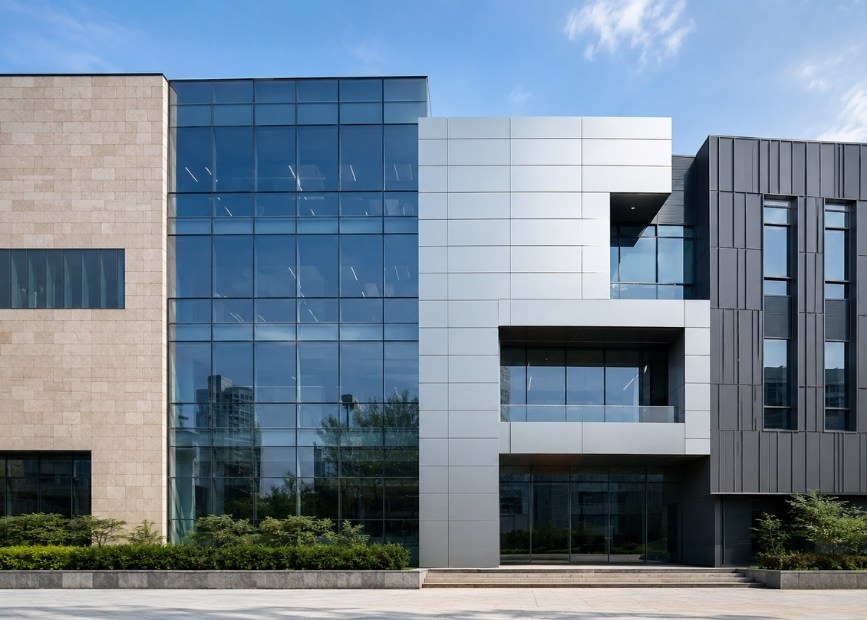
Exterior cladding affects far more than a building’s appearance. In commercial architecture, façade materials influence structural loading, weather protection, installation efficiency, maintenance planning, and long-term operational cost.
For developers and architects, the wrong cladding decision can create ongoing issues related to panel movement, moisture exposure, surface inconsistency, or expensive maintenance cycles. As modern commercial buildings become larger and more visually complex, façade systems must balance engineering performance with architectural precision.
This shift is one reason aluminum composite panels have become increasingly common in office towers, retail developments, transportation hubs, healthcare facilities, and institutional projects.
What Aluminum Composite Panels Are
Aluminum Composite Material (ACM) panels consist of two aluminum cover sheets bonded to a thermoplastic or mineral-filled core. Standard commercial panel thicknesses typically range from 3 mm to 6 mm depending on wind load requirements, panel dimensions, and façade system design.
This sandwich-panel structure allows these architectural composite panels to maintain high surface flatness while remaining significantly lighter than many traditional façade materials.
Modern metal composite systems are commonly available with:
PVDF coatings
FEVE coatings
Polyester finishes
Metallic surfaces
Woodgrain textures
Stone-look finishes
PVDF coating systems are especially common in commercial façade applications because they provide strong resistance to UV degradation, chalking, moisture exposure, and long-term color fading.
High-quality commercial PVDF systems are often designed for 20 to 30 years of exterior performance depending on climate conditions and maintenance practices.
ACM vs Traditional Cladding Materials
Steel Cladding
Steel cladding remains widely used in industrial buildings because of its strength and impact resistance. Warehouses, logistics facilities, and manufacturing plants often prioritize durability over façade flexibility.
However, steel systems introduce significantly higher structural weight compared with lightweight composite cladding. Heavier wall systems may increase subframe requirements and installation complexity on large commercial façades.
Steel also limits fabrication flexibility in projects requiring curved surfaces, folded geometries, or highly controlled façade articulation.
In comparison, these composite façade panels provide:
Lower structural loading
Easier transportation and handling
Cleaner large-format panel appearance
Better fabrication flexibility
Reduced installation labor in many applications
For example, a mid-rise retail project using 4 mm aluminum composite panels instead of heavier steel cladding may significantly reduce façade dead load while maintaining a cleaner exterior appearance across long storefront elevations.
Solid Aluminum Panels
Solid aluminum panels offer corrosion resistance and non-combustible performance. In some fully non-combustible wall assemblies, architects may still prefer solid aluminum systems for specific code or project requirements.
However, large solid aluminum sheets may experience visible oil-canning or surface distortion if panel thickness and reinforcement are not carefully engineered.
Because metal composite materials use a bonded composite structure, they generally maintain flatter surfaces across larger spans with lower overall weight.
This becomes particularly important in projects emphasizing:
Monolithic façade appearance
Long uninterrupted panel lines
Consistent reflective surfaces
Controlled shadow depth
Corporate architectural branding
In commercial architecture, even minor panel waviness can become highly visible under daylight reflection across large building elevations.
Fiber Cement Panels
Fiber cement cladding performs well in many climates and provides good fire resistance. It remains common in schools, multifamily housing, and institutional buildings.
However, fiber cement systems are substantially heavier than composite exterior panels and often require specialized cutting tools during fabrication and installation. On larger commercial projects, field modifications can increase labor time and installation complexity.
Compared with fiber cement, modern architectural cladding systems generally allow:
Faster prefabrication
Cleaner edge detailing
Easier routing and folding
More consistent joint spacing
Lower transportation weight
This fabrication flexibility becomes valuable when façade systems include custom corners, soffits, canopies, or integrated signage elements.
Natural Stone Cladding
Natural stone remains one of the most respected façade materials in commercial architecture. Civic buildings, luxury hospitality projects, and heritage-inspired developments often continue using stone because of its permanence and material authenticity.
At the same time, natural stone systems introduce major structural and logistical considerations:
Significant façade weight
More complex anchoring systems
Longer installation schedules
Higher transportation costs
Increased seismic considerations in some regions
Because of these limitations, many commercial projects now use stone-look aluminum composite panels to achieve a similar visual effect with lower structural demand.
This approach is especially common in large mixed-use developments where architects want the visual depth of stone without dramatically increasing façade weight.
Glass Facades
Glass curtain walls remain essential in projects prioritizing daylighting, transparency, and urban visibility. Corporate towers and high-end commercial developments frequently rely on large glazed surfaces to create openness and reflective interaction with the surrounding environment.
However, all-glass façades may increase:
Solar heat gain
Maintenance frequency
Glare management complexity
Cleaning costs
Impact vulnerability at lower levels
As a result, many commercial buildings combine glazing systems with composite rainscreen panels to create balanced façade compositions.
Metallic finishes on these exterior wall systems are often used around podium levels, entrances, canopies, and service zones where architects want greater durability while maintaining a clean modern appearance.
ACM and Modern Rainscreen Systems
Modern commercial façade systems increasingly use ventilated façade systems instead of direct-applied exterior cladding.
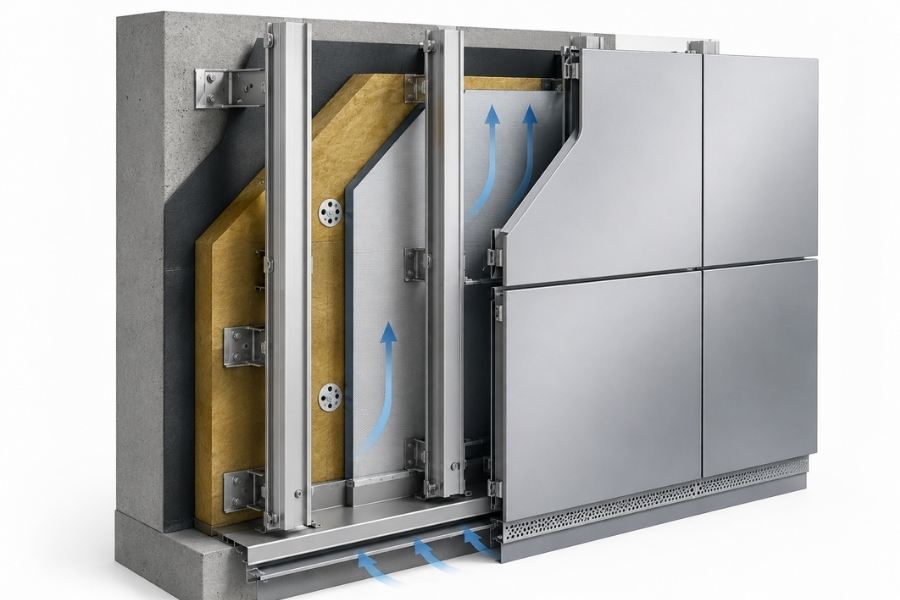
In these systems, the exterior panel surface works together with:
Air barriers
Continuous insulation
Subframe systems
Ventilated cavities
Drainage layers
Attachment systems
Rather than sealing all moisture outside the wall, rainscreen systems manage controlled airflow and drainage behind the façade surface.
Typical commercial cavity depths range from 25 mm to 50 mm depending on climate conditions, wall assembly design, and thermal requirements.
Because aluminum composite façade systems are lightweight and dimensionally stable, they integrate efficiently into ventilated façade assemblies. Their fabrication precision also helps maintain cleaner joint alignment across large rainscreen elevations.
A ventilated façade assembly may improve:
Moisture control
Thermal efficiency
Pressure equalization
Exterior wall durability
Long-term coating performance
These systems are now common in airports, hospitals, office towers, educational campuses, and transportation facilities where long-term envelope performance is critical.
Design Flexibility and Modern Facade Appearance
One reason architects continue specifying metal composite systems is their ability to support complex modern façade geometry without excessive structural weight.
Unlike many traditional cladding materials, these lightweight exterior panels can be:
Routed
Folded
Bent
Curved
Fabricated into cassette systems
Integrated into custom façade layouts
This flexibility helps architects create sharper transitions, cleaner façade layering, and more controlled visual rhythm across large commercial elevations.
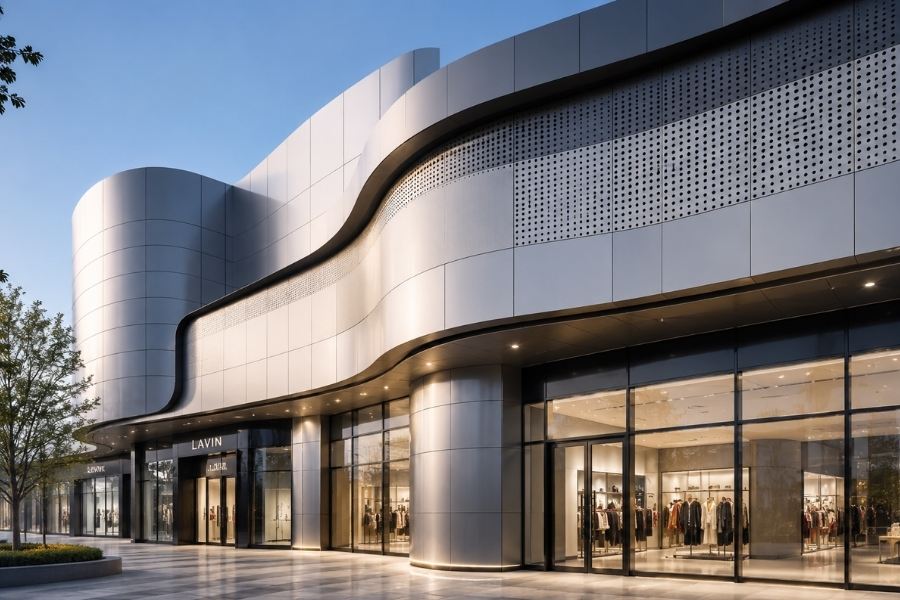
Large-format architectural composite panels also reduce visual clutter by minimizing unnecessary joints and inconsistent surface movement.
In many corporate and retail projects, façade appearance directly supports brand identity. Clean panel alignment, stable color consistency, and controlled shadow lines help create stronger architectural presence in dense urban environments.
Delta E measurements are commonly used to evaluate color consistency between façade panels. Lower Delta E values indicate smaller visible differences between adjacent surfaces.
Modern façade materials are available in finishes such as:
Metallic surfaces
Matte architectural coatings
Woodgrain textures
Stone-look patterns
Weathered steel appearances
Mirror effects
This wide finish range allows architects to balance durability with highly customized visual identity.
Long-Term Durability and Weather Resistance
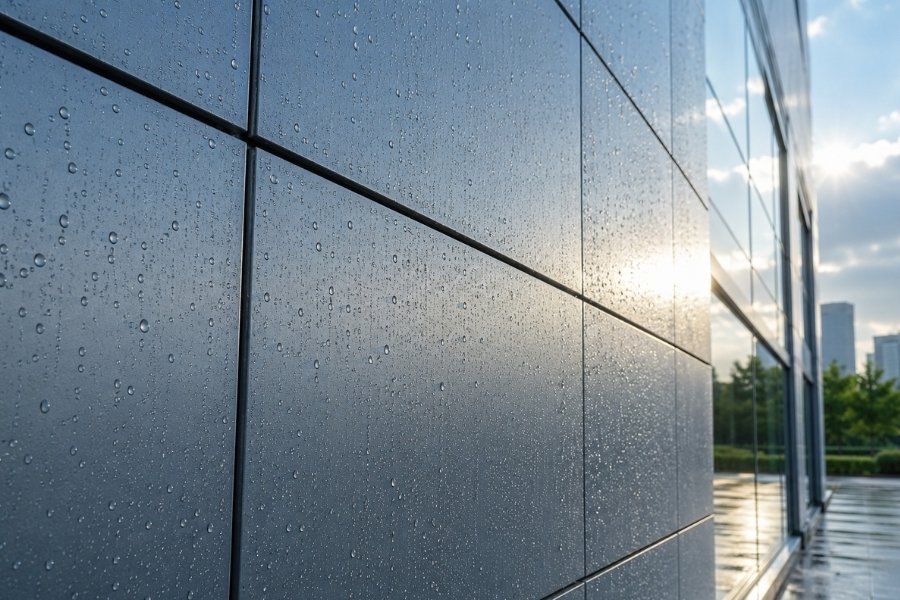
Commercial façade systems must withstand decades of environmental exposure while maintaining structural and visual stability.
High-quality composite façade panels are designed to resist:
UV exposure
Corrosion
Freeze-thaw cycling
Wind-driven rain
Surface contamination
Moisture penetration
In coastal environments or heavily polluted urban areas, coating durability becomes especially important. Poor coating systems may fade unevenly, lose gloss consistency, or develop premature surface degradation.
PVDF coatings are commonly specified because they maintain stronger long-term color retention and weather resistance compared with lower-grade coating systems.
For example, commercial buildings in tropical climates often prioritize PVDF-coated architectural cladding because intense UV exposure and humidity can accelerate surface deterioration in lower-performance materials.
Compared with many traditional façade systems, these composite exterior panels typically require only periodic cleaning with mild detergent and water rather than repainting, sealing, or extensive restoration work.
Fire Safety and Building Code Requirements
Fire safety has become one of the most important considerations in commercial façade specification.
Not all metal composite materials perform the same way during fire exposure.
PE-core systems are generally limited to lower-rise projects where fire-spread requirements are less restrictive.
For commercial towers, hospitals, schools, airports, and institutional projects, fire-rated ACM systems with mineral-filled cores are commonly required.
Many high-rise commercial projects also require compliance with NFPA 285 testing.
Importantly, NFPA 285 evaluates the entire wall assembly rather than a single panel product. Testing may include:
Exterior cladding
Insulation
Air barriers
Attachment systems
Joint conditions
Cavity fire barriers
This reflects how real façade systems behave during fire events.
In some projects requiring fully non-combustible exterior assemblies, architects may still select solid aluminum or other non-combustible materials instead of composite systems. Material selection ultimately depends on building height, occupancy type, code jurisdiction, and façade design strategy.
Installation and Fabrication Advantages
Commercial façade projects depend heavily on dimensional coordination and fabrication accuracy.
Even small measurement inconsistencies can create:
Uneven panel alignment
Irregular joint spacing
Corner transition issues
Site installation delays
Rework costs
Traditional façade systems requiring extensive on-site cutting may increase labor variability and installation risk on large commercial elevations.
Modern aluminum composite panels improve installation consistency through:
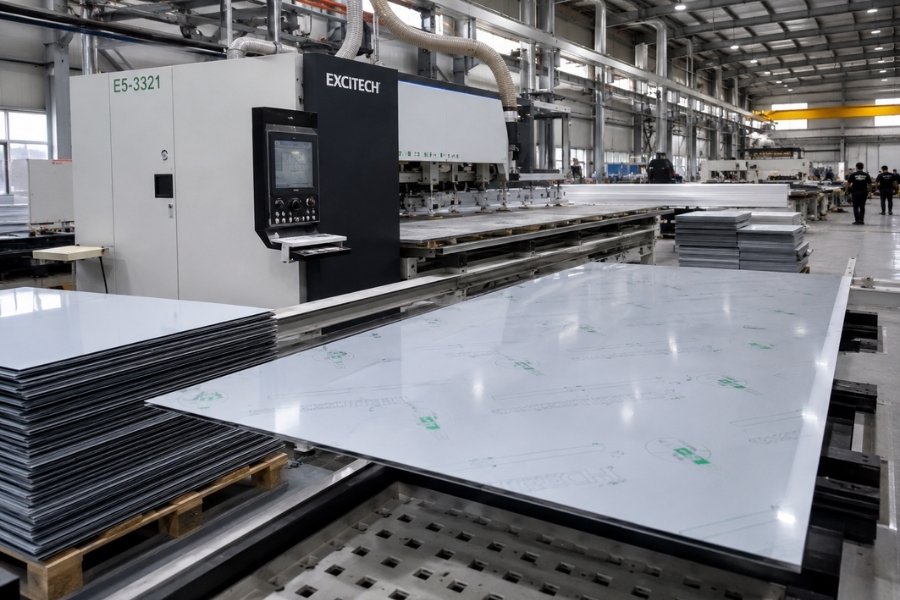
CNC routing
Digital fabrication
Prefabricated cassette production
Modular panel coordination
In large-scale projects, prefabrication also helps shorten installation schedules while improving façade consistency.
Some façade contractors additionally perform full-scale mockup verification before production begins. This process helps confirm panel alignment, attachment conditions, weatherproofing integration, and visual consistency before large-volume installation starts.
Long-Term Cost and Maintenance Benefits
Initial material pricing represents only one portion of commercial façade investment.
Building owners must also evaluate:
Maintenance requirements
Replacement frequency
Installation efficiency
Long-term coating stability
Operational disruption during repairs
Some traditional cladding materials may appear less expensive initially but require significantly higher maintenance over time.
Natural stone may involve expensive anchoring and restoration work. Extensive glass façades can increase cleaning frequency and operational maintenance cost. Lower-grade painted systems may eventually require repainting or refinishing.
Because lightweight composite cladding is corrosion-resistant and relatively easy to maintain, it often provides strong long-term value in commercial applications.
Reduced structural loading may also lower secondary support requirements in certain façade systems.
Sustainability and Recyclability
Sustainability increasingly influences commercial material selection and façade engineering decisions.
Aluminum remains one of the most recyclable construction materials available. Lightweight façade systems may also reduce transportation energy consumption compared with heavier exterior assemblies.
Modular prefabrication can further reduce:
Site waste
Installation inefficiency
Material overuse
Construction disruption
Some projects now prioritize façade systems with longer coating lifespans because fewer replacement cycles can reduce long-term environmental impact.
Aluminum honeycomb systems are also becoming more common in transportation and premium architectural applications because they provide high stiffness-to-weight performance with fully metallic core structures.
At the same time, recyclability depends on material composition. Composite systems containing thermoplastic cores may require more specialized recycling processes compared with fully metallic assemblies.
With more than 20 years of composite panel manufacturing experience, ALUMAX Composite Material Co., Ltd. provides integrated support across multiple stages of façade development.
The Aluwell® product portfolio includes:
Aluminum Composite Panels
Aluminum Honeycomb Panels
Stainless Steel Composite Panels
Architectural interior systems
Customized façade solutions
The company operates a 63,000-square-meter production facility with annual production capacity reaching 6 million square meters.
Its parent company, Taiwan Alumax Industrial Co., developed advanced composite panel manufacturing equipment now used by many ACM manufacturers worldwide.
In addition to panel manufacturing, Aluwell®supports commercial projects through:
Collaborative design assistance
Customized façade engineering
CNC machining capabilities
Modular fabrication systems
Project-specific processing support
Mockup verification assistance
This integrated engineering and manufacturing approach helps architects, contractors, and developers improve façade consistency, fabrication efficiency, and long-term exterior performance across commercial building projects.
FAQ
Are aluminum composite panels suitable for high-rise commercial buildings?
Yes. High-rise projects typically require fire-rated ACM systems with mineral-filled cores and tested wall assemblies. Many commercial buildings must also comply with NFPA 285 requirements depending on local codes, occupancy type, and façade design.
What coating system provides the best long-term color stability?
PVDF coatings are widely used for commercial exterior applications because they provide strong UV resistance, gloss retention, and weather durability. High-quality PVDF finishes can maintain appearance and color consistency for decades in harsh climates.
Can composite façade panels support custom corporate branding colors?
Yes. Modern architectural cladding systems support custom color matching for retail, hospitality, and corporate projects. Consistent panel color and controlled Delta E values help maintain visual identity across large façade surfaces.
What is the difference between ACM panels and aluminum honeycomb panels?
ACM panels use a composite core structure, while aluminum honeycomb panels use a metallic cellular core. Honeycomb systems generally provide higher stiffness-to-weight performance and are often selected for premium architectural and transportation projects.
Are architectural composite panels difficult to maintain?
No. Most composite exterior panels require only periodic cleaning with mild detergent and water. High-performance coating systems help reduce fading, staining, corrosion, and long-term surface deterioration in commercial environments.