

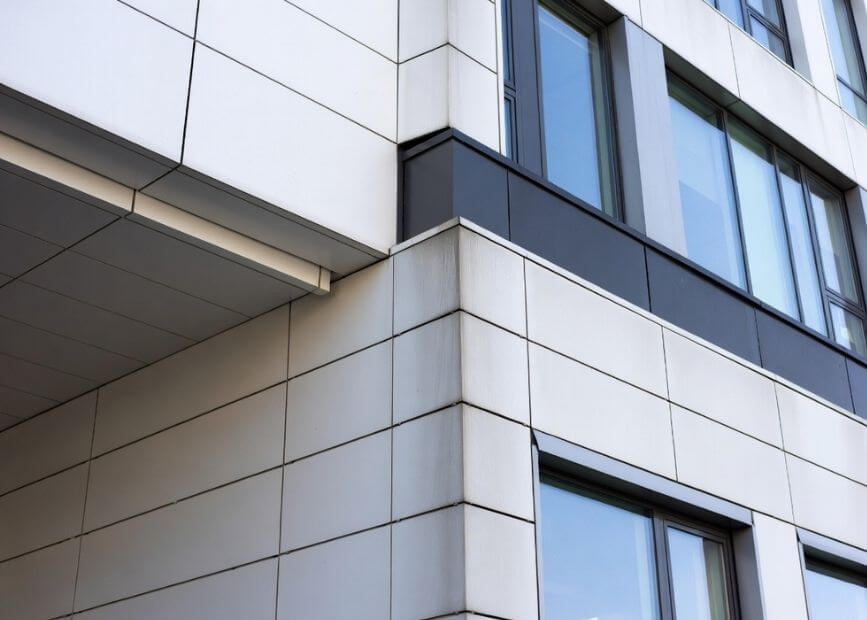
30 Mar
Why Fabrication Determines the Success of ACP Cladding Systems
When ACP Façades Fail — The Problem Often Starts Before Installation
In many projects, façade issues such as panel misalignment, visible color variation, or installation delays are often attributed to material quality or site conditions. In reality, these problems frequently originate earlier during the transition from design to fabrication.
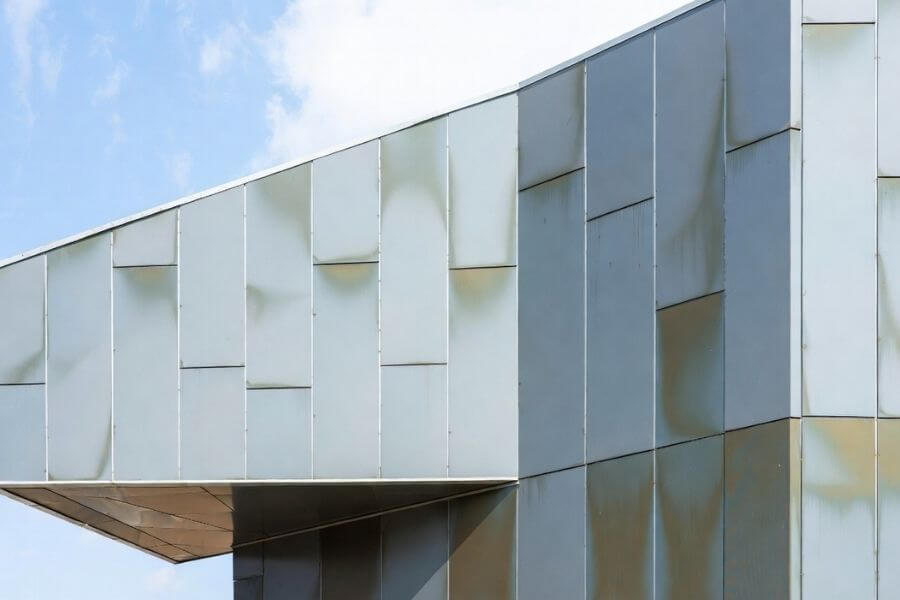
Aluminum composite panels (ACP) are widely used for modern façades, yet the material alone does not guarantee performance. Without controlled fabrication, even high-quality panels can result in inconsistent joints, uneven surfaces, or visual mismatch across large elevations.
Understanding how fabrication influences outcomes is essential for avoiding these issues and achieving reliable façade performance.
ACP Is Only One Layer — Not the Whole Façade System
ACP is not a complete cladding system. It is the outermost surface within a multi-layer façade assembly.
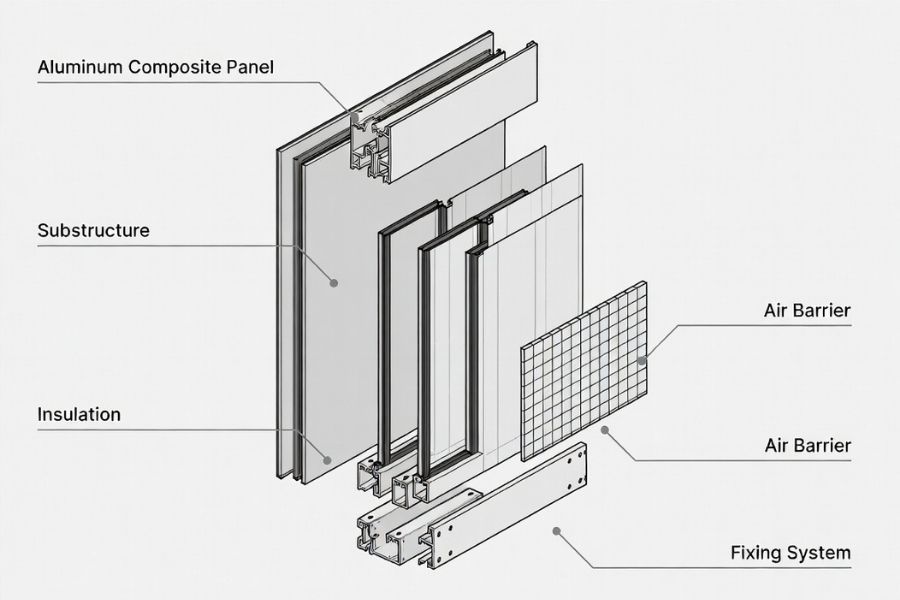
A functional façade typically includes structural framing, attachment systems, insulation, air barriers, and ventilation cavities for drainage. ACP panels provide the visible architectural finish, but their performance depends on how they are integrated into this system.
Fabrication is the stage where flat material becomes part of a coordinated façade assembly. It defines how panels will behave structurally, visually, and during installation.
How ACP Projects Move From Design to Installation
A typical ACP façade project involves multiple stakeholders working in sequence.
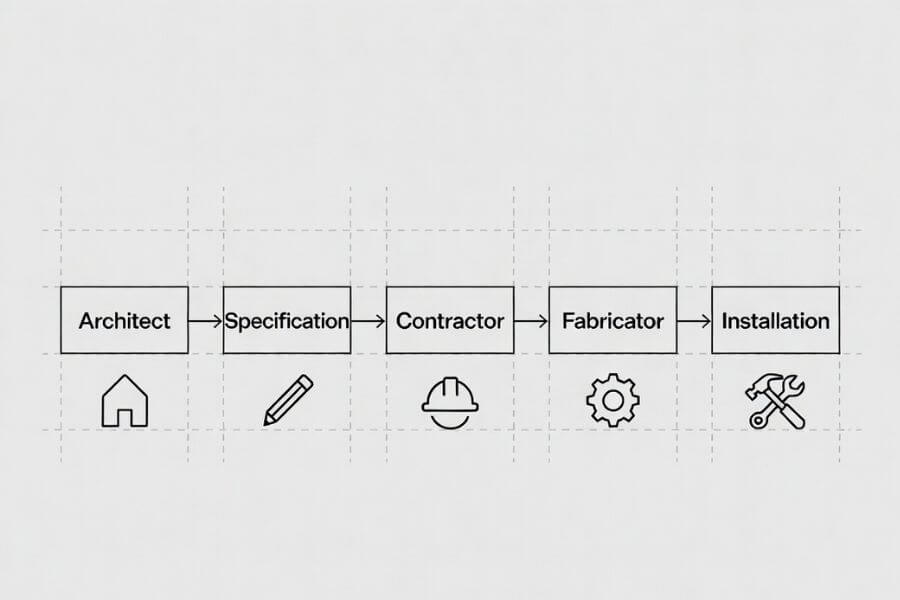
Architects define façade layout, panel rhythm, and visual identity. Specifications establish material standards, coating systems, and performance criteria. Contractors coordinate procurement, scheduling, and on-site execution. Fabricators convert design intent into precise panel components.
At the design stage, drawings communicate appearance, but they do not yet account for fabrication tolerances, fixing methods, or installation constraints. Fabrication introduces production-level detail, ensuring panels can be manufactured consistently and installed without conflict.
Where Fabrication Fits Between Design and Construction
Fabrication acts as the control point between architectural intent and construction reality.
Without fabrication integration, panel dimensions may not align across façade grids, joint spacing can become inconsistent, and installation adjustments increase on-site risk and time. With controlled fabrication, panels are produced within defined tolerances, connection points are pre-coordinated, and installation becomes predictable.
This difference becomes more critical as project scale increases. On façades covering thousands of square feet, even small deviations can accumulate and become visually apparent.
Fabrication Process — Defined by Control, Not Complexity
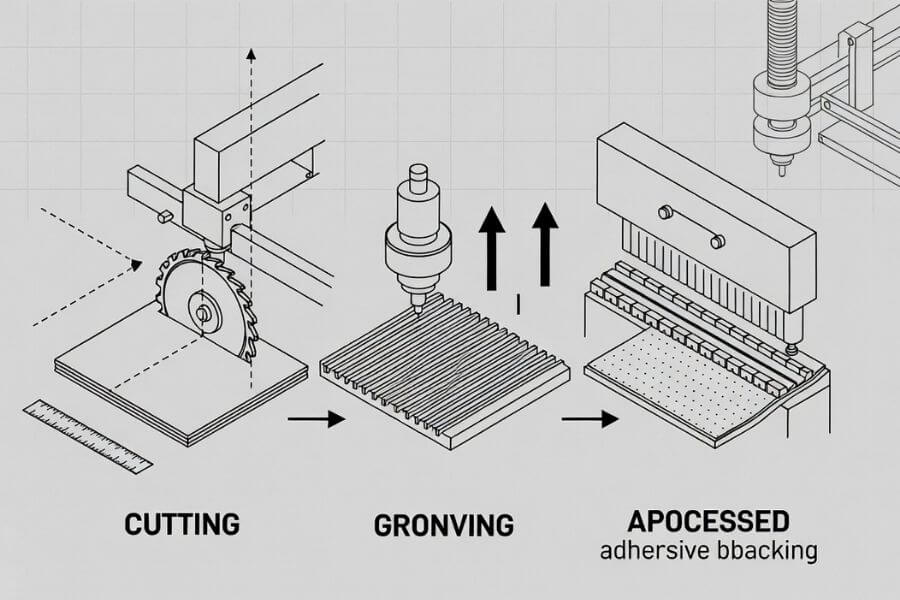
Fabrication is often described through three core operations. These steps are not about mechanical execution alone but define how accurately the façade system performs.
Cutting — Setting the Foundation for Panel Accuracy
Cutting determines the dimensional baseline of each panel. For standard ACP panels typically around 3 mm to 4 mm thick, precision at this stage ensures alignment across the façade grid. Even small deviations can affect joint continuity when repeated across large surfaces.
Forming — Shaping Panels for Structural Performance
Forming through grooving and bending converts flat sheets into rigid panel units. This step defines edges, returns, and fixing zones that interact with the substructure. Inconsistent forming can lead to distortion or installation misalignment.
Assembly — Locking Panels Into a Stable System
Assembly stabilizes the panel geometry and prepares it for installation. Internal supports and connections ensure resistance to wind load, thermal movement, and environmental exposure. Accurate assembly reduces the need for on-site adjustments and improves installation efficiency.
Fabrication Also Controls How the Façade Looks
Fabrication does not only affect structure. It plays a critical role in visual consistency.
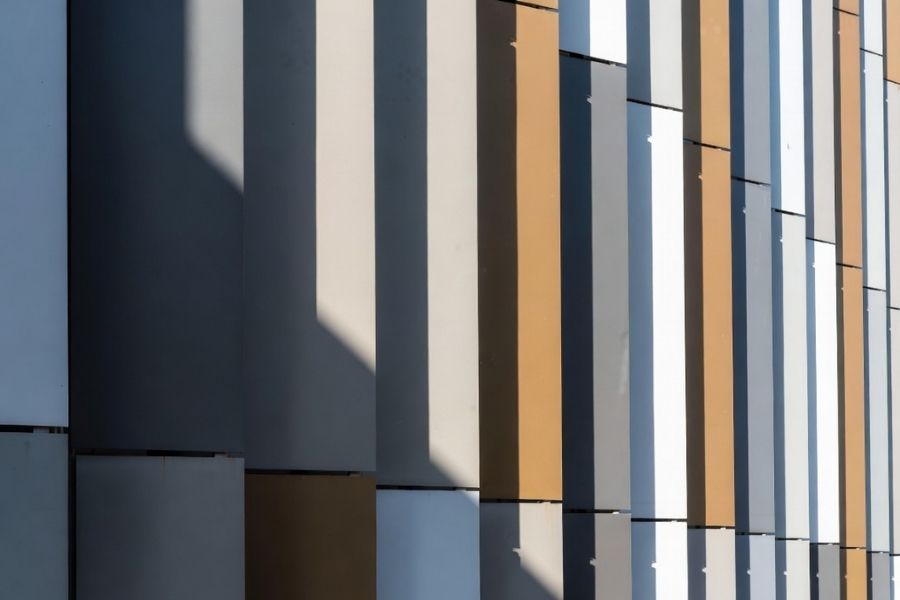
Panel orientation, forming direction, and installation sequencing influence how light interacts with the surface. This is especially important for metallic or high-gloss finishes, where reflectivity can vary depending on fabrication alignment.
Even when panels share the same color specification, differences in fabrication handling can result in visible variation. In large façades, this may appear as shading differences or uneven reflection across panel groups.
Consistency must therefore be controlled at the system level rather than relying on material alone.
Why Coordination Between Teams Matters
ACP cladding projects require coordination between multiple disciplines.
Architects define design intent and visual composition. Façade consultants evaluate structural and performance requirements. Contractors manage execution and sequencing. Fabrication teams translate drawings into buildable components.
Early collaboration allows fabrication constraints such as panel size, joint layout, and installation access to be addressed during design. This reduces rework, improves efficiency, and ensures consistent façade performance.
Why Material Consistency Matters in Fabrication
Fabrication accuracy depends not only on process control but also on material stability.
Variations in coating performance, bonding quality, or panel structure can affect forming accuracy and surface consistency. In large-scale projects where panels are produced in batches, these variations can become visible across the façade.
Material consistency plays a key role in fabrication accuracy. In practice, stable supply sources such as Aluwell® help maintain uniform coating performance and consistent panel quality across extended production runs.
Fabrication Connects Material, Design, and Installation
ACP cladding is not defined by material alone. It is the result of coordination between design intent, fabrication precision, and construction execution.
Fabrication connects these elements into a functional system, ensuring panels meet structural requirements while maintaining visual consistency across the façade.
When fabrication is integrated early and managed carefully, ACP systems can achieve both technical reliability and architectural clarity.
FAQ
What is the difference between ACP material and a cladding system?
ACP is only the outer surface of a façade assembly. A cladding system includes substructure, fixings, insulation, and drainage layers. Fabrication and installation integrate these elements into a complete system that meets structural, visual, and environmental performance requirements.
Why is fabrication critical in ACP cladding projects?
Fabrication converts design intent into installable components with defined tolerances and fixing details. It ensures panels align correctly, perform structurally, and integrate with the substructure. Without controlled fabrication, façade quality and installation efficiency can be compromised.
At what stage does fabrication begin in a project?
Fabrication begins after design drawings are translated into production-ready details. It often overlaps with design development, as factors such as panel size, joint layout, and tolerances must be coordinated before final approval and manufacturing can proceed.
How does fabrication affect the visual appearance of ACP façades?
Fabrication controls panel alignment, joint consistency, and surface orientation. Differences in cutting or forming direction can change how light reflects, especially on metallic finishes. Consistent fabrication ensures uniform color perception and visual continuity across the façade.
What role do fabricators play compared to architects and contractors?
Architects define the design intent, while contractors manage execution. Fabricators translate drawings into precise panel systems that can be manufactured and installed. They ensure the façade design is feasible, accurate, and compatible with construction requirements.
Can poor fabrication impact project timelines?
Poor fabrication can cause panel mismatches, installation conflicts, and rework on site. These issues delay construction and increase costs. Accurate fabrication reduces on-site adjustments and allows panels to be installed efficiently and predictably.
How does material consistency influence fabrication results?
Stable material properties support consistent fabrication outcomes. Variations in coating or panel structure can affect bending accuracy, assembly, and surface alignment. Reliable material consistency helps maintain both structural precision and visual uniformity across large façades.