

08 Apr
How to Achieve Perfect ACP Facade Color Matching
Panel and Trim System Integration Explained
Why ACP Facade Colors Often Don’t Match
In many façade projects, achieving ACP facade color matching is more complex than selecting a color from a chart.
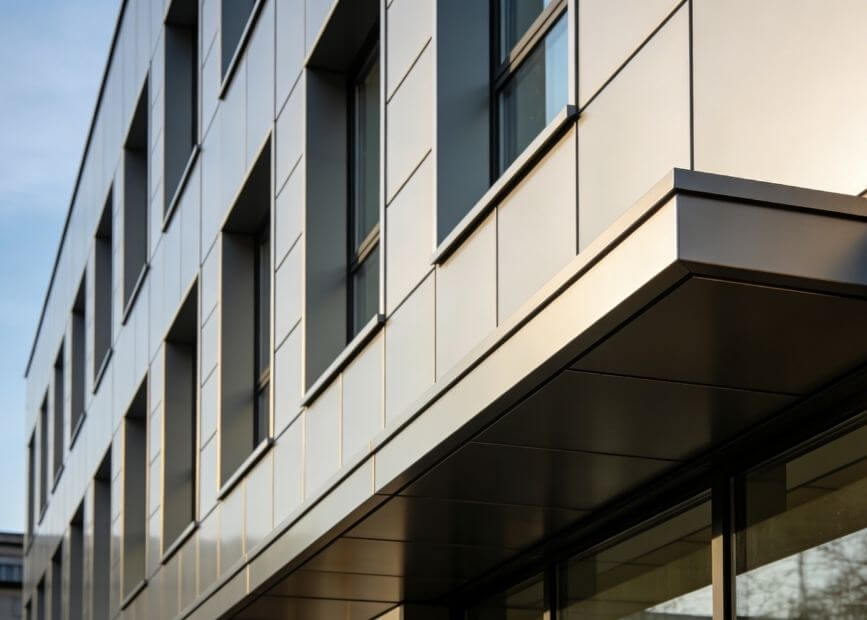
Panels may appear consistent during sampling, yet once installed across large surfaces, subtle differences become visible. On façades exceeding 5,000 square feet, even a small deviation such as ΔE above 2.0 can become noticeable along joints, edges, and shadow lines.
This issue becomes more critical in projects where color defines identity. In retail façades, corporate headquarters, and branded commercial buildings, inconsistent color directly affects how the building is perceived.
The root problem is not a single material defect. It is a system failure across design, materials, fabrication, and installation.
Why Trim Systems Are the Weak Point in Color Matching
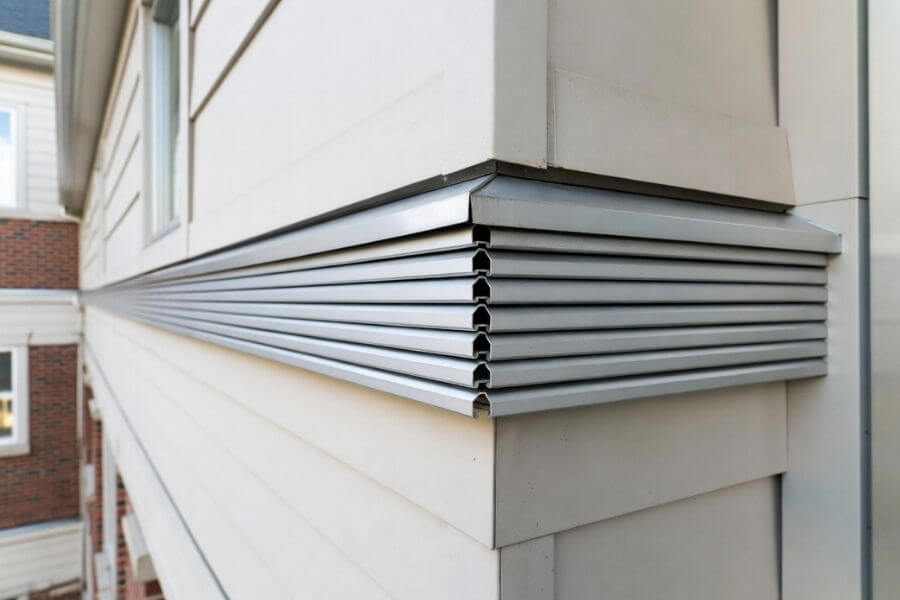
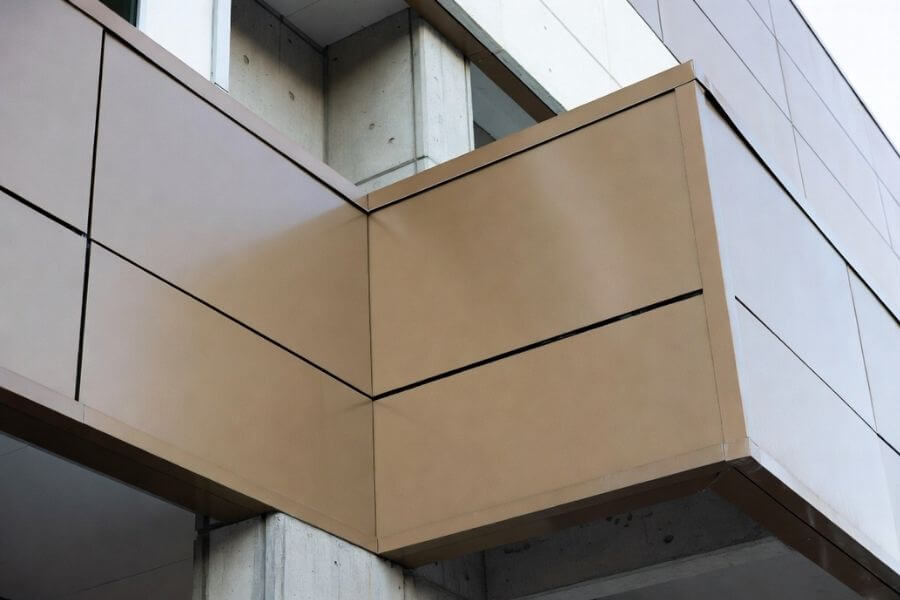
In most façade projects, color mismatch does not originate from the main panels. It originates from trims.
Trim components are installed at window perimeters, canopies, vertical joints, corners, and façade transitions. These areas receive stronger light exposure and create contrast lines that amplify even minor inconsistencies.
Different suppliers often use different coating systems. Even when identical color codes are specified, variations in gloss, substrate, and coating chemistry lead to visible differences. Exposure conditions further accelerate this issue, especially at edges where UV and water runoff are more intense.
In retail storefronts or high-visibility entrances, trim mismatch is often the first issue noticed, even when panels appear consistent.
When panels and trims are sourced separately, coordination becomes difficult. Coating chemistry, gloss level, and production tolerances are rarely identical, which leads to long-term inconsistency.
Unlike fragmented supply models, Aluwell® integrates panels and trims within a unified coating and production system. This approach eliminates one of the most common causes of ACP color consistency issues and ensures alignment from fabrication to long-term exposure.
A Practical Method to Keep ACP Colors Consistent
Achieving reliable aluminum composite panel color matching requires a structured approach that connects design intent with manufacturing and installation control.
Step 1 — Define Color Clearly from the Start
Color decisions should be established early in the design phase rather than during procurement or installation.
A master color reference should be defined using both physical samples and digital standards. Evaluation under controlled lighting such as D65 is critical to avoid subjective variation.
On large curtain walls, color behaves differently than on small samples. A tone that appears uniform on a sample panel may show variation across hundreds of panels due to lighting angles and viewing distance.
In high-rise façades, vertical orientation and changing daylight conditions further amplify perceived inconsistencies.
ALUMAX supports this stage through collaborative design services, helping project teams define measurable color targets and align expectations across stakeholders.
Step 2 — Keep Coating and Materials Aligned
Color consistency depends on coating systems, gloss levels, and substrate conditions, not just pigment.
PVDF coatings are widely used for façade applications due to their superior UV resistance and long-term color stability. Gloss level also plays a critical role, as high-gloss surfaces reflect more light and reveal inconsistencies more easily.
Even when the same color code is used, differences in coating formulation can produce visible variation. This effect, known as metamerism, becomes more pronounced under strong directional light.
In south-facing façades or areas with high solar exposure, mismatched coatings can quickly lead to visible differences.
Aluwell® ACP systems use controlled PVDF coating processes to ensure both panels and trims share identical performance characteristics, reducing variation across the façade.
Step 3 — Use Measurable Color Standards
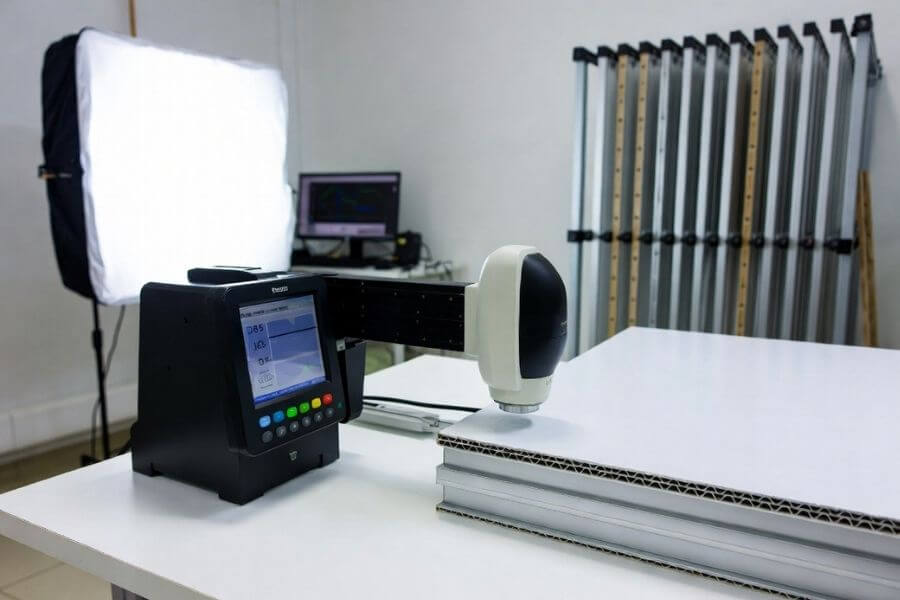
Modern façade projects rely on objective color measurement rather than visual judgment alone.
The industry standard for evaluating color difference is Delta E (ΔE). For most architectural applications, ΔE ≤ 1.5 is considered acceptable. In high-visibility façades or glossy finishes, stricter control closer to ΔE ≤ 1.0 may be required.
On large façade surfaces, even small variations within tolerance can become visually noticeable due to lighting conditions and panel alignment.
To maintain consistency, spectrophotometers are used to measure spectral reflectance under standardized lighting conditions. Instruments must be calibrated regularly to ensure accuracy across production batches.
Digital color standards allow consistent communication across suppliers and manufacturing locations, eliminating variation caused by aging physical samples.
ALUMAX integrates digital color control into its production processes, ensuring that color targets remain stable from sampling through full-scale manufacturing.
Step 4 — Control Installation and On-Site Quality
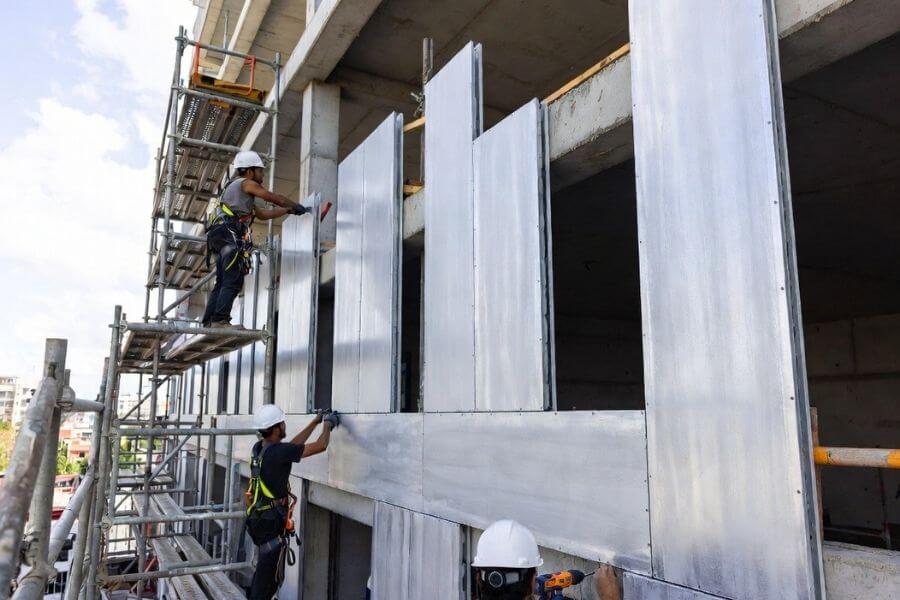
Even with precise materials, installation errors can create visible inconsistency.
Panel alignment, joint spacing, and batch control must be carefully managed. Mixing panels from different production runs can introduce variation, especially in large installations.
Sealant application must also be controlled to avoid staining or discoloration near joints.
In façade systems, perceived color differences are often caused by shadow lines rather than actual color variation. Misalignment of even a few millimeters can create contrast that appears as color mismatch.
A practical on-site method is to compare installed panels with a standard sample under natural diffused light at a viewing distance of three to five meters. If no visible boundary is detected, the installation meets visual requirements.
ALUMAX enhances installation accuracy through modularized services and pre-installation mock-ups, reducing on-site adjustments and improving final consistency.
How to Prevent Color Fading Over Time
Initial ACP facade color matching is only part of the challenge. Long-term consistency depends on how materials perform under environmental exposure.
UV radiation, air pollution, moisture, and temperature fluctuations all affect color stability. In exposed façade areas such as rooflines and projections, surface temperatures can exceed 80°C under direct sunlight, accelerating coating degradation.
High-performance coatings must resist UV exposure, maintain pigment stability, and prevent surface breakdown over time.
Aluwell® ACP systems are designed to ensure that panels and trims age at the same rate, maintaining façade consistency over extended service life.
FAQ
Why do panels and trims with the same color code look different?
This usually happens due to differences in coating systems, gloss levels, or substrates. Even with the same color code, variations in reflectivity can create visible differences. In façade applications, using a unified coating system and verifying with physical samples is essential for consistent visual results.
How can color consistency be verified on-site?
Color consistency is typically checked under natural diffused daylight using a standard reference panel. Observations should be made from a normal viewing distance. For more accurate control, Delta E measurement is used to quantify color differences and confirm compliance with project specifications.
What is the acceptable color tolerance for façade systems?
Most façade projects require a color difference of ΔE ≤ 1.5 for acceptable consistency. In high-visibility applications such as retail façades or glossy finishes, stricter tolerances may be required to prevent visible variation across large panel surfaces.
Why is trim more likely to show color mismatch?
Trim components are placed at edges and transitions where lighting is stronger and viewing angles change. These conditions make small color differences more noticeable. In façade systems, trim mismatch often becomes visible earlier than panel variation, especially after weather exposure.
Can custom colors be matched consistently across large projects?
Yes, but this requires standardized color data, controlled coating systems, and strict batch management. Digital color standards and consistent production processes help maintain uniformity across large façade areas and multiple manufacturing runs.
What makes aluminum composite panels suitable for façade use?
Aluminum composite panels offer a combination of lightweight structure, high rigidity, and strong weather resistance. Their advanced coating systems provide long-term color stability, making them suitable for architectural façades where durability and consistent appearance are critical.
Final Thoughts — Treat Color as a System, Not a Detail
Achieving reliable ACP facade color matching is not a single decision. It is the result of coordinated control across design, materials, manufacturing, and installation.
Trims should be treated as integral components rather than secondary elements. Measurable standards should replace subjective judgment wherever possible. Most importantly, all façade elements should be aligned under a unified coating and supply system.
In projects where color defines architectural identity, especially in commercial and brand-driven environments, fragmented sourcing introduces unnecessary risk.
Choosing an integrated ACP system is not simply a material decision. It is a strategy to ensure long-term consistency, reduce coordination complexity, and protect the integrity of the architectural design.