

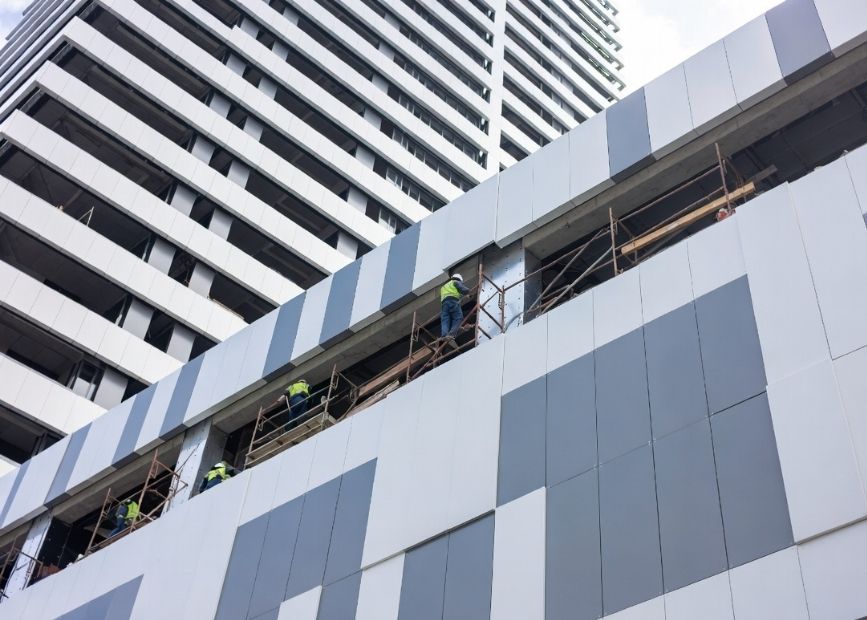
14 Apr
How to Install Aluminum Composite Panels – Systems, Methods, and Common Mistakes
Why ACP Installation Systems Matter for Façade Performance
Aluminum composite panels are widely used in modern façades due to their lightweight structure, flatness, and design flexibility. However, long-term façade performance depends less on the panel itself and more on the ACP installation system behind it.
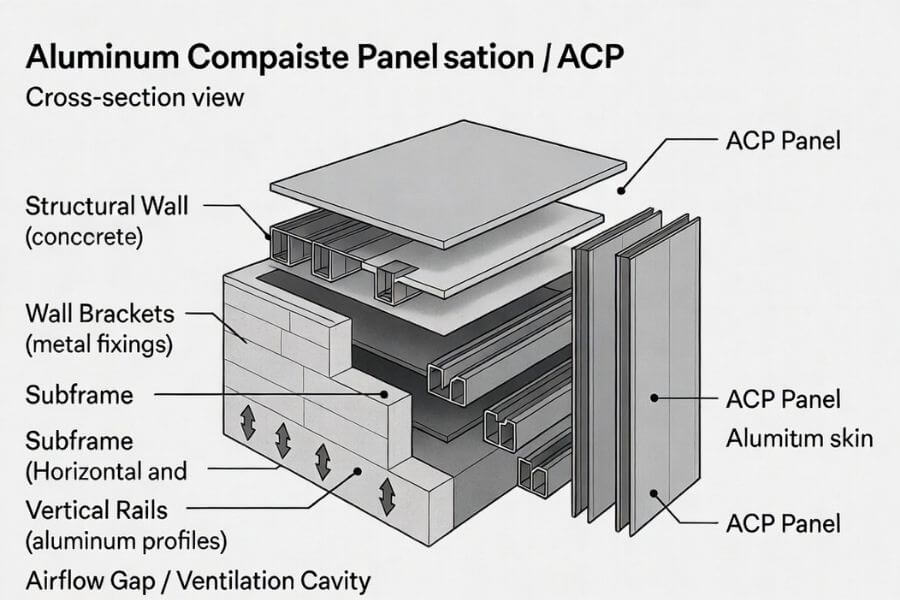
In practice, most façade issues are not caused by material defects. They are typically the result of incorrect subframe alignment, missing thermal expansion gaps, inadequate wind load calculations, or improper sealing. These are system failures rather than material failures.
A reliable ACP façade is achieved through coordinated decisions across design, engineering, fabrication, and installation. Treating installation as a system rather than a sequence of steps is essential for structural stability, visual consistency, and long-term durability.
What You Need to Know About ACP Materials Before Installation
An aluminum composite panel consists of two aluminum sheets bonded to a core material such as LDPE, FR mineral-filled core, or aluminum honeycomb. These materials provide lightweight strength, surface flatness, and coating durability.
Because aluminum expands and contracts with temperature changes, installation systems must allow controlled movement. Without proper allowances, panels may warp, buckle, or develop visible joint inconsistencies over time.
In real façade applications, performance depends less on panel thickness and more on how movement is managed through the installation system.
Key Factors to Check Before ACP Installation
Structural and Load Requirements for ACP Systems
Before installation begins, the building must be evaluated as a structural base. Important considerations include dead load from panels and subframe, wind load in exposed façades, and thermal movement.
In buildings above 20 to 30 meters, wind pressure often determines panel size and fixing spacing. Larger panels without proper reinforcement may result in vibration or long-term fatigue.
How to Choose the Right ACP Panels for Your System
Panel selection must align with the installation system and project conditions. Key factors include panel thickness, coating system such as PVDF for long-term durability, fire rating requirements, and surface finish.
In façade projects with strict visual requirements, color consistency is influenced by both manufacturing control and installation accuracy. Mismatch between panel properties and installation methods is a common cause of project issues.
Manufacturers like Aluwell® often support projects at the design stage to ensure panel specifications align with installation systems, reducing risks during construction.
ACP Installation System Types and When to Use Them
Different ACP installation systems are selected based on project scale and performance requirements.
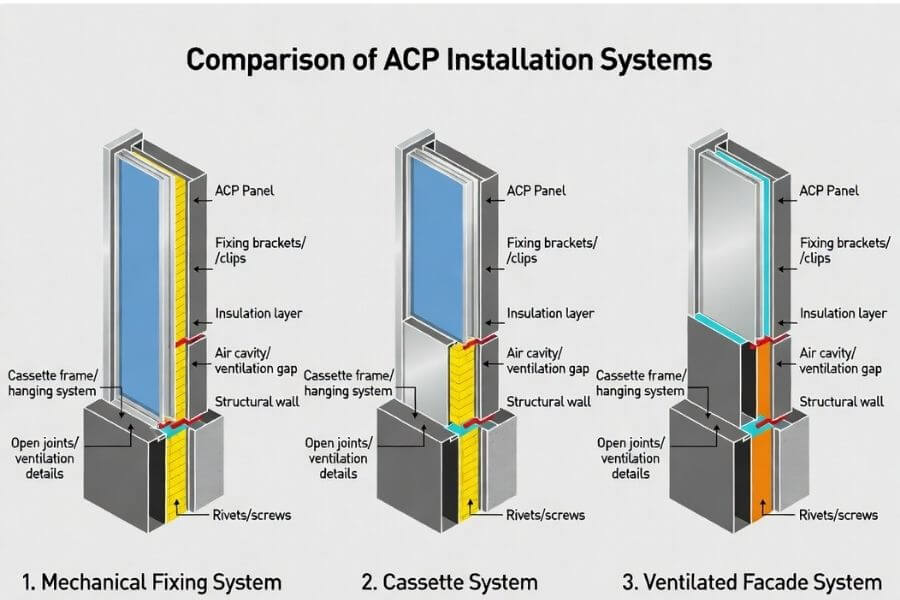
Mechanical fixing systems use rivets or screws and are suitable for large façades and high-wind environments. They allow controlled movement through oversized fixing holes.
Cassette systems involve folding panels into trays and hooking them onto the subframe. This method provides a clean appearance with consistent joint lines and is commonly used in high-end architectural projects.
Ventilated façade systems introduce an air cavity behind the panels. This improves moisture control, reduces condensation, and enhances long-term durability.
The choice of installation system affects not only structural performance but also installation efficiency and façade appearance.
Step-by-Step ACP Installation Process
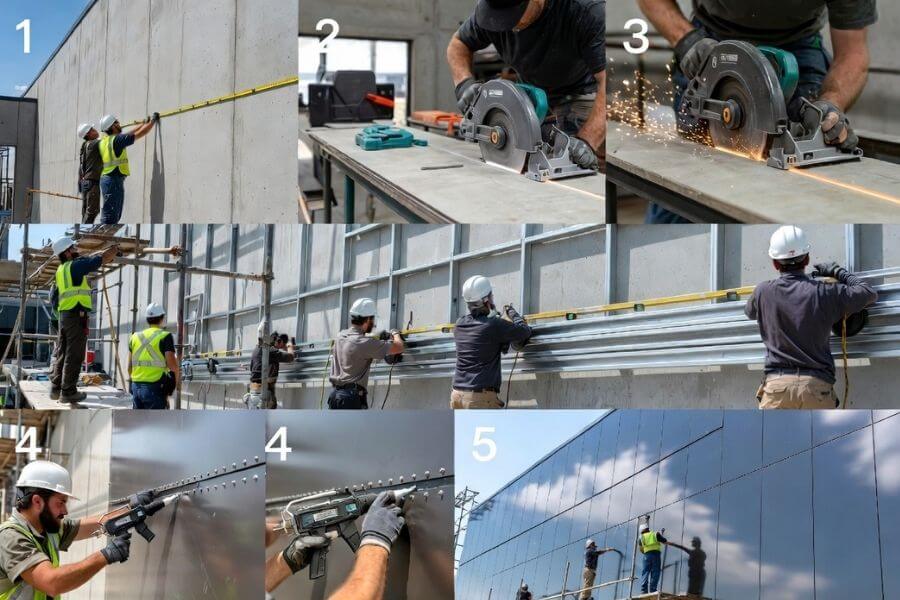
Surface Preparation and Marking
The installation surface must be clean, dry, and aligned with design drawings. Accurate marking ensures correct positioning of brackets and consistent façade geometry.
Installing the Subframe System
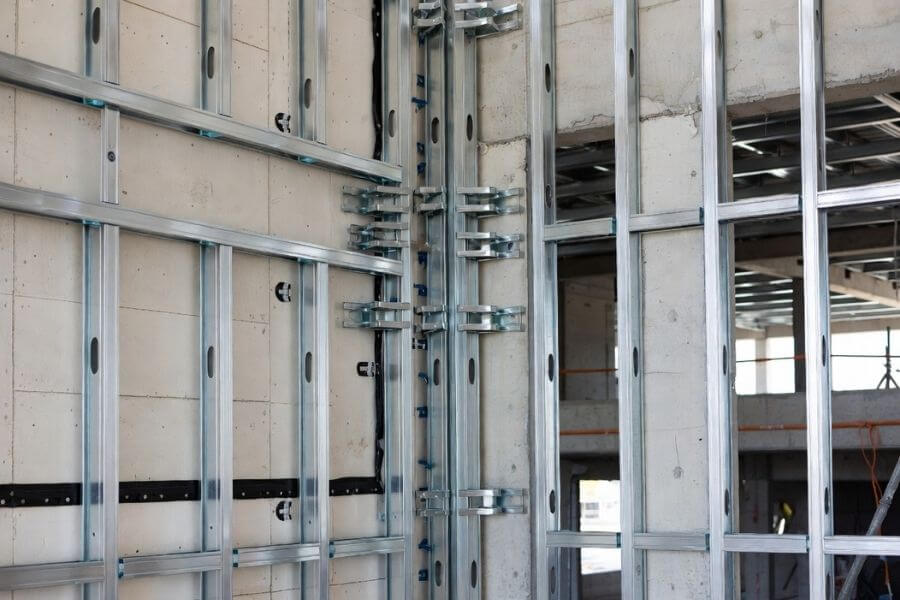
The subframe is the structural backbone of the façade system. Brackets are fixed using anchor fasteners, followed by installation of vertical and horizontal profiles. Continuous alignment checks are necessary to ensure accuracy.
Cutting and Fabricating ACP Panels
Panels are cut and routed before installation. Cutting is performed with protective film intact to prevent damage. Edges are routed to allow folding, and stiffeners may be added to improve rigidity.
Fixing ACP Panels to the Structure
Panels are fixed using the selected installation system. Mechanical fixing requires careful tightening, while cassette systems rely on precise engagement. Expansion gaps must always be maintained.
Over-tightening fasteners can restrict movement and lead to deformation over time.
Sealing Joints and Waterproofing
Joint sealing is essential for both durability and appearance. Backer rods are used to control sealant depth, and neutral weather-resistant silicone sealants are applied to prevent water infiltration while allowing movement.
Final Inspection and Finishing
Before completion, the façade must be checked for alignment, joint consistency, and fixing integrity. Protective films should only be removed after inspection to avoid surface damage.
Why ACP Colors Look Different After Installation
Color inconsistency is a common concern in façade projects. Even when panels share the same color code, they may appear different after installation.
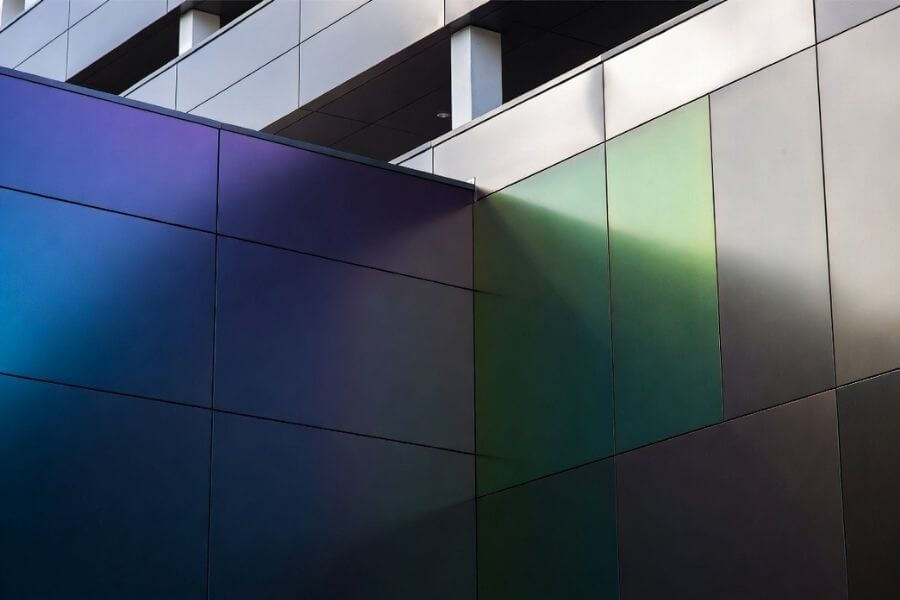
This is influenced by panel orientation, surface flatness, light reflection, and joint alignment. Small differences in installation angle can change how light reflects on the surface, creating visible variation.
To maintain color consistency, it is important to control installation accuracy, ensure uniform panel orientation, and maintain consistent joint spacing. Coordination between manufacturing and installation is critical for achieving a uniform façade appearance.
Aluwell® supports this process by combining controlled production with design-stage collaboration, helping projects maintain both structural and visual consistency.
Common ACP Installation Mistakes to Avoid
Several common mistakes can reduce façade performance. These include missing expansion gaps, over-tightening fasteners, poor subframe alignment, using incompatible sealants, and ignoring wind load requirements.
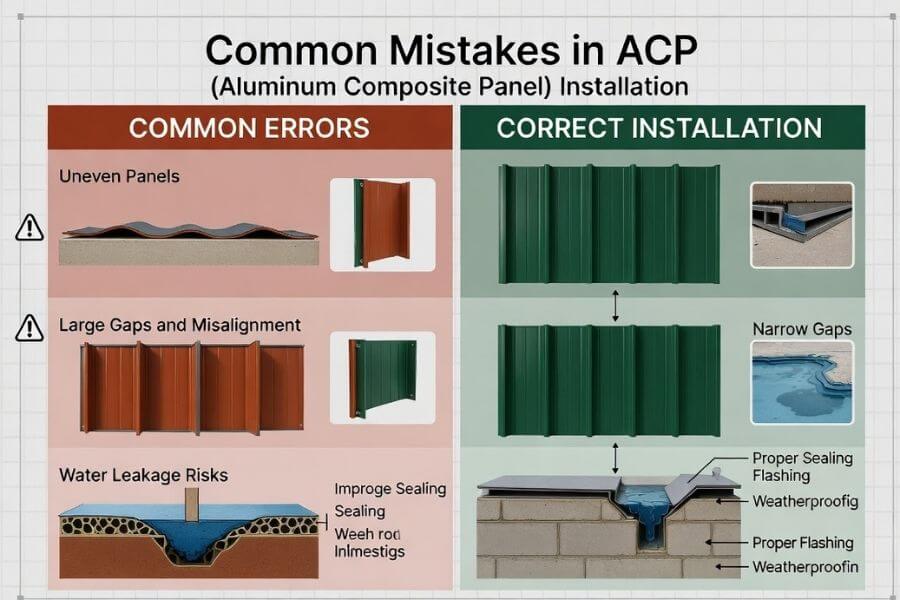
Such errors often lead to panel deformation, water leakage, and reduced service life. Avoiding these issues significantly improves long-term façade reliability.
ACP Maintenance Tips After Installation
Proper maintenance helps extend façade lifespan. Panels should be cleaned regularly using mild detergents and soft cloths. Sealant joints should be inspected periodically, and fixings in high-wind areas should be checked.
With correct installation and maintenance, ACP façades can perform reliably for more than 20 years.
How Integrated Design and Manufacturing Improve Installation
Many installation challenges arise from gaps between design intent and construction execution. These gaps often involve mismatched specifications, unclear detailing, or lack of coordination between project stakeholders.
ALUMAX addresses these challenges by combining design collaboration, customized fabrication, and pre-installation validation. This integrated approach helps improve installation efficiency and ensures more predictable façade performance.
FAQ
Can aluminum composite panels be installed without professional support?
Small interior applications such as partitions or signage can be handled by experienced fabricators. However, façade installations require professional teams due to structural calculations, wind load considerations, and safety requirements. Improper installation may result in panel deformation, water infiltration, or long-term system performance issues.
What is the best installation system for ACP façades?
There is no single best system for all projects. Mechanical fixing and cassette systems are widely used for external façades due to their structural reliability and ability to accommodate thermal movement. Ventilated systems are preferred in demanding environments where moisture control and energy performance are critical.
Why are expansion gaps necessary in ACP installation?
Aluminum expands and contracts with temperature changes. Without adequate expansion gaps, stress can build up within the panels, leading to warping, buckling, or joint failure. Properly designed gaps allow controlled movement while maintaining façade alignment and long-term structural stability.
How does installation affect color consistency on façades?
Color perception is influenced by panel alignment, surface flatness, and light reflection. Even when panels share the same coating, variations in installation angle or uneven joints can create visible differences. Accurate fabrication and precise installation are essential for maintaining uniform appearance across large façade surfaces.
What type of sealant should be used for ACP joints?
Neutral, non-bleeding weather-resistant silicone sealants are recommended for ACP systems. These sealants provide flexibility to accommodate thermal movement while preventing water infiltration. Using incompatible or low-quality sealants may lead to staining, adhesion failure, and reduced durability.
How long does an ACP façade typically last?
A properly installed and maintained ACP façade can last 20 to 30 years or longer. Performance depends on coating quality, environmental exposure, installation accuracy, and regular maintenance. Periodic inspection of joints and fixings helps extend service life and maintain visual appearance.
Can ACP panels be used in coastal or high-wind environments?
Yes, ACP panels can perform effectively in coastal or high-wind conditions when the system is properly engineered. This includes corrosion-resistant subframes, suitable fixing methods, and accurate wind load calculations to ensure long-term structural stability.
What role does the subframe play in ACP installation systems?
The subframe provides structural support for the entire façade system. It transfers loads from the panels to the building while maintaining alignment and spacing. Poor subframe design or installation can lead to misalignment, vibration, and reduced overall façade performance.
Final Thoughts on ACP Installation Systems
A successful ACP façade depends on the alignment between installation systems, engineering design, and material performance. When these elements work together, façades achieve long-term durability, stable color performance, and consistent architectural appearance.
Understanding this relationship helps architects, contractors, and developers make better decisions and deliver more reliable building façades.