

27 May
From Materials to Machinery - What Investors Should Understand Before Building an ACP Production Line
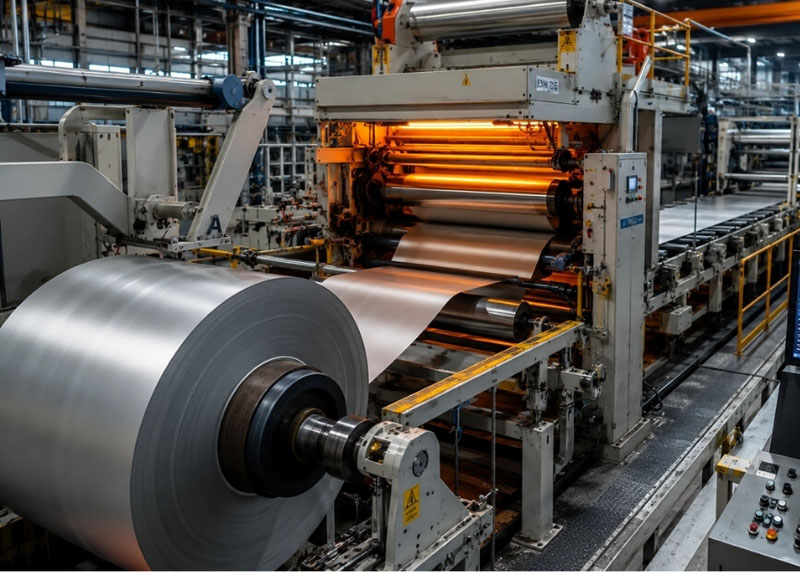
Many ACP production line investments look relatively simple during the planning phase. Equipment suppliers present attractive production speeds, panel output capacity, and automated manufacturing systems. On paper, the process appears straightforward — combine aluminum coils with a thermoplastic core, laminate the layers, and produce finished architectural panels.
The reality inside an operating ACP factory is far more complex. Stable ACP manufacturing depends on continuous process coordination between raw materials, heating systems, adhesive behavior, lamination pressure, cooling stability, and downstream fabrication control. In many factories, the most expensive production problems do not originate from obvious equipment failure. They develop gradually through small process inconsistencies that accumulate over months of operation.
As façade projects demand stricter fire compliance, tighter flatness tolerances, and larger panel dimensions, ACP manufacturing has evolved from a basic sheet production business into a process-driven engineering system. Investors evaluating an ACP manufacturing plant today must understand far more than equipment pricing or nominal line speed.
ACP Production Lines Function as Continuous Manufacturing Systems
One of the most common mistakes made by first-time ACP investors is treating the production line as a collection of independent machines rather than an integrated manufacturing process.
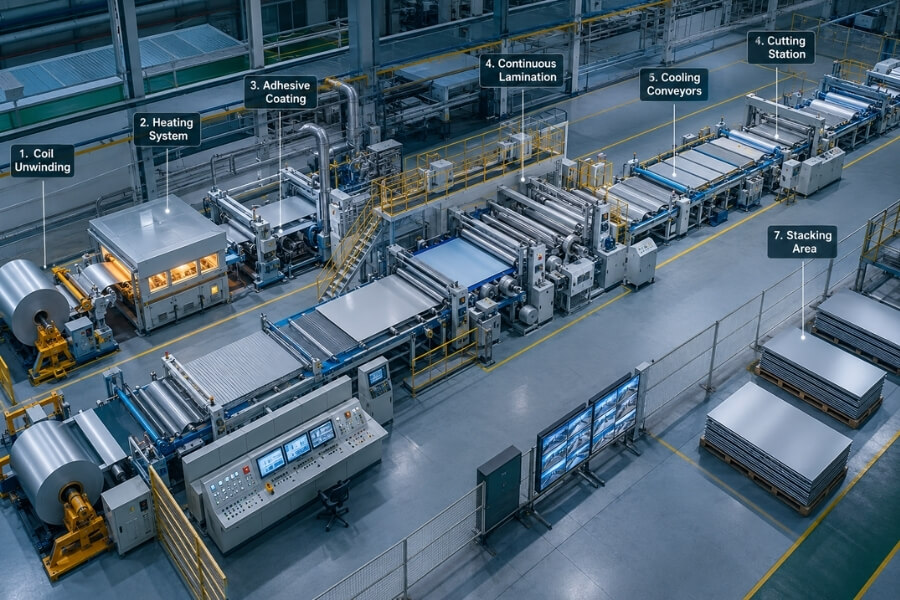
A modern ACP production line typically includes:
Coil unwinding systems
Surface pretreatment units
Heating sections
Adhesive application systems
Continuous laminators
Pressure rollers
Cooling conveyors
Edge trimming systems
Protective film laminators
Cutting and stacking systems
Under real factory conditions, these sections must remain synchronized throughout continuous operation. A minor imbalance in one stage often affects downstream panel stability several hours later.
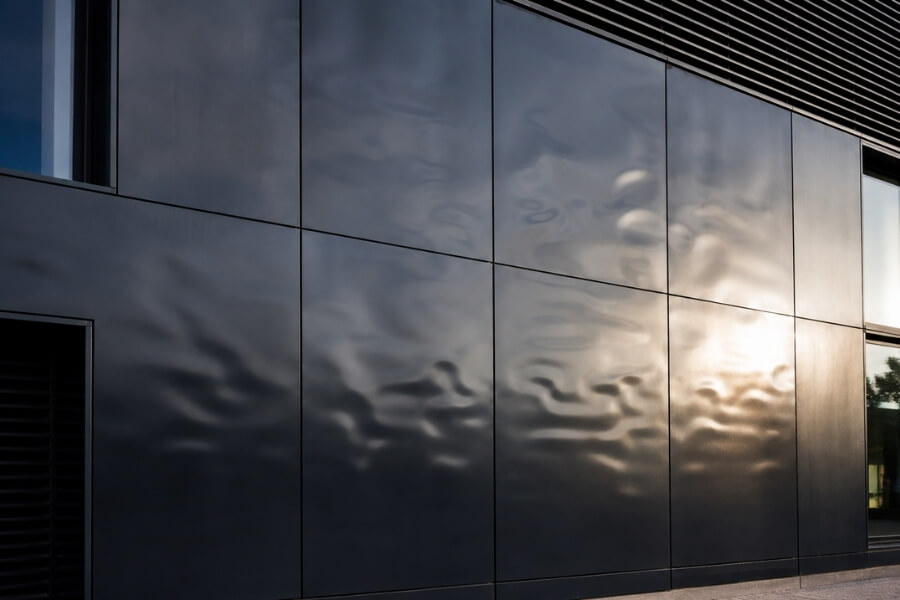
For example, inconsistent heating temperatures may not immediately cause visible defects during production. The panels can initially appear flat and visually acceptable while still carrying internal thermal stress from unstable lamination. In some factories, surface waviness only becomes noticeable after protective film removal under afternoon sunlight inspection near the loading area.
This type of delayed quality issue is common in ACP manufacturing because many defects emerge only after thermal cycling, transportation stress, or façade installation exposure.
Raw Material Stability Often Determines Long-Term Panel Quality
Many production lines use advanced automation systems but still struggle with panel consistency because raw material stability remains poorly controlled.
Aluminum Coil Quality Directly Affects Visual Flatness
Architectural ACP panels rely heavily on coil consistency for long-term façade appearance.
Manufacturers typically monitor:
Coil thickness tolerance
Surface cleanliness
Coating adhesion
Gloss consistency
Residual coil stress
Color variation between batches
Large-format façade panels are especially sensitive to coil instability because reflected daylight exaggerates even small surface irregularities.
Dark-colored ACP systems usually reveal flatness problems more easily than light finishes. On commercial curtain wall projects using reflective PVDF-coated panels, slight waviness may become highly visible during certain daylight angles despite technically passing standard dimensional inspections.
FR and A2 Core Materials Increase Manufacturing Complexity
Traditional PE-core ACP systems remain easier to process because polyethylene extrusion behavior is relatively stable.
FR and A2 systems introduce significantly higher process sensitivity due to mineral-filled core formulations. Variations in mineral dispersion, density, and moisture content can influence bonding stability throughout the line.
Inconsistent FR core production may later contribute to:
Delamination
Uneven panel stiffness
Edge cracking
Surface distortion
Increased rejection rates
Bond instability during thermal movement
These risks become more severe on oversized façade panels or routed cassette systems where internal stress concentrates around folded edges and fixing locations.
Some ACP factories discover that certain FR core formulations run stably during winter production but become increasingly difficult to laminate during humid summer conditions because moisture sensitivity alters bonding behavior.
Adhesive Systems Require Precise Thermal Control
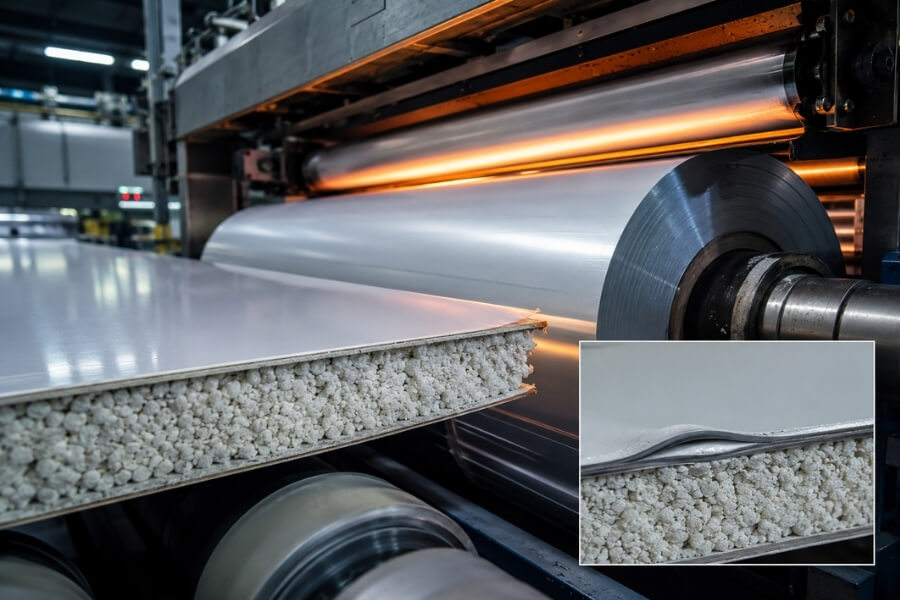
Adhesive performance remains one of the least understood areas for inexperienced ACP investors.
Stable bonding depends on maintaining narrow curing windows involving:
Heating temperature
Production speed
Adhesive viscosity
Roller pressure
Ambient humidity
Cooling balance
Insufficient curing may not immediately produce visible defects. Panels can leave the factory appearing fully bonded while microscopic bonding weakness remains trapped inside the structure. Months later, repeated thermal expansion and moisture exposure may gradually initiate localized delamination.
In coastal environments, these failures often first appear near panel edges or fabrication cuts where moisture intrusion becomes easier.
Why Lamination Stability Controls ACP Panel Performance
The lamination section functions as the core stability point of the entire ACP production line.
Stable lamination requires coordinated control of multiple variables simultaneously:
Heating zone consistency
Roller pressure uniformity
Coil tension balance
Lamination speed
Adhesive distribution
Cooling stability
Factories focused only on increasing line speed often create hidden quality instability. Higher throughput may temporarily improve production volume while reducing adhesive curing consistency and increasing internal panel stress.
This trade-off becomes particularly important for façade-grade ACP systems used in:
High-rise commercial buildings
Airport terminals
Transportation hubs
Large retail developments
Coastal architectural projects
Large ACP panels installed on ventilated rainscreen systems experience repeated expansion and contraction throughout daily temperature cycles. If internal stress from unstable lamination already exists before installation, thermal movement may later amplify visible oil-canning or surface distortion.
Some manufacturers reduce visible waviness by lowering panel width or limiting reflective finishes for certain project applications.
Fire-Rated ACP Manufacturing Requires Different Process Logic
The growing demand for fire-rated ACP systems has significantly increased manufacturing complexity across the industry.
PE-core ACP production primarily focuses on lightweight efficiency and stable extrusion behavior. FR and A2 systems require tighter process control because mineral-filled cores respond differently during heating and lamination.
Manufacturers producing fire-rated ACP panels must carefully control:
Mineral dispersion consistency
Core density stability
Extrusion temperature
Lamination pressure
Thermal bonding compatibility
Cooling rate uniformity
A2 systems generally require even tighter manufacturing control because higher mineral loading reduces material flexibility and increases brittleness during fabrication.
Fire-rated ACP systems may be evaluated against standards such as:
NFPA 285
ASTM E84
EN 13501
BS 8414
However, passing a fire test does not automatically guarantee façade system safety under every project condition. Fire performance depends on the complete wall assembly, including:
Insulation systems
Air cavities
Support framing
Joint detailing
Cavity barriers
Installation quality
This is one reason why many façade consultants now evaluate ACP manufacturers not only on panel certifications, but also on system-level engineering understanding.
Common Production Problems in ACP Factories
Most recurring ACP defects originate from process instability rather than isolated machine failure.
Delamination
Delamination remains one of the most serious ACP manufacturing defects because it directly affects long-term façade durability.
Typical causes include:
Incomplete adhesive curing
Contaminated coil surfaces
Uneven heating
Insufficient roller pressure
Moisture intrusion during lamination
Factories sometimes notice rising delamination complaints several months after increasing line speed because curing stability gradually declined without immediate visual warning signs.
Oil-Canning and Surface Waviness
Oil-canning is especially common on reflective architectural façades using large-format ACP panels.
Contributing factors may include:
Residual coil stress
Uneven cooling
Thickness inconsistency
Improper tension control
Excessively rigid installation systems
Even when ACP panels technically remain within dimensional tolerance, visual flatness may still become unacceptable under direct sunlight reflection.
Color Inconsistency Between Production Batches
Color variation creates major problems on commercial façade projects requiring visual continuity across thousands of square feet of installed panels.
Potential causes include:
Coating batch inconsistency
Uneven curing temperature
Variable coating thickness
Different coil suppliers
Production interruptions between batches
Low Delta E variation becomes increasingly important for premium architectural façade systems where adjacent panels are viewed across large reflective surfaces.
Edge Deformation During Fabrication
Edge instability often appears during routing, folding, or cassette fabrication.
This issue may result from:
Improper cooling balance
Excessive residual thermal stress
Weak edge bonding
Inconsistent trimming tension
In some factories, operators notice edge movement becoming more severe late in long production runs as roller temperatures gradually drift away from calibrated settings.
Nominal Line Capacity Rarely Reflects Real Factory Throughput
ACP production equipment is often marketed using theoretical maximum output capacity. Actual factory productivity is usually much lower once maintenance, material handling, and quality control interruptions are considered.
Real manufacturing capacity depends on:
Changeover time
Coil replacement frequency
Maintenance stoppages
Startup stability
Scrap rates
Rework percentages
Operator training levels
Production scheduling efficiency
Some factories technically maintain high production output while quietly accepting increased rejection rates or downgraded panels for lower-value markets.
Over time, these hidden inefficiencies significantly affect profitability.
A production line operating at moderate speed with stable quality control often achieves better long-term operating performance than a high-speed line struggling with inconsistent bonding or excessive scrap generation.
Preventive Maintenance Directly Affects ACP Consistency
ACP production equipment operates under continuous thermal, mechanical, and pressure-related stress.
Preventive maintenance programs help stabilize:
Roller alignment
Heating consistency
Conveyor movement
Cooling balance
Adhesive cleanliness
Trimming precision
Many quality problems initially appear subtle. Slight roller wear may first produce barely visible waviness near panel edges before gradually affecting full panel flatness across larger widths.
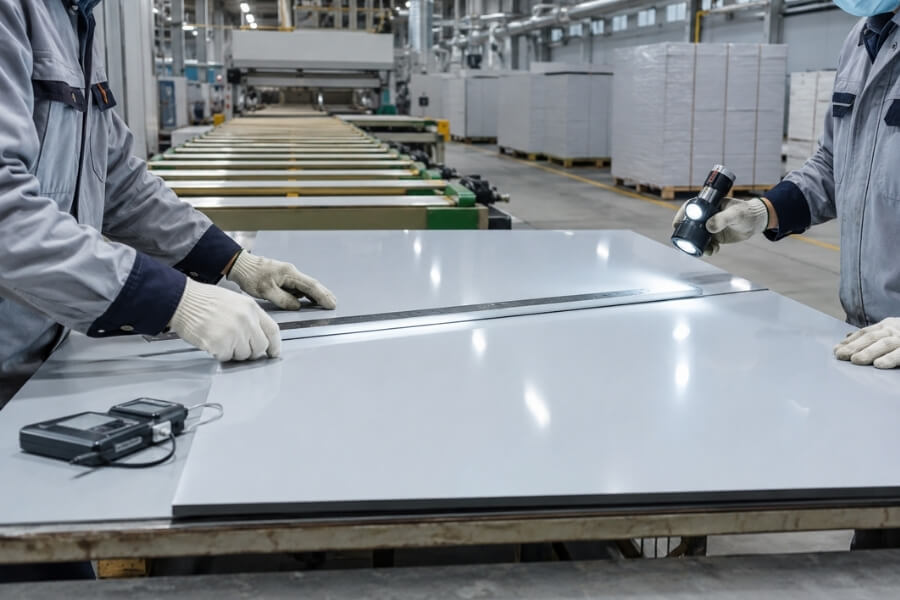
Factories delaying maintenance to preserve short-term production output often experience rising rejection rates later as small calibration problems accumulate throughout the line.
Well-maintained ACP lines generally achieve:
More stable panel flatness
Lower scrap rates
Better bonding consistency
Reduced downtime
Improved production repeatability
These factors become increasingly important for manufacturers supplying high-end architectural façade systems rather than commodity signage panels.
ACP Manufacturing Efficiency Depends on Process Coordination
Successful ACP manufacturing depends less on maximum machine speed and more on long-term process coordination.
Stable factories usually focus on balancing:
Material consistency
Production throughput
Energy consumption
Quality repeatability
Fire compliance
Maintenance scheduling
Waste reduction
Operator training
Lean manufacturing principles can improve ACP production efficiency, but excessive cost-cutting often creates long-term instability if material quality or process monitoring standards decline.
Factories aggressively reducing adhesive usage or lowering process temperatures to reduce operating costs may later experience significantly higher delamination risk under real façade service conditions.
What Investors Should Evaluate Before Selecting ACP Equipment Suppliers
ACP machinery evaluation should extend far beyond purchase price comparisons.
Investors should carefully evaluate whether equipment suppliers possess real experience with:
Continuous ACP lamination systems
FR and A2 panel production
Coating line integration
Thermal bonding stability
Process commissioning
Automation calibration
Long-term maintenance support
Additional evaluation factors may include:
Spare parts availability
Technical troubleshooting support
Operator training systems
Software integration
Energy efficiency
Future line expansion capability
Factories supplying architectural ACP systems for commercial façade projects generally require tighter production tolerances and better process repeatability than plants focused mainly on signage-grade panels.
Equipment selection should therefore align with the intended market position of the factory rather than focusing only on initial capital investment.
ACP Manufacturing Is Becoming Increasingly Engineering-Driven
The ACP industry is gradually shifting away from low-complexity commodity production toward more engineering-oriented manufacturing systems.
Modern façade projects increasingly demand:
Better fire performance
Improved weather resistance
Larger panel dimensions
Tighter flatness tolerances
More consistent coating appearance
Longer façade service life
As a result, ACP manufacturers must improve not only production capacity, but also process stability, material coordination, thermal bonding control, and manufacturing repeatability.
Manufacturers capable of maintaining stable lamination, controlled tolerances, reliable fire-rated production, and consistent façade-grade panel quality are becoming increasingly important in commercial architectural cladding markets. Companies such as Aluwell® continue focusing on process coordination, coating consistency, and long-term façade performance as ACP manufacturing standards move toward more engineering-driven production systems.
FAQ
What is the most important part of an ACP production line?
The lamination section is usually the most critical part of the production line because bonding stability directly affects panel flatness, delamination resistance, and long-term façade durability. Problems in heating, roller pressure, or cooling balance can create hidden quality defects that may only appear after installation.
Why are FR and A2 ACP panels more difficult to manufacture?
FR and A2 ACP panels contain mineral-filled cores that behave differently during extrusion and lamination. These materials require tighter control of temperature, pressure, moisture, and bonding stability. Manufacturing inconsistency can lead to cracking, weak bonding, or surface deformation during fabrication and installation.
What causes delamination in ACP panels?
Delamination is commonly caused by incomplete adhesive curing, contaminated aluminum coil surfaces, unstable heating temperatures, or moisture intrusion during production. In some cases, excessive line speed can reduce bonding consistency even when panels initially appear visually acceptable after manufacturing.
Why does oil-canning appear on some ACP façades?
Oil-canning is often linked to residual internal stress, uneven cooling, coil tension imbalance, or overly rigid installation systems. Reflective coatings and large-format panels usually make surface waviness more visible under direct sunlight or changing daylight reflection conditions.
Is higher production speed always better in ACP manufacturing?
Not necessarily. Increasing line speed may improve short-term output but can also reduce adhesive curing consistency and increase internal thermal stress. Many stable ACP factories prioritize production repeatability and low rejection rates rather than pursuing maximum theoretical throughput.
What should investors evaluate before purchasing ACP production equipment?
Investors should evaluate more than equipment price or advertised capacity. Important factors include FR/A2 production capability, process integration experience, maintenance support, automation stability, spare part availability, operator training, and long-term production consistency for façade-grade ACP systems.