

24 Mar
Are Aluminum Composite Panels Fire Safe? A Practical Guide to ACP Fire Ratings
Why ACP Fire Safety Is a Critical Issue Today
Is aluminum composite panel fireproof
This is one of the most common questions in façade design today.
Recent façade fire incidents have shown that exterior wall systems can significantly influence how fire spreads across a building. As a result, ACP fire safety has become a central concern for architects, developers, and contractors.
Aluminum composite panels are widely used because they are lightweight, easy to fabricate, and visually adaptable. However, their fire performance is not defined by appearance.
It depends on what is inside the panel and how the entire wall system is built.
This distinction is where most risks occur.
What Makes an Aluminum Composite Panel Fire Safe or Unsafe
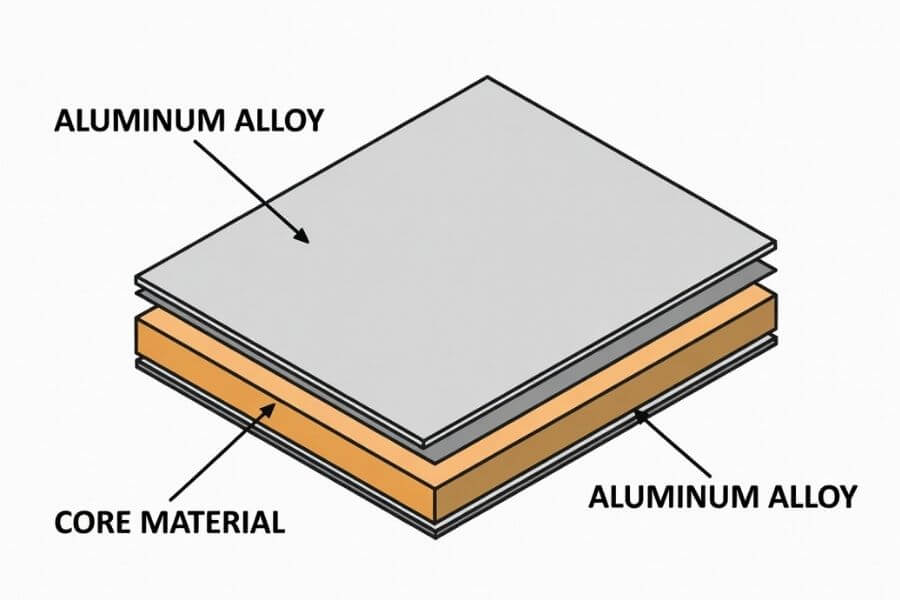
The fire behavior of an aluminum composite panel is primarily determined by its core material.
Common core types include
PE core panels
These use polyethylene, which is combustible and can contribute to rapid flame spread.FR core panels
These contain mineral fillers that slow combustion and reduce heat release.A2 core panels
These are classified as non-combustible or limited combustibility materials and are typically required for high-rise buildings.Aluminum honeycomb panels or solid aluminum panels
These contain no combustible core and offer the highest level of fire resistance.
This is the critical point
ACP panels are not inherently fire-safe or unsafe. The core defines the baseline risk.
Why Fire Safety Depends on the Entire Wall System, Not Just the Panel
Many projects fail to recognize this
A fire-rated panel alone does not guarantee a fire-safe façade.
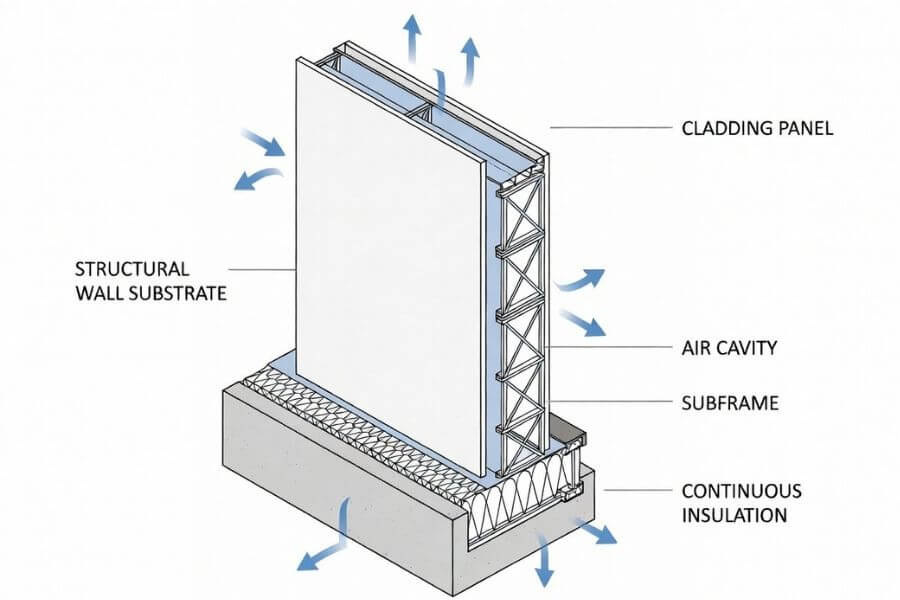
Fire performance is evaluated at the system level, not the material level.
A typical façade assembly includes
Structural substrate
Air and water barrier
Thermal insulation
Subframe and fixing system
Ventilated cavity
Exterior cladding
Even small design differences can change fire behavior
A deeper cavity can create a chimney effect
Missing fire barriers can allow vertical flame spread
Improper joint sealing can allow hidden fire movement between floors
This is why building codes require full wall assembly testing rather than single material approval.
Fire Safety Standards Explained – NFPA 285, EN 13501 and More
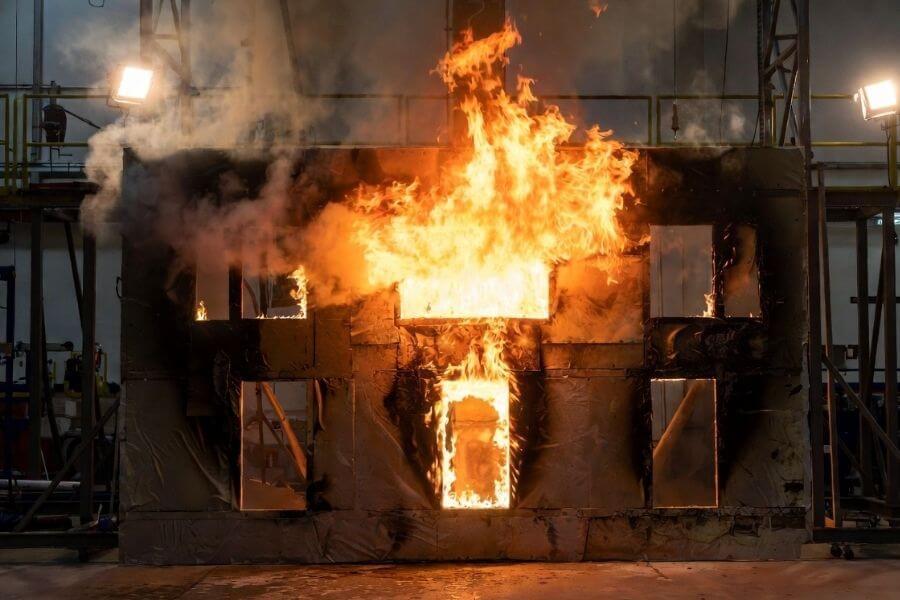
What is NFPA 285 and why does it matter
It is not just a material test.
NFPA 285 is a full-scale fire test that evaluates how flames spread across a multi-story wall system. It simulates a real fire scenario where flames exit a window and travel upward along the façade.
Other key standards include
ULC S134 – Canada
BS 8414 – United Kingdom
EN 13501-1 – Europe
GB 50016 – China
These standards share a common principle
They test the complete façade system under worst-case conditions
A system that passes these tests demonstrates controlled flame spread, limited heat transfer, and stable structural performance.
PE vs FR vs A2 Panels – A Practical Comparison
Choosing the right panel starts with understanding the differences clearly.
| Panel Type | Core Material | Fire Rating | Risk Level | Typical Application |
|---|---|---|---|---|
| PE Core ACP | Polyethylene | B2 / B3 | High | Low-rise, signage |
| FR Core ACP | Mineral-filled core | B1 | Medium | Commercial buildings |
| A2 ACP | High mineral core | A2 | Low | High-rise façades |
| Aluminum Honeycomb | Aluminum core | Non-combustible | Very Low | High-performance façades |
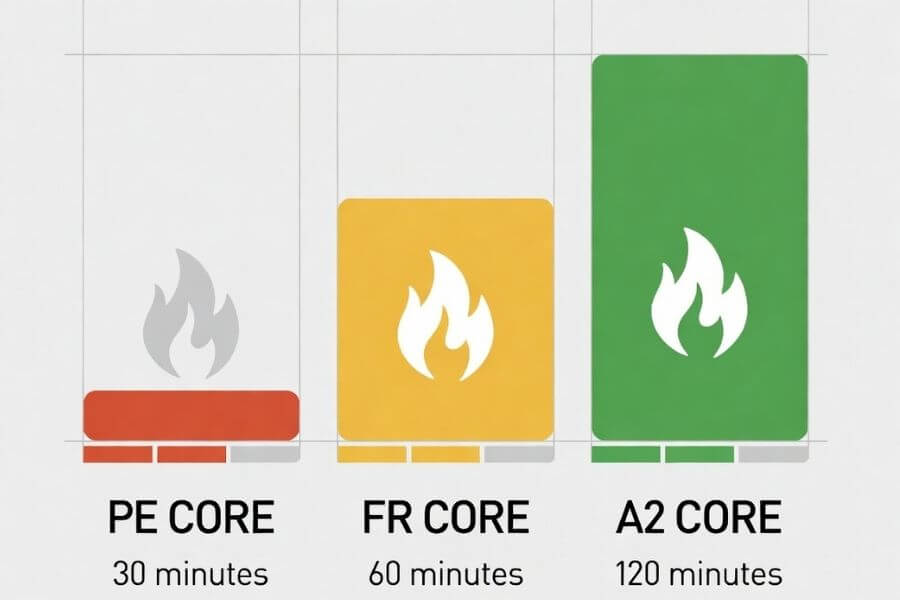
This comparison highlights a simple rule
The higher the building, the higher the required fire performance.
How Design and Installation Affect ACP Fire Safety in Real Projects
Fire safety is not only about what material you select
It is about how the façade is designed and built.
In real projects, the following factors are critical
Cavity fire barriers
Installed at each floor level to prevent vertical fire spread inside the façade systemCavity depth control
Excessive cavity space can accelerate fire through the chimney effectJoint sealing and compartmentation
Proper sealing limits fire movement between floors and façade zonesSubstructure behavior under heat
Metal framing systems must maintain stability under high temperaturesInstallation accuracy
Even a compliant system can fail if installation deviates from tested configurations
This is where many façade failures occur
Not in material selection, but in execution.
Fire Safety in Practice – A Real Project Perspective
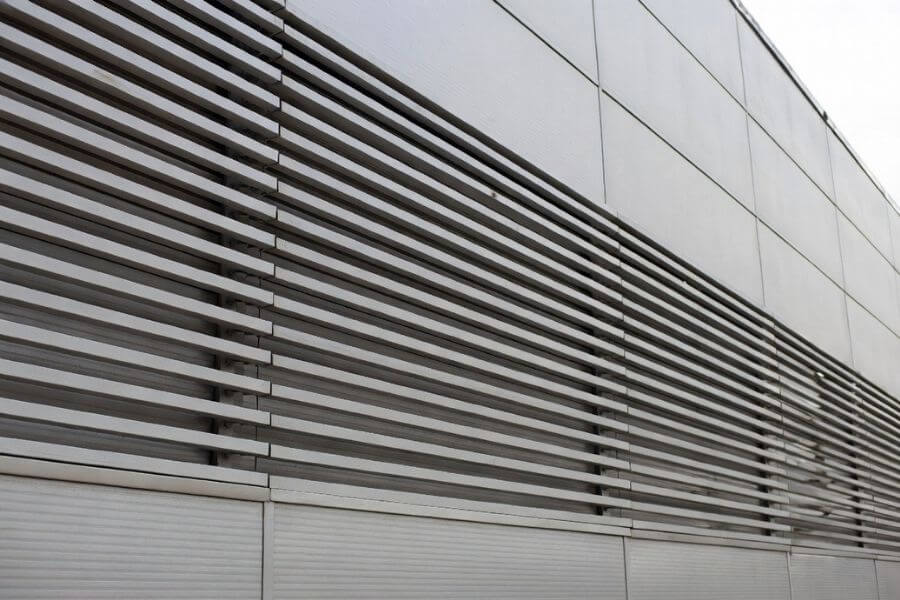
In a recent commercial façade project, more than 8,000 square feet of A2-rated aluminum composite panels were installed as part of a ventilated rainscreen system.
The project included
A controlled cavity depth with vertical fire barriers at each slab edge
A tested subframe system aligned with NFPA 285 requirements
Factory-prefabricated panel modules to ensure installation consistency
The result was a façade that met fire safety requirements while maintaining clean visual lines and efficient installation.
This illustrates an important principle
Fire safety is achieved through coordinated system design, not isolated product selection.
How to Choose the Right ACP for Different Building Types
Different building types require different fire strategies
Residential buildings
A2-rated panels provide a safe and flexible solutionHigh-rise buildings
Require systems tested to NFPA 285 or equivalent standardsCommercial buildings
Often use FR or A2 panels depending on code requirementsInterior and furniture applications
Benefit from fire-resistant composite panels with added durability and hygiene advantages
Material selection should always align with building height, occupancy, and local regulations.
How Aluwell® Supports Fire-Safe and Buildable Façade Systems
In façade projects, the challenge is rarely just material selection
It is coordination across design, engineering, and construction.
In projects where system integration is critical, early-stage collaboration helps reduce compliance risks and avoid costly redesign.
This is where Aluwell®, developed by ALUMAX Composite Materials, is typically involved.
Rather than focusing only on panel supply, the approach includes
Supporting design teams in aligning façade concepts with fire-safe system configurations
Adapting panel structures and core types to meet project-specific code requirements
Providing modular verification, including full-scale mock-ups and installation validation
Leveraging advanced manufacturing systems developed by Taiwan Alumax Industrial Co. to ensure consistency
This integrated approach helps ensure that what is designed can also be built and approved.
FAQ
Is aluminum composite panel fireproof
No. An aluminum composite panel is not inherently fireproof. Its fire performance depends on the core material and the façade system design. Panels with polyethylene cores are combustible, while A2-rated panels with mineral cores provide significantly higher fire resistance and are typically required for regulated building applications.
What is the safest type of ACP for high-rise buildings
For high-rise buildings, A2-rated aluminum composite panels or non-combustible systems are considered the safest option. These materials must be used within wall assemblies that comply with standards such as NFPA 285, ensuring controlled flame spread and overall system-level fire safety performance.
Why is NFPA 285 important
NFPA 285 is a full-scale fire test that evaluates how flames spread across an entire exterior wall assembly. It simulates real fire conditions, including window flame exposure, to verify that the system can limit vertical and lateral fire propagation in multi-story buildings.
Can ACP be used safely in façade systems
Yes. ACP can be used safely when the appropriate core material is selected and the façade system is properly designed, tested, and installed. Fire safety depends on the entire assembly, including cavity barriers, insulation, and installation details, not just the panel itself.
What causes most façade fire failures
Most façade fire failures are caused by system-level issues rather than the panel alone. Common risks include missing cavity fire barriers, excessive air gaps, poor joint sealing, and installation deviations from tested configurations, all of which can allow hidden fire spread within the façade system.
Choosing Safer ACP Systems Without Compromising Design
Fire safety in façade design is not a limitation
It is a design parameter that defines long-term building performance.
By understanding how aluminum composite panels behave within real wall systems, and by selecting materials that meet both structural and fire requirements, it is possible to achieve both safety and architectural intent.
The key is to treat fire safety as a system decision from the very beginning.