

14 Apr
How to Choose Aluminum Composite Panel Thickness for Façades
Why aluminum composite panel thickness matters for façade performance
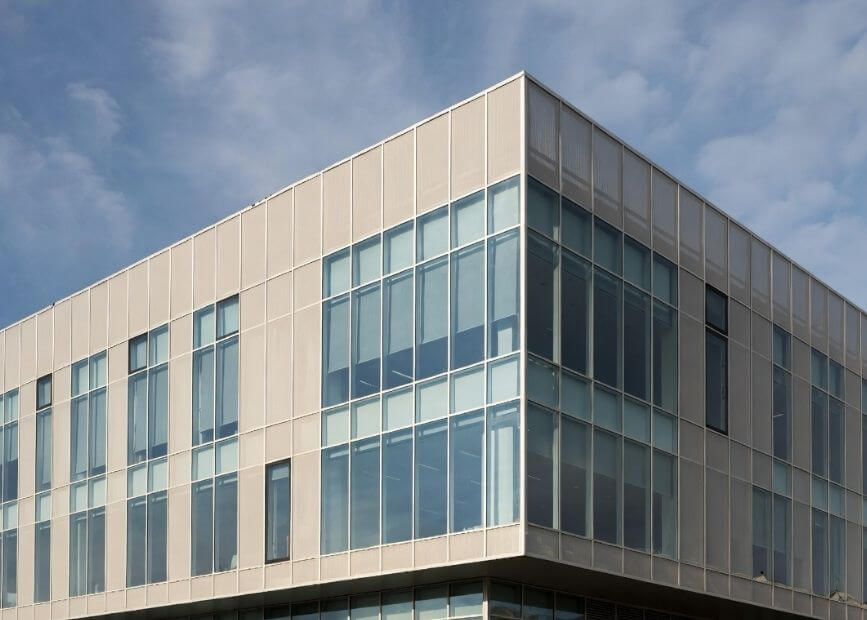
Choosing the right aluminum composite panel thickness is a critical decision in façade design. It affects structural stability, wind resistance, long-term durability, and the visual quality of the building envelope. In practice, incorrect thickness selection often leads to panel deflection, visible waviness, or performance issues under wind load. Thickness is not just a material parameter — it is a system-level decision that influences both engineering performance and architectural expression.
Quick decision guide – choosing the right thickness
If you need a fast answer, most façade projects follow these guidelines.
Low-rise buildings (≤3 floors) → 3–4mm
Standard commercial façades → 4mm
High-rise buildings (>10 floors) → 4–6mm
Coastal or high-wind zones → minimum 4mm, often 6mm at corners
In most real-world projects, 4mm aluminum composite panels are the standard choice due to their balance between rigidity, weight, and cost.
What aluminum composite panel thickness means in practice
How aluminum composite panels are built and measured
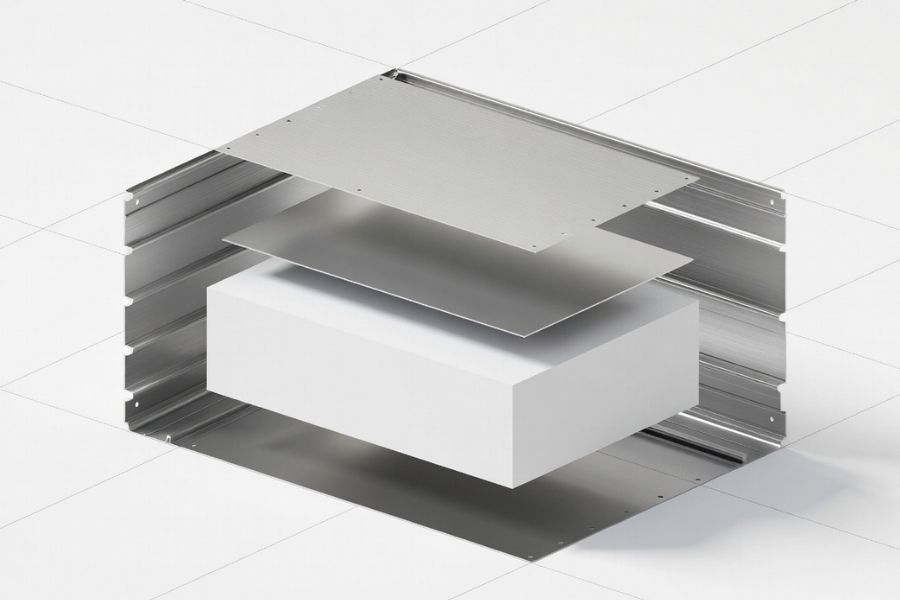
An aluminum composite panel consists of two aluminum cover sheets bonded to a core material, typically polyethylene or fire-retardant mineral core, and finished with protective coating systems such as PVDF. The total thickness — usually 3mm, 4mm, or 6mm — determines how the panel behaves under load, how flat it appears on large façades, and how it integrates with the support system. It is important to understand that thickness influences stiffness and span capability, while fire performance depends on the core material rather than the overall thickness.
3mm vs 4mm vs 6mm – which thickness should you use
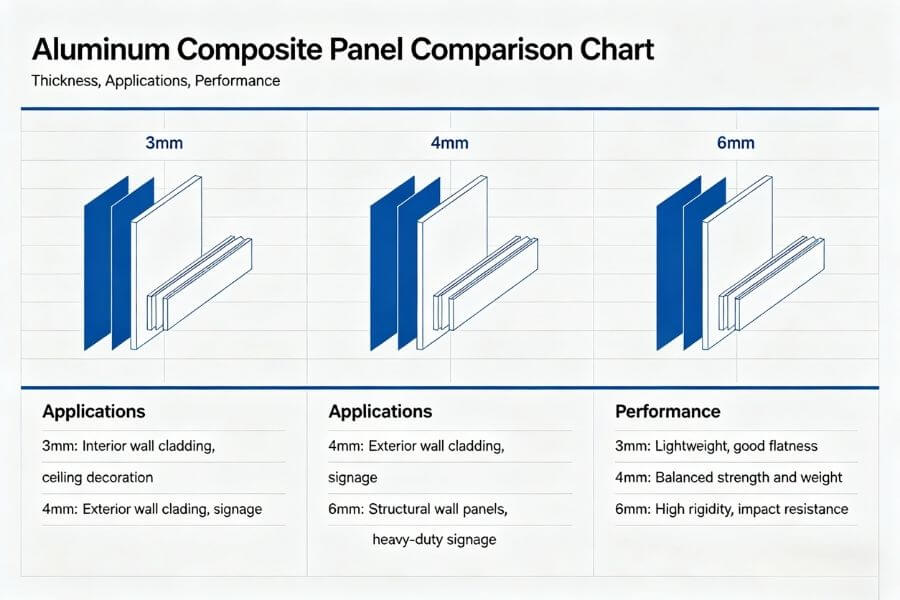
Practical differences in real projects
| Thickness | Typical Use | Real-World Performance |
|---|---|---|
| 3mm | Interiors, signage | Easy to fabricate, limited rigidity |
| 4mm | Standard façades | Balanced performance, widely used |
| 6mm | High-rise façades | Higher stiffness, better wind resistance |
In most commercial façade projects, 3mm panels are limited to interior or low-load applications, 4mm panels are used as the default for exterior cladding, and 6mm panels are reserved for high-stress zones such as tall buildings or exposed corners. From a design perspective, thicker panels help reduce oil-canning effects and improve perceived flatness across large façade surfaces, especially under changing light conditions.
How panel thickness affects the entire façade system
Thickness is part of a system, not a standalone choice
A common misconception is that thicker panels automatically ensure better performance. In practice, façade performance depends on the interaction between panel thickness, subframe design, and fixing systems. For example, 3mm panels typically require support spacing around 450mm, 4mm panels allow wider spacing up to 750mm, and 6mm panels can reach 1200mm with engineered systems. This directly affects structural load distribution, installation efficiency, and overall project cost.
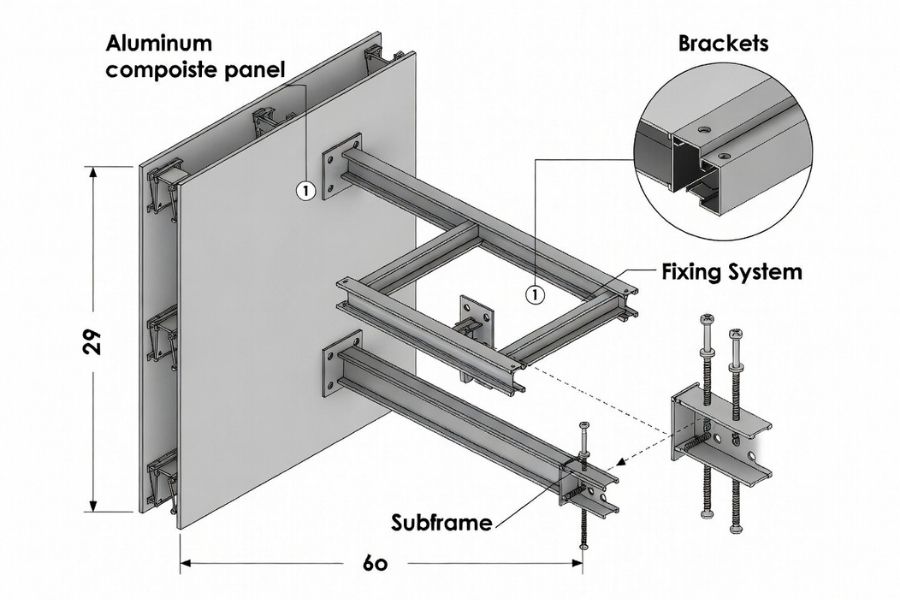
In projects where façade precision and alignment are critical, working with manufacturers that provide integrated fabrication and technical support, such as Aluwell®, can reduce on-site adjustments and improve installation consistency.
Key factors that determine the right panel thickness
How building height and wind load affect thickness
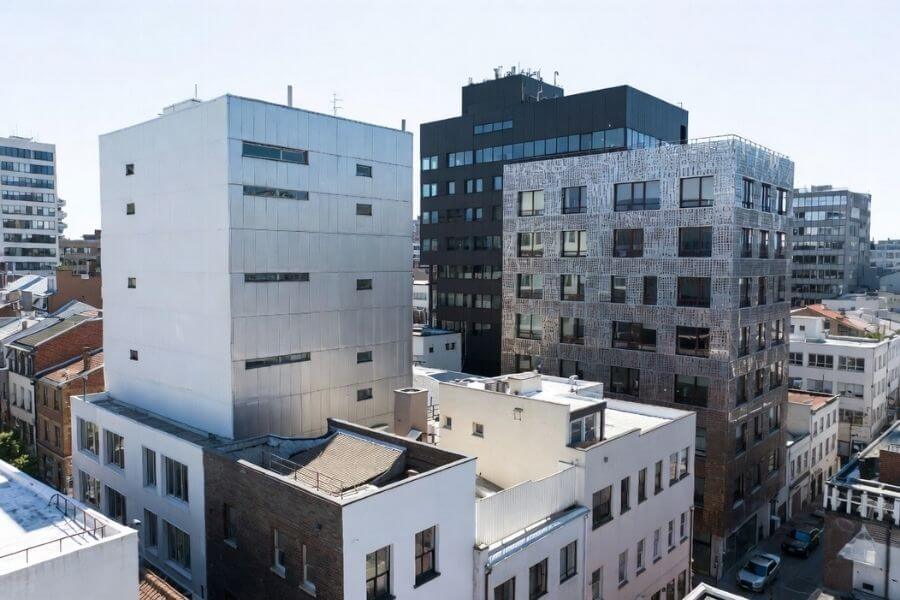
In practice, low-rise buildings experience limited wind pressure and can use 3–4mm panels, mid-rise buildings typically rely on 4mm panels for stable performance, and high-rise buildings require 4–6mm panels to resist higher wind loads. Corner zones and lower façade areas often require increased thickness due to higher stress concentration.
How climate conditions influence panel thickness selection
Environmental conditions play a significant role in ACM panel thickness selection. Coastal regions require at least 4mm panels due to wind and corrosion exposure, while mountain regions may require 6mm panels to handle snow loads. Tropical climates typically use 4mm panels with proper joint design, and urban environments benefit from 4mm panels with durable coatings for pollution resistance.
Where the panel is installed matters
Thickness selection often varies across different façade zones. Main façade surfaces typically use 4mm panels, while corners and wind-exposed areas may require 6mm panels. Decorative elements or shading structures can use 3–4mm panels, and balcony or safety-related applications usually require 4mm or thicker panels for stability.
How performance requirements change thickness choices
Panel thickness influences impact resistance, flatness, acoustic performance, and thermal stability. From an architectural perspective, increased thickness improves surface stability and reduces visual distortion, helping maintain clean lines and consistent reflections across large façade areas.
Recommended panel thickness by building type
Practical reference for architects and contractors
| Building Type | Recommended Thickness | Notes |
|---|---|---|
| Low-rise commercial | 3–4mm | 4mm in high-traffic areas |
| High-rise buildings | 4–6mm | 6mm at corners and wind zones |
| Residential façades | 4mm | Standard exterior solution |
| Industrial facilities | 4–6mm | Heavy-duty zones require 6mm |
| Healthcare buildings | 4–6mm | Stability and hygiene considerations |
How thickness impacts installation and cost
Engineering and construction implications
| Thickness | Support Spacing | Installation Complexity | Cost Impact |
|---|---|---|---|
| 3mm | ~450mm | Simple | Base |
| 4mm | ~750mm | Moderate | +30% |
| 6mm | ~1200mm | Complex | +75% |
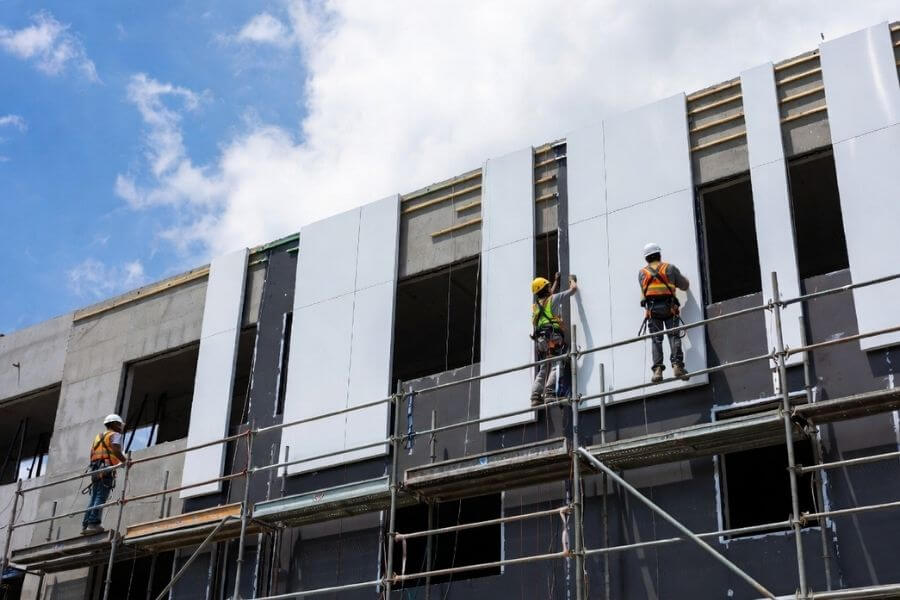
In practice, thicker panels increase structural requirements, require more robust subframe systems, and lead to higher installation costs. Proper allowance for thermal expansion, correct joint spacing, and corrosion-resistant fastening systems are essential for long-term performance. Manufacturers with integrated processing capabilities, such as Aluwell®, can optimize fabrication and pre-processing, improving installation efficiency and reducing project timelines.
Real project example – choosing thickness in a coastal façade
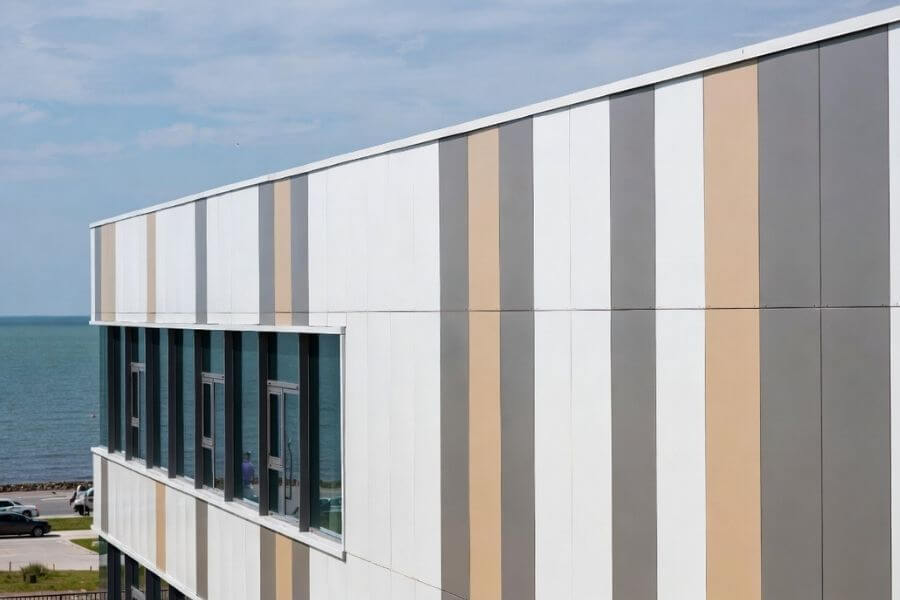
A coastal commercial project in Southeast Asia involved a 12-floor building with a ventilated rainscreen façade system covering over 10,000 square feet. In this case, 4mm panels were used across the main façade areas, while 6mm panels were applied at corners and wind-exposed zones. This approach ensured stable performance under strong wind conditions, minimized panel deformation, and maintained consistent façade flatness over time. The project demonstrates that aluminum composite panel thickness must be selected based on environmental conditions and structural requirements rather than assumptions.
Common mistakes when choosing panel thickness
Common errors include assuming thicker panels are always better, using 6mm panels across all façade areas, ignoring the role of subframe systems, and confusing thickness with fire performance. In reality, most façade systems perform efficiently with 4mm panels, while thickness increases should be applied strategically based on structural demand.
FAQ
What is the standard aluminum composite panel thickness for façades
The most common aluminum composite panel thicknesses are 3mm, 4mm, and 6mm. In façade applications, 4mm is typically used because it offers a balanced combination of structural rigidity, manageable weight, and cost efficiency, making it suitable for most commercial and residential exterior cladding systems.
How do I choose the right aluminum composite panel thickness
Thickness selection depends on building height, wind exposure, and façade location. In practice, 4mm panels are used for most standard façades, while 6mm panels are applied in high-rise buildings, corner zones, or areas exposed to higher wind loads to improve structural stability.
Is 6mm always the best choice for façade systems
No. While 6mm panels provide higher rigidity and improved flatness, they also increase weight and installation cost. In most façade projects, 4mm panels deliver sufficient performance, and 6mm is only used in specific high-stress areas where additional strength is required.
Can 3mm aluminum composite panels be used for exterior façades
3mm panels can be used in limited exterior applications, such as low-rise buildings or protected façade zones. However, for primary exterior cladding, 4mm panels are generally preferred because they offer better durability, improved resistance to deformation, and more stable performance under environmental loads.
Does panel thickness affect fire performance
No. Fire performance is determined by the core material, not the total panel thickness. Fire-retardant (FR) cores are used to meet building code requirements, while thickness mainly affects structural behavior, such as rigidity, impact resistance, and span capability within the façade system.
Final thoughts – choosing the right thickness for your project
Selecting the right aluminum composite panel thickness requires balancing structural performance, environmental conditions, and architectural intent. The most effective solutions come from understanding how thickness interacts with the entire façade system. In projects with complex façade conditions or strict design requirements, thickness decisions are often validated through system design and technical consultation. Manufacturers with strong engineering support, such as Aluwell®, can assist in aligning panel specifications with real construction conditions. A well-chosen thickness ensures long-term façade stability, consistent visual quality, and efficient project delivery.