

30 Mar
Anodized vs PVDF ACP Panels – Which Finish Avoids Costly Façade Mistakes?
Why Surface Finish Matters in ACP Façade Design
A façade is not just an exterior layer – it defines how a building performs visually and technically over time. Color consistency, durability, and environmental resistance all depend on the surface finish system.
When specifying aluminum composite panels (ACP), the choice between anodized ACP and PVDF ACP directly affects project risk. Inconsistent color, premature aging, or replacement issues often originate from this early decision.
At ALUMAX, we have supported façade projects for over 20 years with an annual production capacity exceeding 6 million square meters. Through our brand Aluwell®, we focus on delivering ACP systems that reduce uncertainty and perform reliably in real construction environments.
Understanding the Difference Between Anodized and PVDF ACP
When comparing anodized ACP and PVDF ACP, the key difference lies in how the surface finish is created and controlled. Anodizing modifies the aluminum itself, while PVDF applies a controlled coating layer. This distinction determines how color behaves, how panels age, and how predictable the final façade will be.
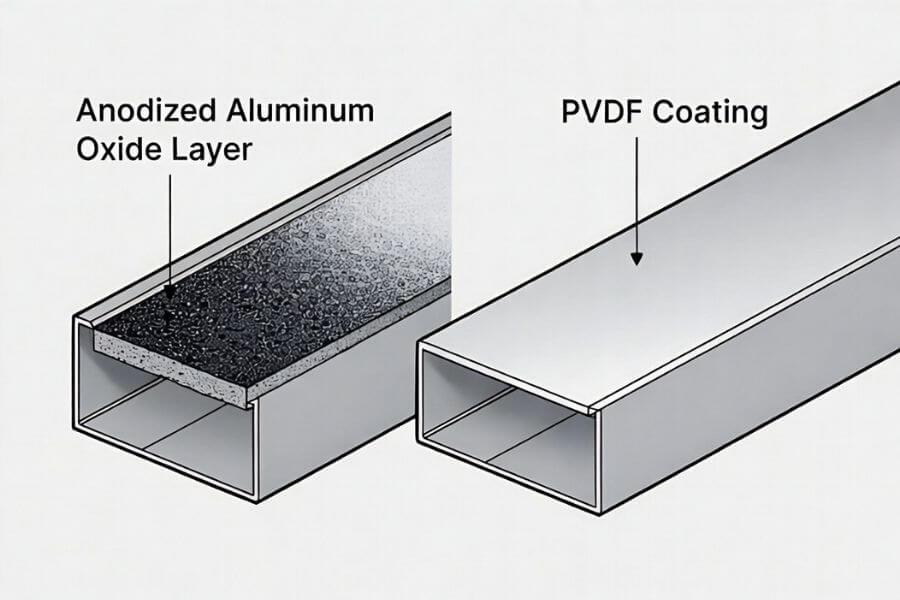
This structural difference explains why anodized panels may vary visually, while PVDF systems allow consistent, repeatable color control across large projects.
How Anodized ACP Works and Where It Performs Best
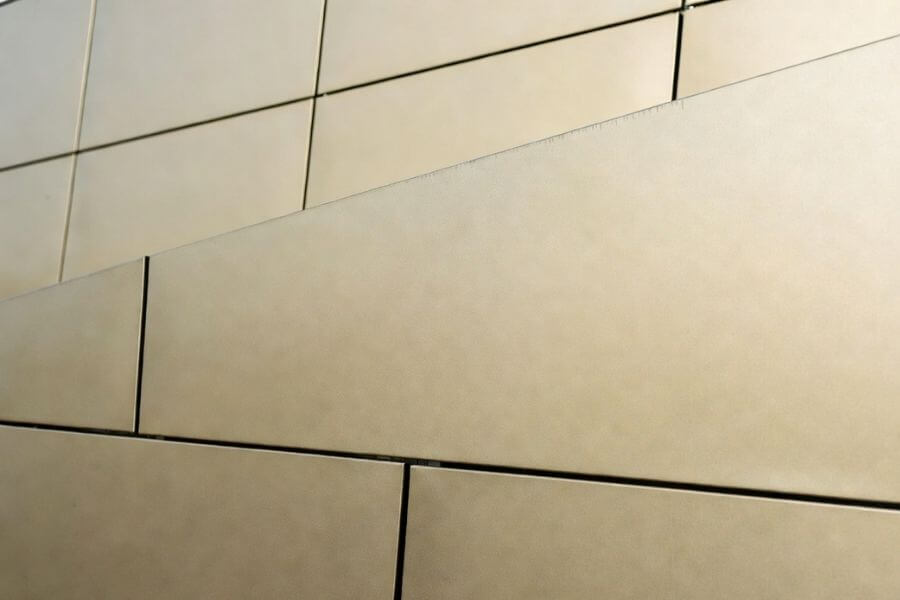
![anodized ACP metallic finish appearance on building facade]
Anodizing is an electrochemical process that transforms the aluminum surface into a dense oxide layer. This layer becomes part of the metal itself, which means it cannot peel or detach.
Where anodized ACP performs well
High-traffic environments where surface wear is a concern
Projects requiring a natural metallic appearance
Applications where surface hardness is a priority
What can go wrong
Visible color variation across panels – even small batch differences become noticeable on large façades
Directional inconsistency – panel orientation affects light reflection and visual tone
No repair option – damaged panels must be replaced
Anodized ACP is therefore a material-driven finish, where appearance depends on the aluminum itself rather than controlled production.
How PVDF Coating Works in ACP Applications
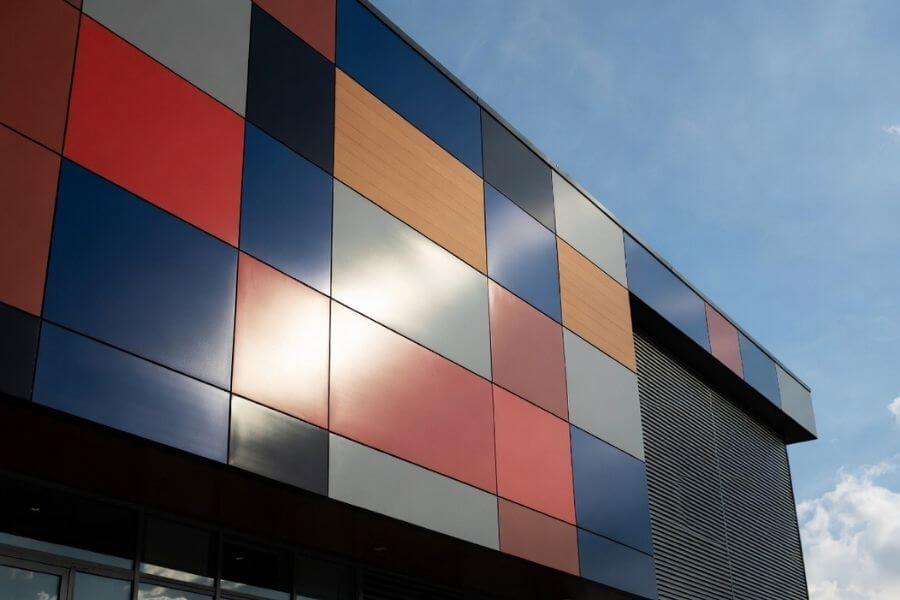
PVDF coating is a high-performance fluoropolymer system applied through a coil coating process and cured at high temperature. It creates a stable, protective layer designed for long-term exterior use.
Where PVDF ACP performs best
Large façades requiring consistent color
Buildings exposed to UV, pollution, or coastal conditions
Projects with strong design or branding requirements
Risk control advantage
Color can be reproduced across batches
Panels can be supplied in phases without mismatch
Minor damage can be repaired without full replacement
At Aluwell®, PVDF coatings follow AAMA 2605 standards, ensuring durability and long-term color stability under demanding conditions.
The Real Difference – Color Control vs Material-Driven Appearance
The most critical difference is not hardness or cost – it is color control at scale.
Anodized ACP – color depends on aluminum composition, process variation, and installation direction
PVDF ACP – color is engineered and controlled across production
In façade engineering, this is measured using Delta E, which indicates color difference. Lower values mean better consistency.
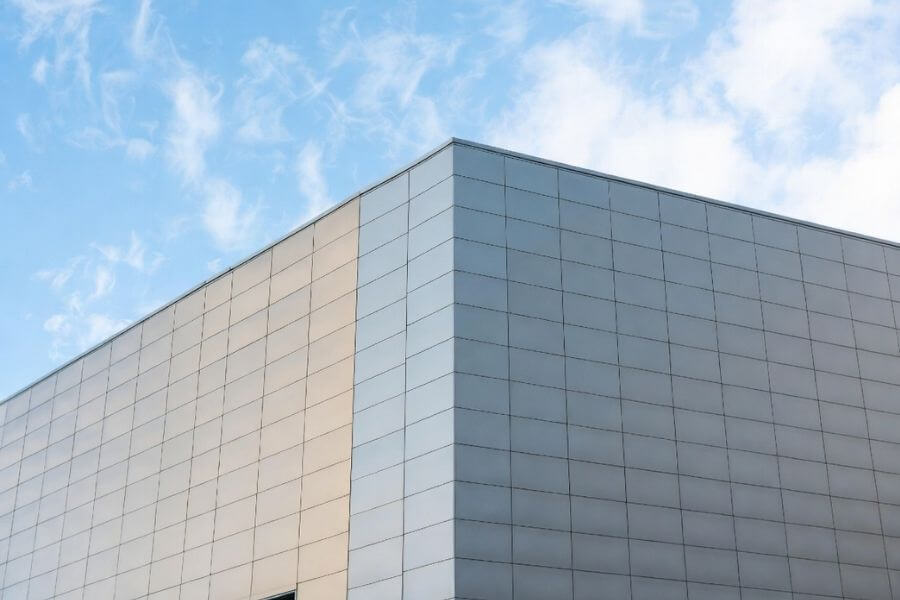
In small samples, anodized panels may appear uniform. On full façades, variation becomes visible, especially when:
panels come from different batches
installation direction changes
replacement panels are introduced
PVDF systems reduce these risks by providing controlled, repeatable color output.
Anodized vs PVDF – Key Differences That Impact Your Project
Which Performs Better in Harsh Environments
Anodized ACP
High surface hardness
Suitable for controlled or interior environments
Limited long-term performance in aggressive conditions
PVDF ACP
Designed for exterior durability
Resistant to UV, salt spray, and pollutants
Maintains color and surface integrity over decades
For coastal or high-rise applications, PVDF significantly reduces maintenance and failure risk.
Design Freedom vs Metallic Appearance
Anodized ACP
Limited to metallic tones
Natural aluminum expression
Difficult to control across large areas
PVDF ACP
Wide color range including custom shades
Supports textures such as wood, stone, and metallic effects
Enables consistent façade design
At Aluwell®, color matching is treated as an engineering process, ensuring design intent can be reliably executed.
Initial Cost vs Long-Term Project Value
Anodized ACP
Lower initial cost
Higher risk of inconsistency and replacement
Limited flexibility for phased construction
PVDF ACP
Higher upfront cost
Lower lifecycle cost
More predictable long-term performance
In practice, projects that prioritize initial savings often face higher total costs due to rework.
Why Color Consistency Becomes a Risk in Large ACP Projects
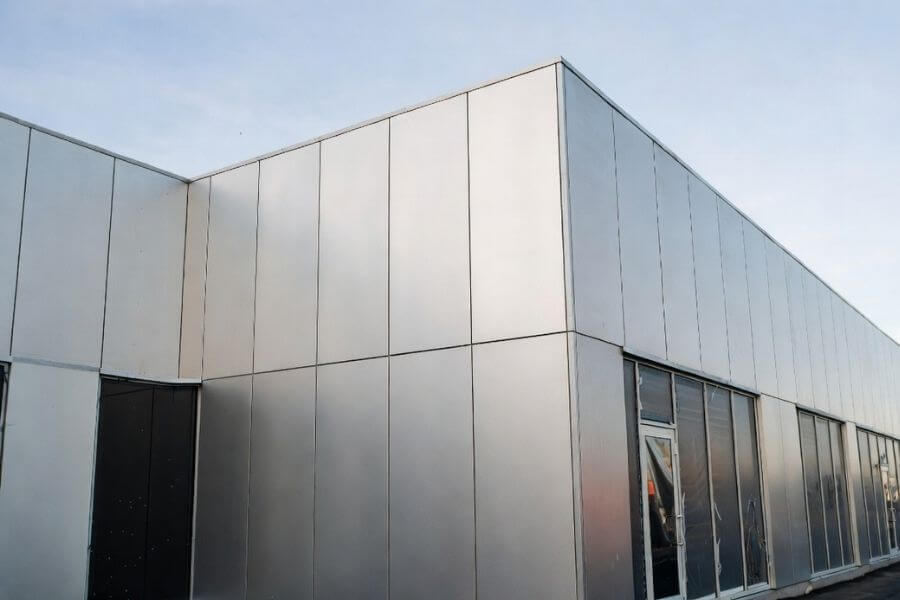
In a façade exceeding 10,000 square feet, installed in multiple phases:
With anodized panels
batch variation becomes visible
installation direction creates inconsistency
replacement panels do not match
Result
uneven façade appearance
client dissatisfaction
increased rework cost
With PVDF systems
color is controlled across production
phased delivery remains consistent
façade appearance stays uniform
This is one of the most common real-world façade risks.
How Aluwell® Supports ACP Projects Beyond Material Supply
Closing the Gap Between Design and Construction
We work with architects and contractors early to ensure that material behavior aligns with design expectations, reducing downstream risk.
Solving Complex ACP Design Challenges
Our R&D team supports custom colors, finishes, and structural requirements, helping turn design concepts into buildable solutions.
Improving Installation Efficiency with Modular Systems
We provide modularized solutions and pre-installation verification to reduce on-site errors and improve construction efficiency.
Precision Fabrication for Complex Façade Components
Our CNC processing capabilities ensure precise fabrication, helping maintain alignment and visual consistency across panels.
FAQ
Which is more durable, anodized or PVDF ACP?
Durability depends on exposure conditions. Anodized ACP offers higher surface hardness and better scratch resistance in high-contact areas. PVDF ACP performs better against UV, moisture, and chemical exposure, making it more reliable for long-term exterior façades where environmental stability matters.
Which system provides better color consistency?
PVDF-coated ACP provides significantly better color consistency, especially in large or phased projects. Anodized panels are affected by material batches and grain direction, which can lead to visible variation. PVDF systems allow controlled production, reducing the risk of façade color mismatch.
Which finish is better for coastal or industrial environments?
PVDF ACP is the preferred choice in harsh environments. Its resistance to salt spray, humidity, and pollutants helps maintain surface performance and color stability over time. Anodized finishes offer corrosion resistance, but may not provide the same long-term reliability in aggressive conditions.
Can anodized or PVDF panels be repaired if damaged?
Anodized panels cannot be repaired once the surface is damaged, as the oxide layer is integral to the material. In contrast, PVDF-coated panels allow localized repair, which helps reduce maintenance cost and avoids full panel replacement in many cases.
Why do anodized panels show color variation in large projects?
Anodized finishes are sensitive to aluminum coil differences, processing conditions, and installation direction. These factors can cause visible variation across panels, especially on large façades. This is why many projects require single-batch ordering, which increases cost and limits flexibility.
How do initial cost and long-term value compare?
Anodized ACP typically has a lower initial cost, but higher long-term risk due to replacement and consistency issues. PVDF ACP offers better lifecycle value, with longer service life, lower maintenance requirements, and more predictable performance across the building lifespan.
Does Aluwell® support custom ACP façade solutions?
Yes. Aluwell® provides customized ACP solutions, including color development, fabrication support, and installation optimization. By integrating design, engineering, and manufacturing, we help ensure that complex façade projects achieve consistent performance and controlled visual results.
How to Choose Between Anodized and PVDF ACP for Your Project
There is no universal best solution, only the one that minimizes risk for your specific project.
Choose anodized ACP when metallic appearance and surface hardness are the priority. Choose PVDF ACP when consistency, durability, and design flexibility are critical.
For most modern façade projects, especially those involving large surfaces, phased installation, or strict design requirements, PVDF systems offer a more predictable and controllable outcome. With Aluwell®, the goal is not only to supply materials, but to ensure that façade systems perform reliably from design to long-term use.