


30 Apr
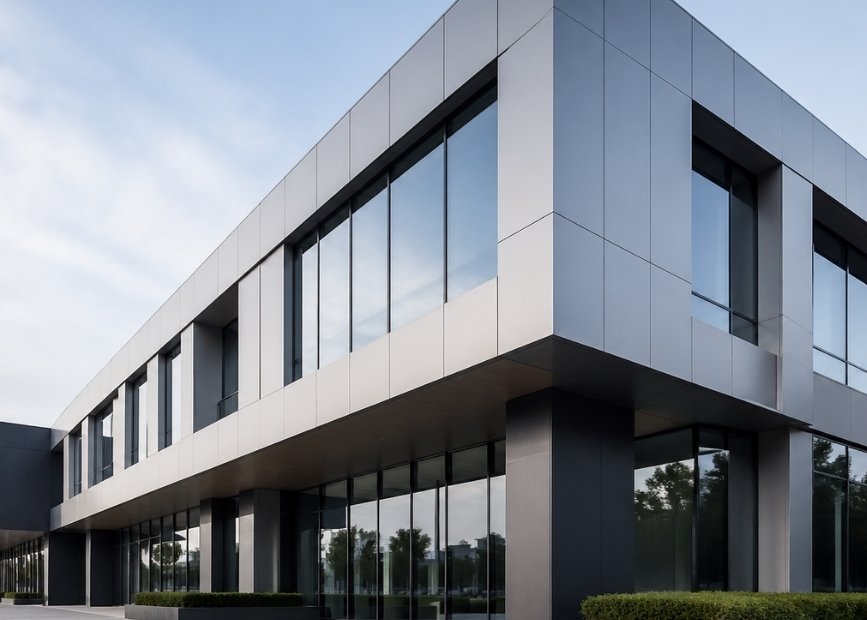
The façade is more than a visual layer. It functions as a protective system that controls weather resistance, energy performance, and long-term maintenance.
Choosing the right aluminum composite panels for exterior facades, or more broadly, façade cladding panels, directly affects structural load, coating durability, and installation efficiency. Poor material decisions often lead to visible defects, premature aging, or increased lifecycle cost.
Aluminum composite material panels are engineered as a three-layer system:
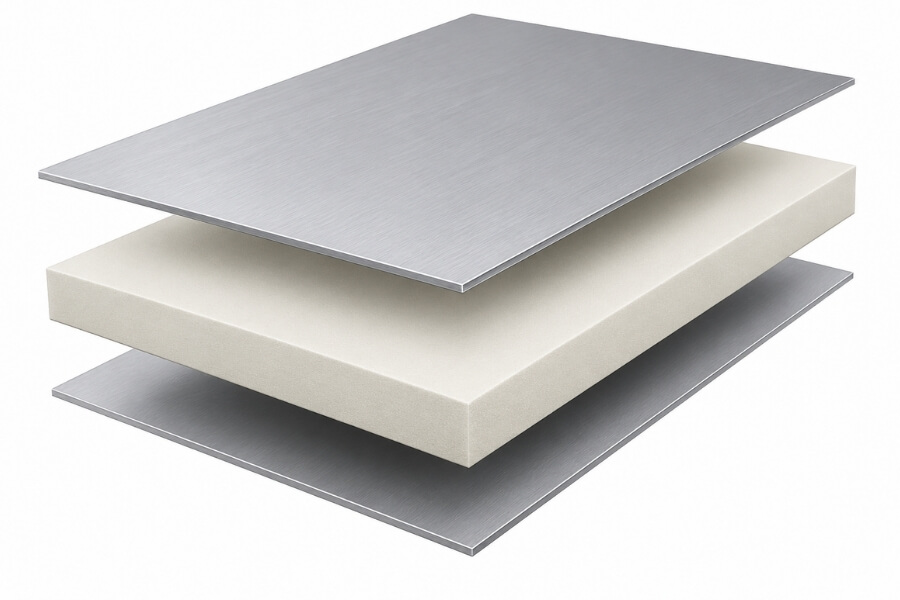
Two aluminum skins bonded to a core material
Core types include polyethylene (PE), fire-retardant (FR), or A2 mineral-filled cores
Standard façade thickness is typically 4 mm, balancing rigidity and weight
Surface performance depends on coating systems:
PVDF coatings for long-term exterior exposure
Multi-layer fluoropolymer systems for improved durability
Custom finishes for architectural design integration
This combination allows ACM panels for exterior cladding, often referred to as aluminum composite cladding panels, to achieve high stiffness while maintaining low weight, typically reducing mass by more than 50% compared to solid aluminum panels.
Fire performance is a primary constraint in façade design.
PE core panels are generally limited to low-rise applications
FR and A2 cores are required for high-rise or regulated buildings
Compliance often requires system-level testing such as NFPA 285
Selecting the wrong core can result in regulatory failure or costly redesign during approval stages.
Environmental exposure defines long-term durability.
Coastal environments introduce salt corrosion and coating degradation
Urban pollution accelerates surface aging
High UV exposure affects color stability over time
Exposed-edge applications introduce additional risks:
Cut edges are more vulnerable to moisture and corrosion
Edge sealing and coating protection must be specified early
Some systems require distance from saltwater environments
Ignoring environmental conditions often leads to coating failure within a few years rather than decades.
Coating selection determines how long the façade maintains its appearance.
PVDF coatings can maintain color performance for over 20 years under standard outdoor exposure
Three-coat systems improve resistance to UV radiation and chemical pollutants
Delta E measures the difference between two colors in a three-dimensional color space. Lower values indicate better color consistency across panels.
For large façades, even small color variations become visible, making coating control a critical specification factor.
Surface quality directly affects perceived building quality.
Composite structure minimizes internal stress and deformation
Eliminates oil-canning commonly seen in thin metal sheets
Maintains consistent alignment across large panel surfaces
This is especially important for commercial façades where visual uniformity defines brand perception.
Material selection impacts construction efficiency.
ACM panels can be CNC routed, folded, and pre-fabricated with high precision
Lightweight panels reduce installation complexity and lifting requirements
Modular systems shorten installation time and reduce on-site errors
In fast-track projects, façade materials that integrate with fabrication workflows can reduce installation time by 20–30%.
ACM panels offer a balance between performance, cost, and design flexibility.
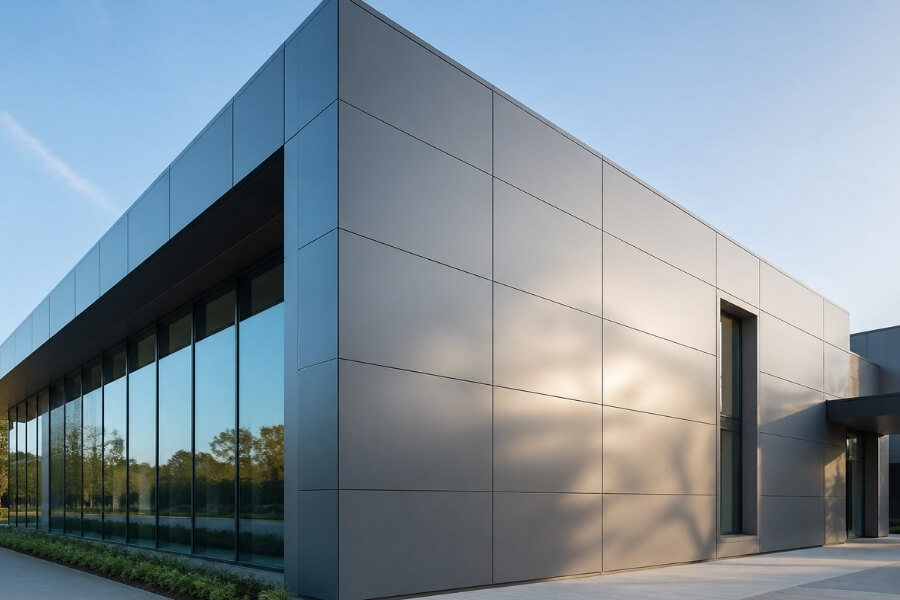
Lightweight structure reduces dead load on curtain wall systems
Smooth surfaces create clean and consistent architectural lines
Durable coatings protect against UV exposure and environmental wear
Ventilated façade systems improve thermal performance and moisture control
Flexible fabrication supports curved, perforated, and customized designs
These characteristics make exterior metal composite panels, also known as architectural composite panels, suitable for a wide range of building types.
Exposed edges require additional engineering control.
Special surface treatments must be applied
Fabrication tolerances must be tightly controlled
Environmental exposure increases vulnerability at edges
These applications should be specified during the design stage, not after fabrication begins.
Salt-heavy environments accelerate degradation.
Coating systems may require additional protection or maintenance
Alternative materials such as solid aluminum or honeycomb panels may perform better in extreme exposure
Material selection should reflect long-term environmental stress rather than short-term cost savings.
Fire compliance is determined at the system level.
High-rise buildings typically require A2-rated materials
Panel selection must align with full façade system testing
Incorrect assumptions about fire performance can result in costly redesign or project delays.
In many projects, these materials are evaluated as part of a broader metal composite cladding system strategy.
| Material | Key Characteristics | Typical Application |
|---|---|---|
| ACM panels | Lightweight, flat, cost-efficient | Commercial façades, retail buildings |
| Aluminum solid panels | Higher strength, heavier | High-wind or high-impact zones |
| Extruded aluminum panels | Thick, rigid profiles | Long-span architectural façades |
| Aluminum honeycomb panels | Ultra-light, high stiffness | High-rise buildings, large panels |
ACM panels provide a balanced solution where appearance, cost, and performance must be optimized together.
ACM panels are commonly used in ventilated façade assemblies.
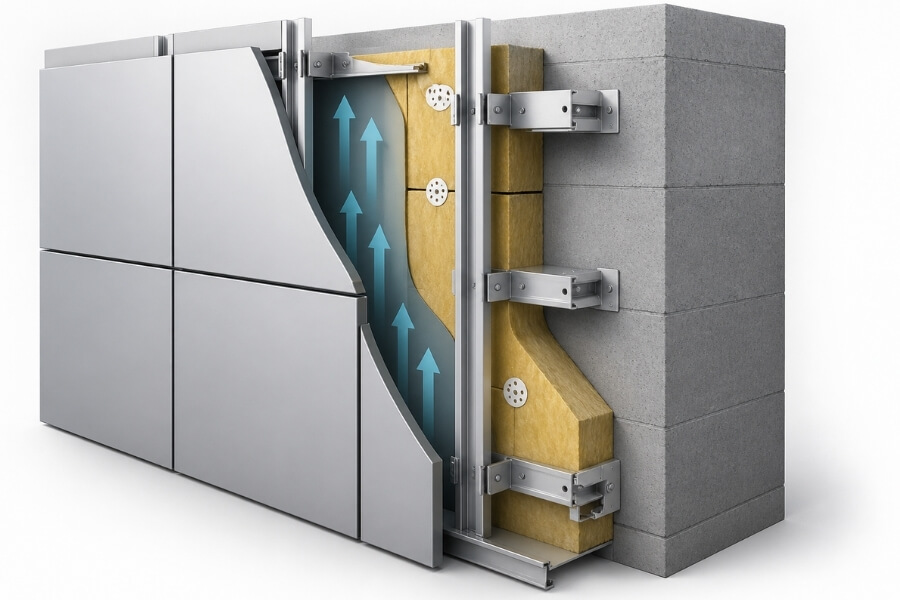
A typical rainscreen system includes:
Exterior panel layer
Ventilated air cavity
Insulation layer
Structural wall
This configuration allows:
Moisture drainage and evaporation
Pressure equalization to reduce water penetration
Improved thermal insulation performance
Rainscreen systems significantly extend façade lifespan and reduce maintenance requirements.
A retail and office development in Southeast Asia required a façade system that combined brand consistency with efficient installation.
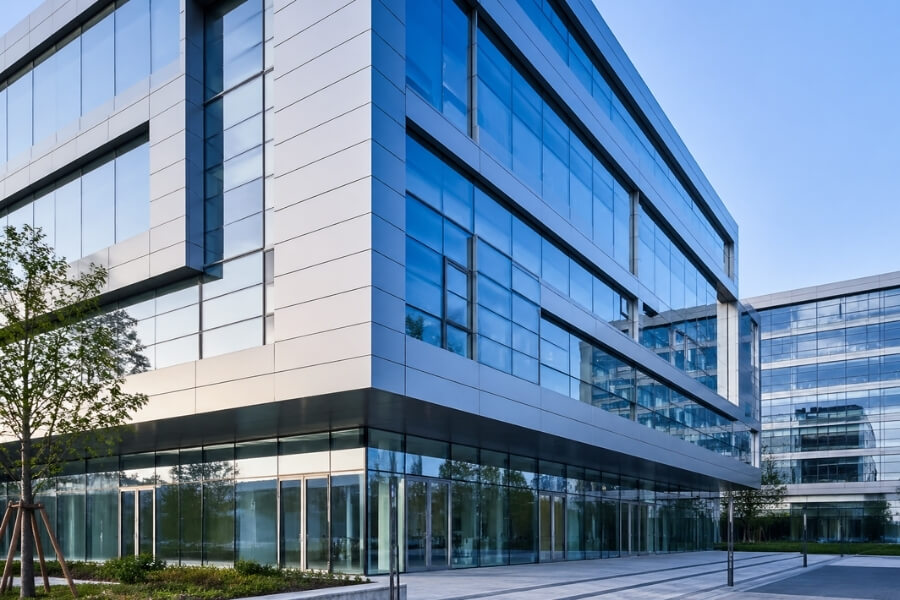
Project size – Approximately 12,000 square feet of façade coverage
Design requirement – Uniform color appearance across multiple elevations
Material selection – PVDF-coated ACM panels integrated into a ventilated rainscreen system
Fabrication – CNC-processed panels for precise geometry and consistent joint alignment
Result – Reduced installation time by approximately 25% and stable color performance after years of exposure
This type of application demonstrates how aluminum composite panels for exterior facades, or ACM façade panels, perform in real construction environments.
A structured selection process reduces risk and improves project outcomes.
Select core type based on building height and local regulations.
Assess UV intensity, humidity, pollution, and proximity to saltwater.
Define color, texture, and façade geometry requirements.
Confirm panel rigidity, span requirements, and support system compatibility.
Balance upfront material cost with durability and maintenance over time.
Ensure coordination between design, manufacturing, and construction teams.
At this stage, working with experienced composite panel manufacturers can help resolve gaps between architectural design and real-world construction constraints.
What are ACM panels made of?
ACM panels consist of two aluminum sheets bonded to a core material, typically polyethylene or mineral-filled fire-resistant compounds. This layered structure provides a combination of strength, lightweight performance, and surface flatness, making the panels suitable for large-scale façade applications where both durability and visual consistency are required.
How do ACM panels compare to solid aluminum panels?
ACM panels are significantly lighter and easier to fabricate, which simplifies installation and reduces structural load. Solid aluminum panels offer higher absolute strength and are often used in extreme conditions, but they require more complex processing and higher installation costs compared to composite panel systems.
What is oil-canning in metal panels?
Oil-canning refers to visible surface waviness in metal panels caused by residual stress, thermal expansion, or improper installation. This effect is more common in thin single-skin metal sheets. Composite panels reduce oil-canning due to their layered structure, which improves rigidity and minimizes deformation under typical environmental conditions.
Can ACM panels be used near coastal areas?
ACM panels can be used in coastal environments when proper coating systems and maintenance practices are applied. However, salt exposure increases the risk of corrosion and coating degradation. In high-salinity areas, additional protection measures or alternative materials may be considered to ensure long-term façade performance.
How long do ACM panels typically last?
High-quality ACM panels with PVDF coatings can maintain performance for 20 to 30 years under typical outdoor conditions. Actual lifespan depends on factors such as environmental exposure, installation quality, and maintenance practices, all of which influence long-term durability and appearance retention.
Selecting aluminum composite panels for exterior facades, or other exterior wall composite panels, requires balancing fire safety, environmental conditions, structural performance, and architectural intent.
When properly specified and integrated into a façade system, ACM panels provide long-term durability, consistent appearance, and efficient installation.
With advanced manufacturing systems, integrated engineering support, and extensive composite material experience, Aluwell® helps deliver façade solutions that align design intent with real-world construction performance.