

30 Mar
How to Know If a Facade Is Fire Safe – NFPA 285 and ACP Design Guide
Balancing Design Freedom with Fire Safety in Facade Systems
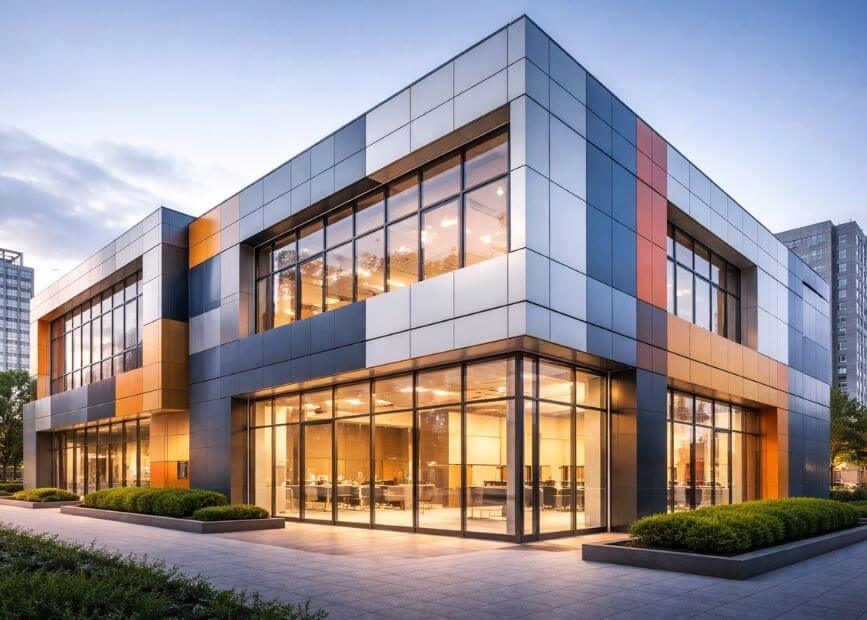
Architects are often asked to deliver expressive façades while meeting strict fire safety requirements. The challenge is not choosing between design and compliance, but understanding how both can coexist within a properly engineered system.
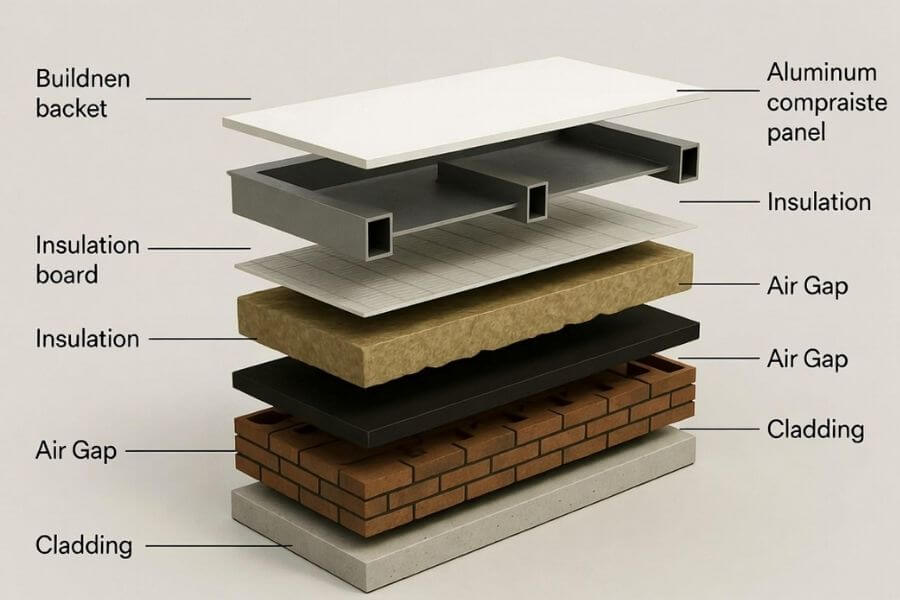
An exterior wall is not a single product. It is a layered assembly where each component influences fire behavior, including the structural substrate, air and water barrier, insulation, cavity and attachment system, and exterior cladding such as aluminum composite panels. Because fire spreads through systems rather than individual materials, façade safety must always be evaluated at the wall assembly level.
What Actually Makes a Wall Assembly Fire Safe
To determine whether a façade is fire safe, you need to verify three critical aspects. First, whether the wall type meets code requirements. Second, whether the full assembly has been tested or validated. Third, whether any design variations remain within approved limits.
Under the International Building Code, fire-rated walls are categorized into fire walls, fire barriers, fire partitions, and exterior walls. For façade systems, exterior walls and fire barriers are the most relevant.
A 1-hour fire-rated wall does not mean the wall will not burn. It means the assembly can resist flame penetration, limit heat transfer, and maintain structural stability for at least one hour. This controlled performance window is what allows occupants to evacuate safely.
Why NFPA 285 Defines Fire-Safe Facade Performance
For façade systems that include combustible components, the most important standard is NFPA 285. This standard evaluates how fire spreads across a complete wall assembly rather than a single material.
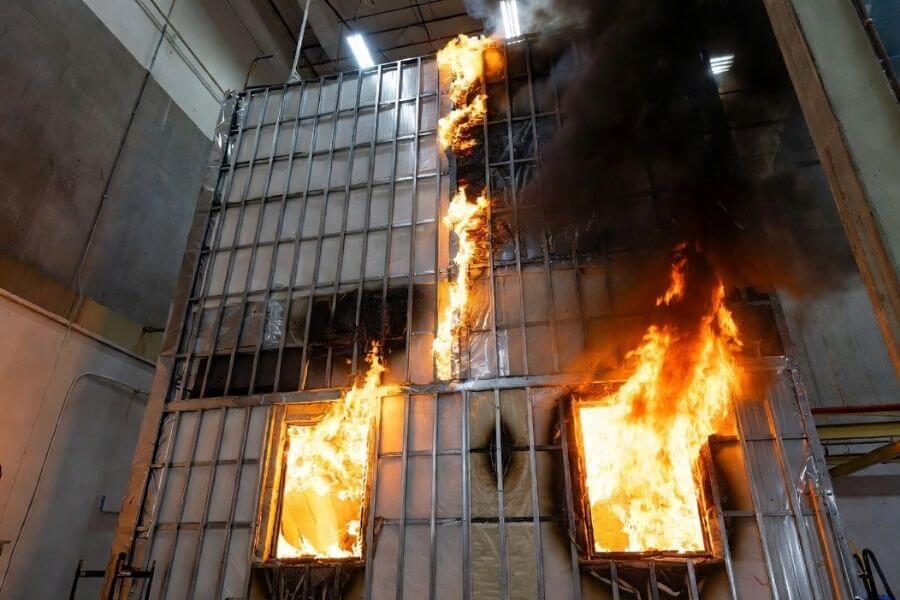
The test simulates scenarios such as interior fire breaking through an opening, external flame exposure along the façade, and fire propagation through cavities and insulation layers. This is critical because façade fires often spread through concealed spaces rather than visible surfaces.
The 2023 update introduced Annex B, which provides structured guidance for extending test results. This allows design teams to evaluate controlled variations without repeating full-scale testing.
When Testing Is Not Enough – How Engineering Judgment Works
In real projects, it is not feasible to test every possible wall configuration. Even small changes, such as insulation density or coating type, can create new combinations.
Engineering judgment allows fire protection engineers to assess whether a modified system remains equivalent to a tested assembly. They analyze material properties, layer configuration, and thermal behavior to determine whether performance will remain compliant.
This becomes especially important when introducing custom finishes or coatings, where visual changes must be evaluated against performance requirements.
How ACP Panels Perform Within Fire-Rated Wall Systems
Aluminum composite panels are widely used in façade systems because they reduce structural load, support precise installation, and allow complex architectural forms. However, ACP panels do not determine fire safety on their own.
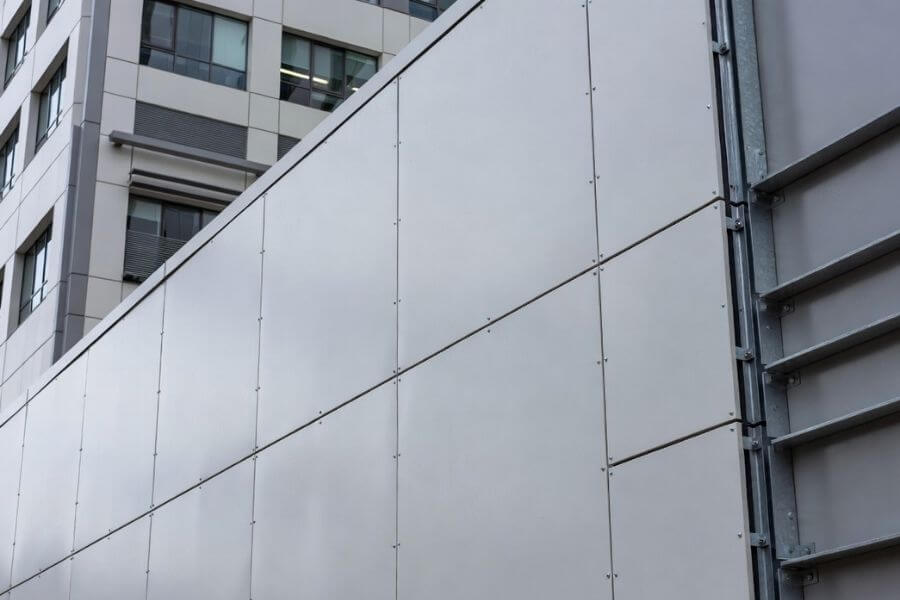
Their performance depends on how they interact with insulation materials, cavity ventilation, fixing systems, and fire-stopping details. When integrated into a wall assembly that has passed NFPA 285, ACP panels can be safely used within code-compliant façade systems.
Why Coating Systems Matter More Than Color Alone
In façade design, color is often treated as a visual choice. In reality, color is defined by the coating system, which is an engineered material layer.
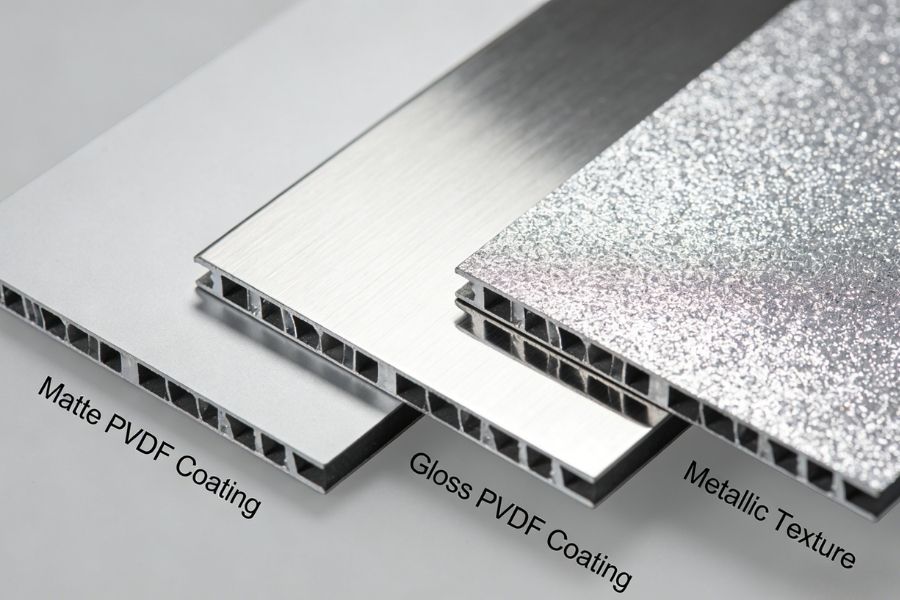
Key factors include resin type, coating thickness, and pigment composition. For example, PVDF coatings provide long-term UV resistance and maintain surface stability under environmental exposure. These properties support consistent façade performance over time.
Custom color selection must therefore be controlled at a material level. It is not simply a visual match, but a repeatable formulation that ensures both durability and performance consistency.
Aluwell® Solutions for Fire-Safe and Design-Driven Facades
In projects where both compliance and design intent are critical, the choice of material partner plays an important role in system performance.
Aluwell® panels are produced within a manufacturing system that integrates equipment engineering, material processing, and façade application knowledge. This enables consistent control over coating quality, panel flatness, and fabrication accuracy.
In practical terms, this allows design teams to achieve custom color intent while maintaining alignment with tested wall systems. By considering coating selection and panel specifications early in the design stage, potential compliance risks can be reduced before construction begins.
A Practical Approach to Designing Fire-Safe Facades
To achieve both safety and design flexibility, façade projects typically follow a structured process.
First, define the required fire performance based on building type and regulations. Second, select a wall assembly that meets NFPA 285 or equivalent standards. Third, evaluate any design changes through engineering judgment. Fourth, ensure that ACP panels and coating systems remain consistent with the approved configuration. Finally, coordinate fabrication and installation to minimize on-site variability and maintain system integrity.
FAQ
What is NFPA 285 and why is it important for façade systems
NFPA 285 is a full-scale fire test that evaluates how flames spread within an exterior wall assembly. It is essential because building codes require proof that systems containing combustible components, such as composite panels, can limit vertical and lateral fire propagation under controlled test conditions.
Can custom-colored aluminum composite panels be used in fire-rated walls
Yes, but only when they are part of a tested wall assembly or supported by engineering judgment. The coating system, including resin type and thickness, must remain consistent with the approved configuration to ensure the custom finish does not affect fire performance.
What does a 1-hour fire-rated wall mean
A 1-hour fire-rated wall is designed to resist fire exposure for at least one hour while limiting flame penetration, heat transfer, and structural failure. This rating provides critical time for evacuation and emergency response, but it does not mean the wall is completely fireproof.
Is fire safety determined by the panel alone
No. Fire safety is determined by the entire wall assembly, not a single material. Factors such as insulation type, cavity design, attachment systems, and fire-stopping details all influence how fire spreads and must be evaluated together as part of a tested system.
Why does coating selection matter in façade design
Coating selection affects more than appearance. It influences durability, UV resistance, and long-term stability, while also ensuring consistent performance across custom colors. Controlled coating systems help maintain both visual consistency and material reliability throughout the façade lifecycle.
Fire Safety and Design Can Work Together
Fire-safe façade design is not about limiting architectural expression. It is about understanding how materials, systems, and standards interact.
By focusing on tested wall assemblies, applying engineering judgment, and selecting materials with controlled performance characteristics, architects can achieve both compliance and design intent.
When coating systems, fabrication processes, and façade integration are considered together from the beginning, color becomes part of the system rather than a risk to it.