

27 May
How Glass Selection Impacts Curtain Wall Performance
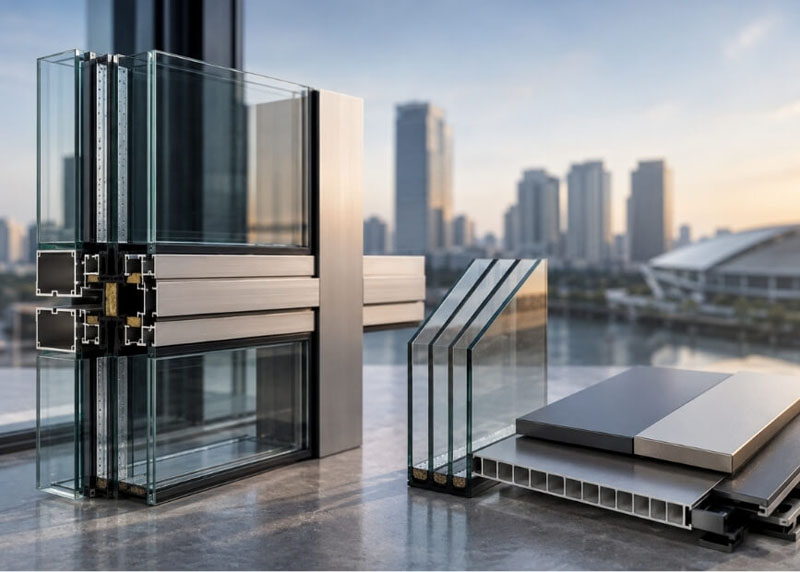
Modern curtain wall systems are expected to do much more than create visually transparent building exteriors. In commercial façade engineering, glass selection directly affects thermal insulation, solar heat gain, occupant comfort, wind resistance, acoustic control, and long-term building envelope durability. In high-rise projects, the glazing system also influences HVAC operating loads, façade maintenance frequency, and even structural movement behavior under changing environmental conditions.
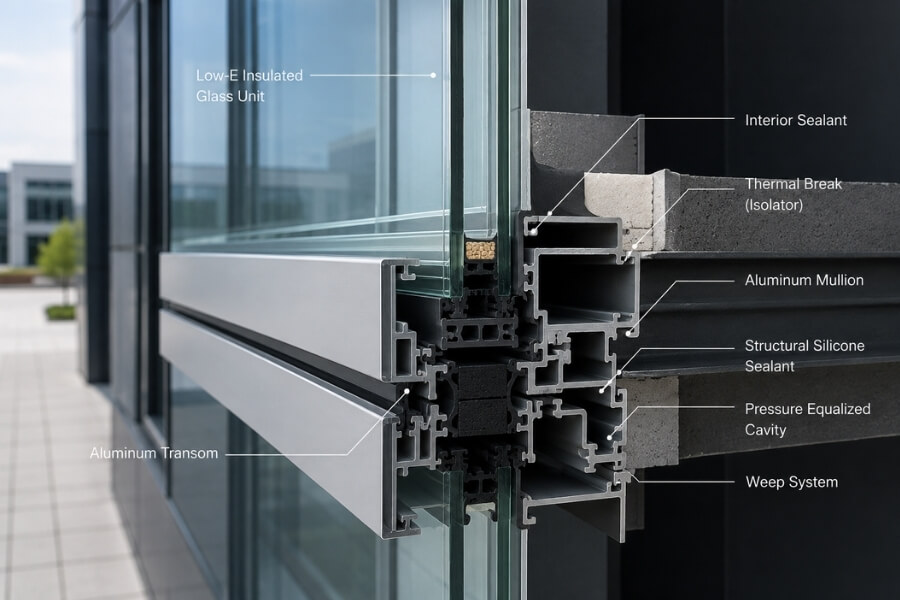
For architects, façade consultants, and developers, glazing is no longer treated as an isolated material decision. The performance of curtain wall glass must work together with aluminum framing systems, thermal breaks, drainage cavities, sealants, and structural support assemblies to create a stable and durable façade system.
Why Glass Plays a Critical Role in Curtain Wall Design
Glass is one of the largest exposed surfaces in most commercial curtain wall systems. Because of this, glazing performance directly influences how a building reacts to sunlight, humidity, temperature fluctuation, wind pressure, and long-term weather exposure.
On large commercial façades, even small changes in glazing performance may create noticeable operational differences over time. Poor solar control can increase cooling demand significantly during summer months, while inadequate thermal insulation may contribute to interior condensation and occupant discomfort near perimeter zones.
Glass selection also affects façade appearance consistency. Variations in coating reflectivity, visible light transmission, or optical distortion can become increasingly visible across large elevations under changing daylight conditions.
Modern building envelope systems typically evaluate glazing performance based on:
Thermal insulation performance
Solar heat gain reduction
Visible light transmission
Wind load resistance
Acoustic insulation
Impact safety
Optical consistency
Long-term coating durability
These performance factors become more critical as commercial façades grow larger, taller, and more structurally complex.
Tempered Glass in Commercial Curtain Wall Systems
Tempered glass is widely used in modern curtain walls because it offers improved mechanical strength and thermal shock resistance compared with standard annealed glass.
The tempering process creates compressive stress across the glass surface, allowing the panel to withstand greater impact and thermal loading. When fractured, tempered glass breaks into smaller granular fragments rather than dangerous sharp shards, improving safety performance in public buildings.
In commercial façade systems, tempered glass is commonly specified for:
High-rise curtain walls
Storefront systems
Entrance glazing
Vision panels
Spandrel assemblies
Areas exposed to stronger wind pressure
Thermal stress resistance becomes increasingly important on façades exposed to direct solar radiation. Dark framing systems, reflective coatings, and large glazing spans may all contribute to localized temperature differences across the glass surface.
On some high-rise buildings, thermal movement may appear relatively minor during fabrication and installation stages. However, after prolonged daily exposure to sunlight and cooling cycles, insufficient allowance for thermal expansion can gradually increase stress concentrations near glazing edges and fixing points.
Laminated Glass and Hurricane-Resistant Façade Design
Laminated glass systems use multiple glass layers bonded together with interlayers such as PVB or SGP. These interlayers help retain broken glass fragments after impact, which improves occupant safety and façade integrity.
In hurricane-prone regions, laminated glazing systems are frequently specified because they help reduce debris penetration risks during extreme wind events. Even if exterior glass layers crack under impact, the interlayer may temporarily maintain enclosure stability and reduce interior exposure to wind-driven rain.
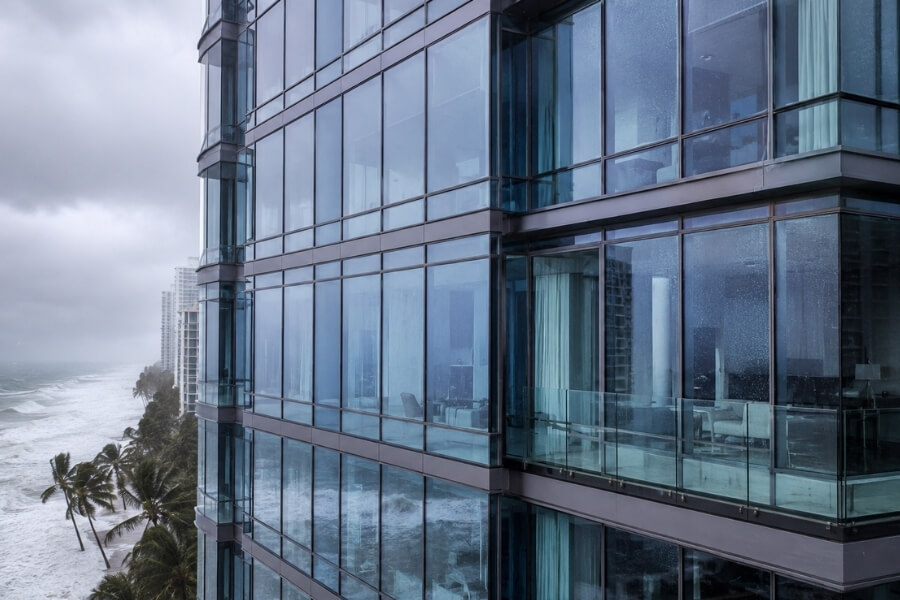
This type of glazing is commonly used in:
Coastal high-rise towers
Airports
Hotels
Mixed-use commercial buildings
Security-sensitive facilities
Storm-resistant façade systems
In coastal environments, façade performance is influenced not only by direct wind pressure but also by long-term humidity exposure, salt spray accumulation, and repeated thermal cycling.
Visible façade aging often appears first near corner glazing zones exposed to stronger wind-driven rain and fluctuating pressure conditions. Over time, moisture intrusion around poorly protected glazing pockets or seal transitions may gradually affect edge seal durability and coating stability.
Laminated systems also improve acoustic insulation performance, making them suitable for projects located near transportation infrastructure or dense urban districts where exterior noise control becomes important for occupant comfort.
Insulated Glass Units and Building Energy Performance
Insulated glass units, commonly called IGUs, use multiple panes separated by sealed cavities filled with air or inert gas. These systems are widely used in commercial curtain walls because modern building envelopes require significantly higher thermal efficiency than older façade systems.
Compared with single-pane glazing, insulated systems help reduce:
Heat transfer
Interior condensation
Temperature fluctuation near façades
Long-term HVAC energy demand
The performance of insulated glazing depends heavily on system quality rather than glass thickness alone. Spacer materials, cavity dimensions, seal durability, gas filling, and framing coordination all influence long-term thermal stability.
On commercial buildings with extensive glazed façades, poorly performing IGUs may contribute to uneven indoor temperatures and higher cooling demand, especially in tropical and high-solar-gain climates.
Seal durability is particularly important in humid environments. Over time, repeated thermal expansion and moisture exposure may gradually weaken edge seals if drainage design and installation precision are insufficient.
Low-E and Solar Control Glass in Modern Façades
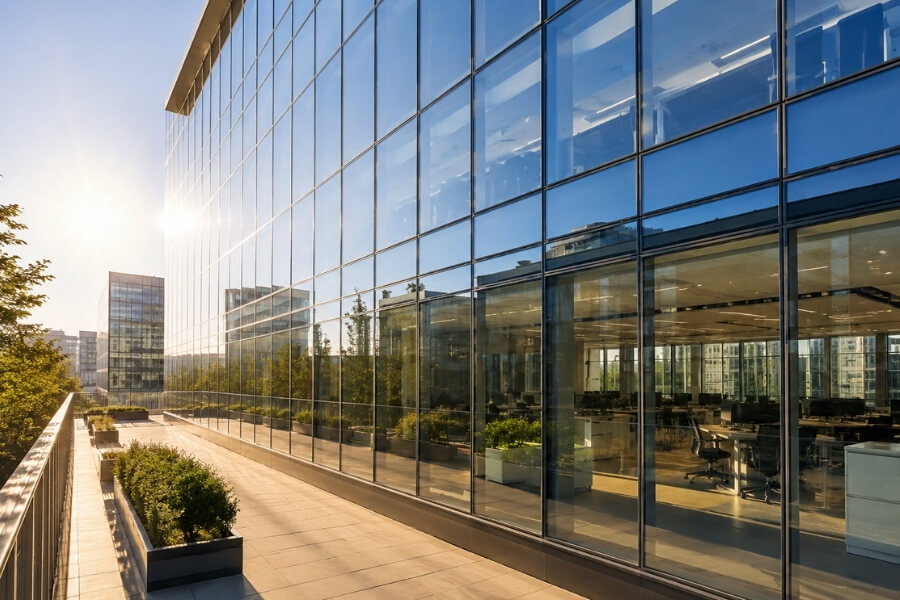
Low-emissivity glass, commonly known as Low-E glass, uses microscopically thin metallic coatings designed to reduce infrared heat transfer while maintaining visible light transmission.
Unlike traditional tinted glazing, Low-E systems help reduce solar heat gain without excessively darkening interior spaces. This balance is especially important in commercial office towers, transportation hubs, hotels, and retail environments where daylight quality directly affects occupant comfort.
Solar control glazing systems are commonly evaluated using:
Solar Heat Gain Coefficient (SHGC)
U-value
Visible Light Transmission (VLT)
Exterior reflectivity
Coating durability
In hot climate regions, excessive solar heat gain can increase cooling loads significantly on curtain wall buildings with large glazed surfaces. High-performance Low-E coatings help reduce this thermal load while maintaining a more comfortable interior environment.
Not all coating systems perform equally under long-term environmental exposure. In humid coastal climates, façade systems may experience accelerated UV exposure, moisture cycling, airborne contaminants, and salt spray accumulation simultaneously.
Because of this, coating durability and optical consistency become increasingly important in large commercial projects. Variations in reflectivity or color stability may become visible across wide façade elevations after years of environmental exposure if coating quality is inconsistent.
How Climate Conditions Influence Curtain Wall Glass Selection
Climate conditions strongly influence glazing specification decisions. The same curtain wall system may perform differently depending on solar exposure, humidity levels, wind intensity, and seasonal temperature variation.
Coastal and Hurricane-Prone Regions
Buildings located near coastlines experience multiple environmental stress factors simultaneously:
High humidity
Salt spray exposure
Wind-driven rain
UV radiation
Extreme wind pressure
Repeated thermal cycling
In these regions, façade movement and pressure equalization become increasingly important. Large glazing panels may experience noticeable deflection during typhoon events if support spacing and framing rigidity are not properly engineered.
Laminated safety glazing, durable sealant systems, and moisture-resistant framing assemblies are often prioritized for coastal curtain wall projects.
Hot Climate Regions
Projects located in hot climates typically prioritize solar control and cooling efficiency. Large west-facing or south-facing glazed façades may contribute significant cooling demand if solar heat gain is not properly controlled.
Low-E coatings, insulated glazing systems, and optimized SHGC values are frequently used to improve thermal performance while maintaining natural daylight access.
Cold Climate Regions
Cold regions prioritize thermal insulation and condensation resistance. Triple glazing and advanced insulated glass systems help reduce winter heat loss and improve interior comfort near façade zones.
Poor thermal performance near glazing systems may create uncomfortable cold perimeter areas even when indoor heating systems operate normally.
Performance Factors Engineers Evaluate in Curtain Wall Glass
Modern façade engineering requires balancing multiple performance priorities simultaneously. Selecting glazing systems based only on appearance or initial cost may create operational and maintenance problems later in the building lifecycle.
Thermal Performance
Thermal performance directly affects building energy consumption and occupant comfort.
Engineers commonly evaluate:
U-value
SHGC
Thermal conductivity
Interior condensation resistance
High-performance glazing systems can help stabilize indoor temperatures and reduce long-term HVAC operating loads.
Structural Performance
Curtain wall glazing systems must withstand:
Wind pressure
Building sway
Thermal movement
Impact loading
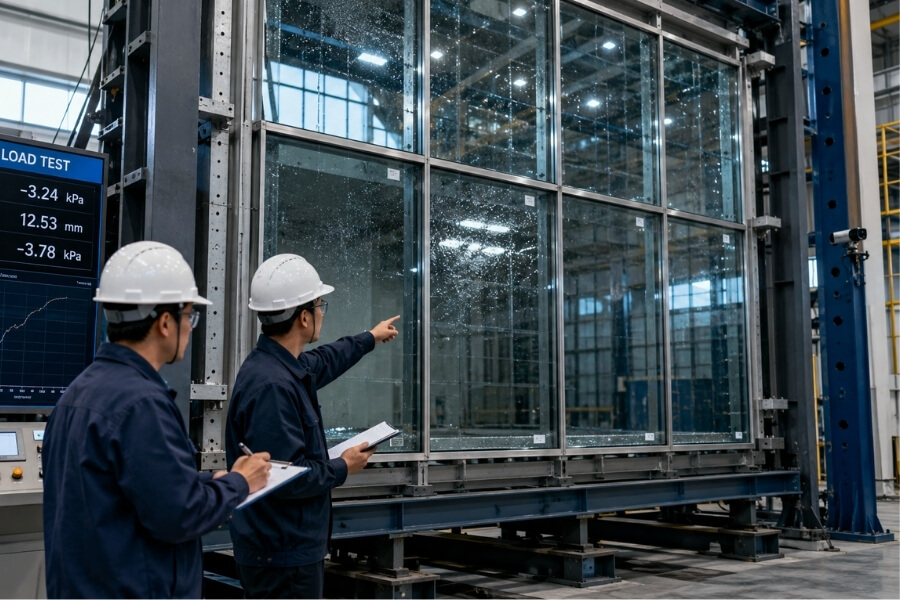
Structural deflection
Glass thickness alone does not determine façade stability. Framing rigidity, anchor design, support spacing, and movement joint coordination all influence long-term structural performance.
On high-rise buildings, insufficient movement allowance may gradually increase edge stress concentrations around glazing pockets and fixing zones, particularly under repeated thermal expansion cycles and fluctuating wind pressure conditions.
Optical Performance
Optical consistency remains important on large commercial façades where visual irregularities may become noticeable under changing sunlight conditions.
Performance evaluation may include:
Reflectivity
Visible distortion
Surface waviness
Coating consistency
Color uniformity
Lower Delta E variation generally improves color consistency across large glazing installations.
Durability and Weather Resistance
Commercial curtain wall systems remain exposed to environmental stress for decades. Long-term durability depends heavily on coating quality, seal stability, and moisture resistance.
Performance testing may include:
Accelerated weathering
Salt spray testing
Humid heat resistance
Coating adhesion testing
Abrasion resistance
These performance factors become especially important in coastal projects where façade systems experience continuous humidity exposure and airborne salt contamination.
How Glass Systems Integrate With Aluminum Curtain Walls
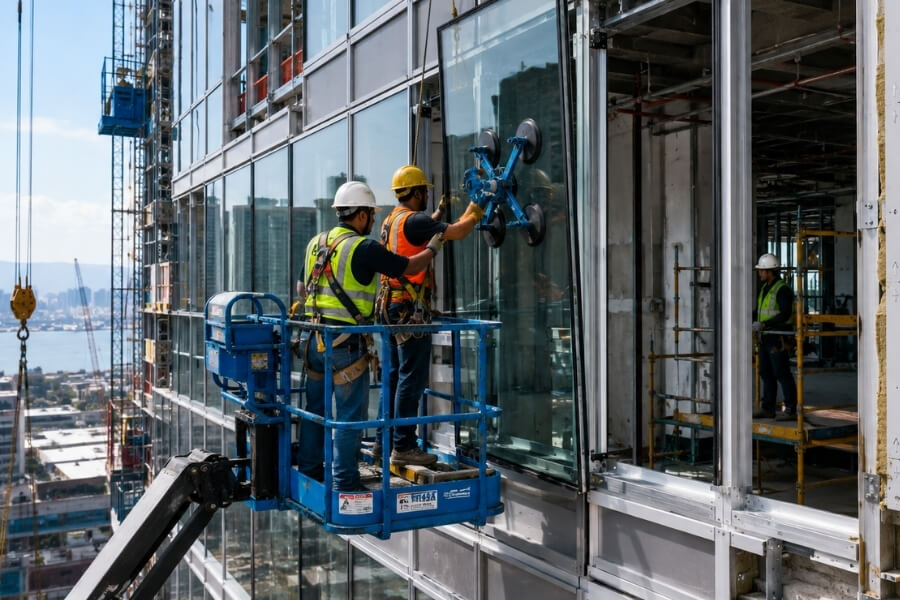
Glass performance cannot be evaluated independently from the overall curtain wall assembly. Successful façade systems depend on coordination between glazing, framing, drainage, thermal insulation, anchoring systems, and exterior cladding materials.
For example, poor extrusion tolerances or insufficient framing rigidity may gradually increase localized stress around glazing pockets under wind pressure conditions. Likewise, inadequate drainage design may allow moisture accumulation that accelerates seal deterioration and coating aging over time.
Modern façade engineering increasingly focuses on system integration rather than isolated material performance. High-performance curtain walls rely on coordinated interaction between:
Glass systems
Aluminum framing
ACP cladding
Thermal breaks
Sealants
Drainage cavities
Structural anchors
This integrated approach becomes particularly important in high-rise and coastal projects where façade systems remain exposed to continuous environmental loading.
Choosing the Right Glass for Commercial Curtain Wall Projects
Different building types require different glazing priorities.
Office towers often prioritize daylight balance and energy efficiency. Hotels may emphasize acoustic insulation and occupant comfort. Transportation hubs frequently require stronger safety glazing and long-term durability under heavy public usage.
Glass specification decisions should consider:
Climate conditions
Wind exposure
Building orientation
Energy code requirements
Acoustic requirements
Maintenance expectations
Structural movement
Architectural appearance goals
Selecting glazing systems based only on visual appearance may create long-term operational and maintenance challenges that become increasingly expensive after occupancy.
Conclusion
Modern curtain wall systems require far more than visually transparent façades. Glass selection directly affects thermal performance, weather resistance, structural behavior, occupant comfort, and long-term building durability.
As commercial building envelopes become increasingly complex, glazing systems must work together with aluminum framing, thermal barriers, drainage design, and exterior cladding assemblies to achieve stable long-term performance.
In many contemporary façade projects, long-term reliability depends less on individual materials and more on how the entire building envelope system is engineered and coordinated under real environmental conditions.
Aluwell® focuses on architectural façade materials and integrated building envelope solutions for modern commercial projects. From aluminum cladding systems to coordinated façade assemblies, successful curtain wall performance depends on balancing engineering durability, weather resistance, thermal efficiency, and long-term material stability across the entire façade system.
FAQ
What is the difference between tempered glass and laminated glass in curtain wall systems?
Tempered glass is primarily designed for higher mechanical strength and thermal shock resistance, while laminated glass focuses more on impact retention and post-breakage safety. Laminated systems are commonly used in hurricane-resistant façades because the interlayer helps hold broken fragments together after impact.
Why are insulated glass units commonly used in commercial curtain walls?
Insulated glass units improve thermal insulation by reducing heat transfer between indoor and outdoor environments. In large commercial buildings, IGUs help reduce HVAC energy demand, improve occupant comfort near façade zones, and minimize condensation risks under changing climate conditions.
Does Low-E glass help reduce solar heat gain in curtain wall buildings?
Yes. Low-E coatings reduce infrared heat transfer while maintaining visible light transmission. In hot climate regions, this helps reduce cooling demand and improve overall building envelope energy efficiency without excessively reducing interior daylight quality.
Which glass type is commonly used in hurricane-resistant façades?
Laminated glass is widely used in hurricane-resistant curtain wall systems because it improves impact retention during extreme weather events. Combined with properly engineered framing and anchoring systems, laminated glazing helps improve façade safety under debris impact and high wind pressure conditions.
How does glass selection affect building energy efficiency?
Glass selection directly influences solar heat gain, thermal insulation, daylight transmission, and HVAC load. High-performance glazing systems help stabilize indoor temperatures and improve long-term energy efficiency in commercial curtain wall buildings.
Why is coating durability important in commercial façade glazing?
Curtain wall systems remain exposed to UV radiation, humidity, salt spray, and airborne contaminants for decades. Durable coating systems help maintain optical consistency, weather resistance, and exterior appearance stability over long-term environmental exposure.