

09 May
How Biophilic Design Is Changing Modern ACM Facades
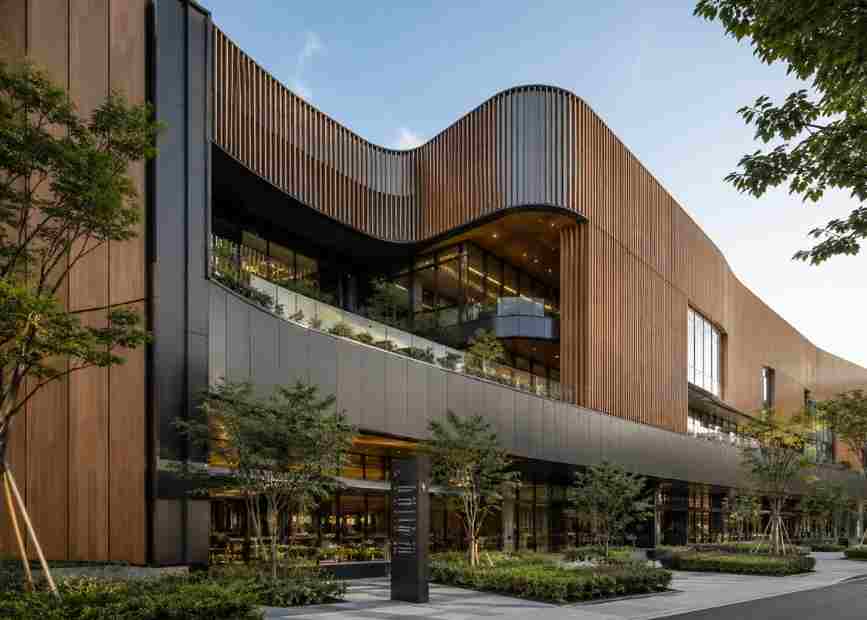
Modern architecture is moving beyond purely industrial exterior aesthetics toward environments that reconnect people with nature. In dense urban areas where occupants spend most of their time indoors, architects are placing greater emphasis on materials, daylight interaction, texture, airflow, and visual comfort.
This shift has accelerated the adoption of biophilic design across commercial towers, healthcare facilities, hospitality developments, educational campuses, and mixed-use projects.
For façade consultants and architects, the exterior envelope is no longer viewed solely as a protective barrier. It now contributes directly to occupant wellbeing, urban identity, environmental performance, and long-term building value.
Within this transition, aluminum composite panels and modern architectural cladding systems have become increasingly important because they allow designers to combine natural aesthetics with high-performance building envelope engineering.
Why Biophilic Design Is Reshaping Modern Architecture
Biophilic design is often misunderstood as simply adding greenery to buildings. In reality, the concept is far more architectural.
Nature-inspired architecture seeks to reconnect occupants with the environment through material selection, spatial experience, lighting quality, natural color palettes, airflow, and sensory perception.
In exterior design, this may include:
Earth-inspired finishes
Organic surface textures
Daylight-responsive materials
Ventilated rainscreen systems
Human-scale visual composition
Reduced urban visual harshness
Improved thermal and acoustic comfort
The building envelope becomes the primary transition layer between the built environment and the natural world.
This explains why architects increasingly specify metal composite facades capable of balancing organic visual language with modern construction performance.
Why ACM Panels Work Well in Nature-Inspired Buildings
Traditional materials such as timber, terracotta, and stone create strong emotional connections with nature. However, large-scale exterior wall applications often introduce practical limitations related to weight, weathering, maintenance, fabrication complexity, and structural loading.
This is where lightweight exterior materials offer significant advantages.
Modern composite facade panels can replicate the warmth and texture of natural materials while maintaining the engineering stability required for contemporary architecture.
Key advantages include:
Lightweight panel construction
Large-format installation flexibility
Precision color consistency
Curved fabrication capability
Advanced PVDF coatings
Lower structural dead loads
Reduced long-term maintenance requirements
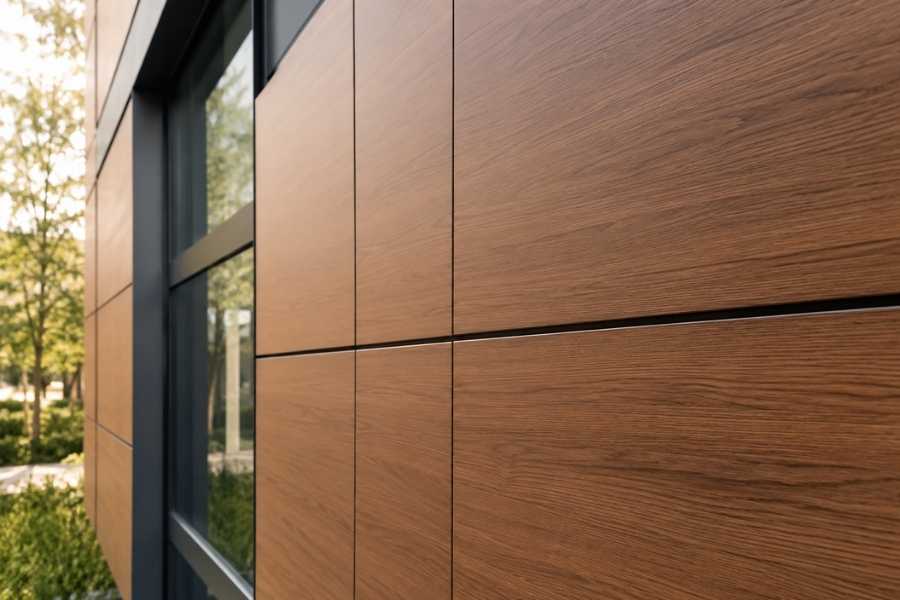
Compared with natural timber systems, engineered panel solutions also provide stronger resistance to:
UV degradation
Moisture absorption
Surface warping
Mold growth
Coastal corrosion exposure
For architects pursuing natural-material aesthetics, these performance advantages create greater design freedom across high-rise and large-scale commercial developments.
At Aluwell®, this flexibility is reflected through a broad range of architectural finishes developed for both interior and exterior applications, including:
Timber-inspired finishes
Stone-inspired surfaces
Oxidized metal coatings
Desert-tone metallic textures
Mineral-inspired mica finishes
Matte low-reflectivity palettes
Rather than imitating nature superficially, these finishes help create exterior surfaces that visually respond to surrounding landscapes, climate conditions, and urban context.
Using Natural Colors and Textures in Exterior Cladding Design
One of the defining characteristics of modern nature-responsive buildings is the use of colors and textures inspired by natural environments.
Architectural color strategy has evolved significantly in recent years. Instead of relying on flat industrial gray or highly reflective curtain wall surfaces, designers increasingly specify finishes influenced by:
Forest vegetation
Coastal minerals
Desert terrain
Weathered metals
Natural stone formations
Volcanic textures
Warm wood species
This transition affects how buildings are perceived at both urban and pedestrian scales.
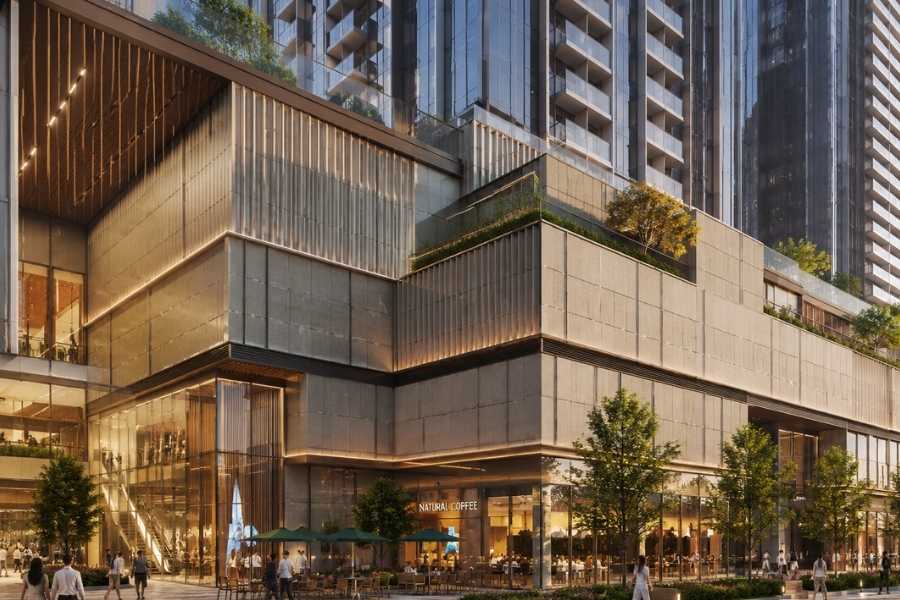
For example, alternating matte metallic panel systems can reduce the perceived mass of large podium structures. Vertical façade segmentation helps soften oversized commercial elevations while maintaining clean contemporary geometry.
Similarly, textured mica coatings create subtle daylight variation across the exterior surface, producing a more natural visual rhythm throughout the day.
These composition strategies are becoming increasingly important in mixed-use urban developments where architects seek to balance density with human-scale visual comfort.
In a coastal mixed-use development in Southeast Asia, designers specified more than 14,000 square feet of timber-effect architectural cladding panels across the podium elevation to reduce the visual harshness created by surrounding glass towers. The matte composite finish was selected specifically to improve pedestrian-scale warmth while maintaining long-term humidity resistance and simplified maintenance requirements.
At ALUMAX Composite Material Co., Ltd., exterior envelope collaboration often begins by evaluating how coating reflectivity, panel segmentation, shadow-line detailing, and environmental exposure will influence the final architectural appearance over time.
This process helps architects maintain both aesthetic consistency and long-term performance across large-scale installations.
How Ventilated Exterior Systems Improve Building Performance
Nature-connected architecture is not limited to visual appearance. Building performance is equally important.
Many modern building envelope systems integrate aluminum composite materials into ventilated assemblies that improve thermal regulation, moisture control, and acoustic performance.
A typical ventilated wall assembly may include:
Exterior cladding panels
Ventilated air cavity
Moisture drainage layer
Structural support framing
Weather-resistant barrier
This layered configuration improves overall building performance in several important ways.
Thermal Regulation
Ventilated cavities help reduce solar heat accumulation on exterior walls.
During warmer seasons, airflow behind the cladding dissipates heat before it transfers into occupied interior spaces. In colder climates, the assembly helps stabilize thermal performance and reduce abrupt temperature fluctuation across wall surfaces.
For commercial buildings with large exterior exposure, this contributes to reduced HVAC demand and improved occupant comfort.
Moisture Protection
Modern rainscreen assemblies are designed to manage water penetration through drainage and pressure equalization.
This helps reduce risks associated with:
Mold formation
Freeze-thaw deterioration
Moisture accumulation
Interior wall damage
Long-term structural degradation
These systems are especially important in humid coastal climates and high-rainfall urban regions.
Acoustic Comfort
Double-skin exterior assemblies can also improve acoustic insulation performance.
In office towers, healthcare facilities, hotels, and residential developments located near traffic corridors, ventilated systems may help reduce exterior noise levels by approximately 6-8 dB depending on wall composition and cavity configuration.
This contributes directly to occupant wellbeing and interior environmental quality.
How Modern Manufacturing Technology Supports Organic Architectural Design
Advances in coating systems and fabrication technologies have significantly expanded the capabilities of modern engineered panel systems.
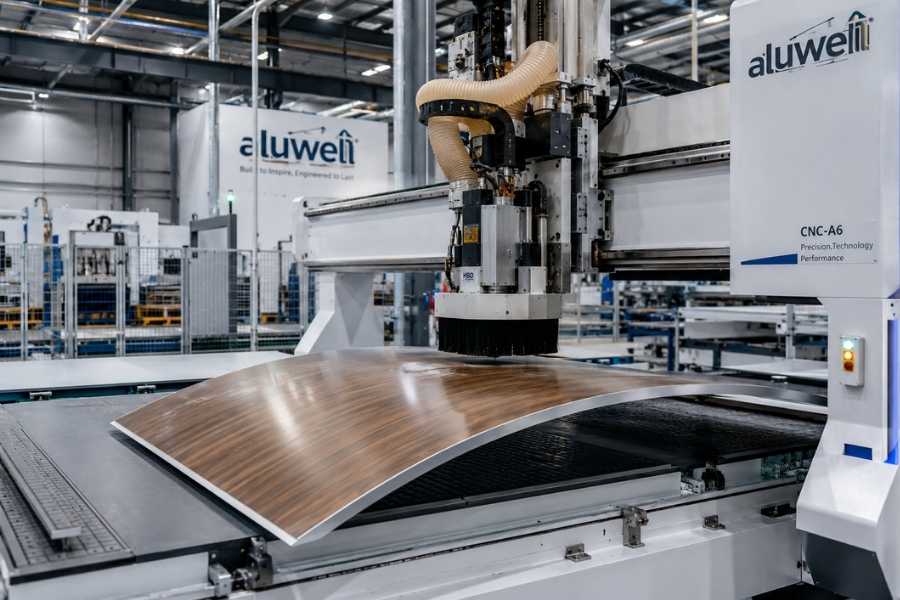
High-performance PVDF coatings now allow exterior surfaces to maintain long-term color stability under severe UV exposure, pollution, humidity, and temperature variation.
This is particularly important for natural-tone palettes because they often rely on subtle color transitions and low-reflectivity finishes. Even minor inconsistency becomes highly visible across large elevations.
At Aluwell®, manufacturing systems are designed to support architectural consistency across complex applications through:
Precision coating control
Large-format production capability
CNC processing support
Curved panel fabrication
Modular assembly integration
Full-scale benchmark verification
The company’s manufacturing background also provides deeper expertise in areas such as:
Panel flatness control
Bonding stability
Thermal movement behavior
Expansion joint coordination
Subframe compatibility
Fabrication tolerances
These engineering considerations become increasingly important for projects involving:
Curved exterior geometry
Parametric building skins
Perforated metal surfaces
Integrated signage systems
Large-format rainscreen assemblies
Multi-material wall compositions
Rather than functioning solely as decorative materials, modern composite systems now operate as fully engineered architectural solutions.
Why Human-Centered Exterior Design Matters in Modern Buildings
Human-centered architecture ultimately focuses on how buildings influence everyday experience.
Research increasingly links natural visual environments with improvements in stress reduction, cognitive focus, emotional comfort, and workplace productivity. In exterior design, these responses are often influenced by subtle architectural decisions rather than obvious decorative gestures.
For example:
Reduced glare improves visual comfort
Matte finishes soften reflected daylight
Earth-tone coatings reduce visual fatigue
Layered wall depth creates stronger shadow articulation
Warmer material palettes improve pedestrian perception
These design strategies become particularly important in:
Healthcare facilities
Educational campuses
Hospitality developments
Workplace headquarters
Residential mixed-use projects
In healthcare architecture, softer reflectivity and calmer material palettes may help reduce environmental stress for patients and visitors. In office developments, nature-inspired exterior composition can improve the overall perception of workplace quality and urban comfort.
As cities become denser, architects increasingly view the exterior envelope not only as an enclosure system, but also as a contributor to human-centered urban experience.
Where Nature-Inspired Composite Cladding Is Being Used
Modern composite cladding solutions are increasingly visible across global architecture projects.
Commercial Developments
Mixed-use developments frequently use timber-look cladding, matte metallic finishes, and textured aluminum surfaces to reduce the visual heaviness of large podium structures.
Shadow-line detailing and vertical articulation help create more balanced urban composition while preserving contemporary architectural character.
Healthcare Facilities
Hospitals increasingly incorporate low-gloss natural finishes and softer exterior palettes to create calmer environments for patients, staff, and visitors.
Fire-retardant and antibacterial panel systems also support stricter safety and hygiene requirements.
Hospitality Projects
Hotels often specify mineral-inspired coatings and textured metallic finishes to strengthen regional architectural identity.
These surfaces interact dynamically with changing daylight conditions throughout the day, helping create a more immersive guest experience.
Corporate Identity Architecture
For headquarters and branded developments, precision color matching supports consistent architectural branding across large exterior wall surfaces.
This becomes especially important on large-format installations where even minor coating variation may become visually amplified.
Why Early Design Collaboration Improves Exterior Envelope Projects
Nature-inspired exterior systems often involve greater coordination than conventional cladding projects because architectural goals must align with engineering feasibility, fabrication methods, installation sequencing, and long-term environmental performance.
Early-stage collaboration helps reduce many common project risks.
For example, material consultation during schematic design may help architects avoid:
Unsupported panel spans
Excessive reflectivity
Inconsistent finish appearance
Installation conflicts
Thermal expansion issues
Unnecessary fabrication complexity
At ALUMAX, collaborative support is integrated throughout the project development process, particularly for customized exterior systems involving complex finishes, curved geometry, or modular installation requirements.
The company’s manufacturing infrastructure includes:
Large CNC processing centers
Modular assembly capability
Prototype fabrication support
1:1 benchmark verification
Custom processing for special geometries
For larger projects, full-scale mock-up verification can significantly improve installation accuracy while reducing on-site adjustment time and construction uncertainty.
This integration between design, fabrication, and engineering is becoming increasingly valuable as exterior systems grow more customized and performance-driven.
FAQ
Is ACM good for biophilic facade design?
Yes. Modern ACM facade systems support biophilic architecture by combining natural-looking finishes with lightweight construction, weather resistance, and long-term durability. Wood-look surfaces, mineral-inspired coatings, and matte textures help create nature-connected exterior environments without the maintenance challenges of traditional materials.
Can aluminum facades look natural?
Yes. Advanced coating and printing technologies allow aluminum-based cladding materials to reproduce realistic timber, stone, copper, and textured metallic finishes. Low-gloss surfaces also create softer daylight reflection, helping exterior elevations feel warmer and more visually connected to natural surroundings.
Are woodgrain ACM panels durable for exterior use?
High-quality timber-look composite panels with PVDF coatings are designed for long-term outdoor performance. They resist UV exposure, humidity, corrosion, fading, and surface deterioration while maintaining the visual warmth of natural wood across demanding climate conditions.
How do ventilated ACM facades improve sustainability?
Ventilated rainscreen assemblies improve airflow, moisture management, and thermal efficiency within the building envelope. This helps reduce HVAC demand, improve indoor environmental quality, and extend exterior wall lifespan through better heat and moisture control.
Can custom biophilic ACM finishes be produced for smaller projects?
Yes. Manufacturers such as Aluwell® can support customized finishes, curved fabrication, specialized coatings, and smaller production quantities for unique architectural projects. This allows designers to create more distinctive nature-inspired exterior concepts without requiring large production volumes.
The Future of Nature-Responsive Exterior Architecture
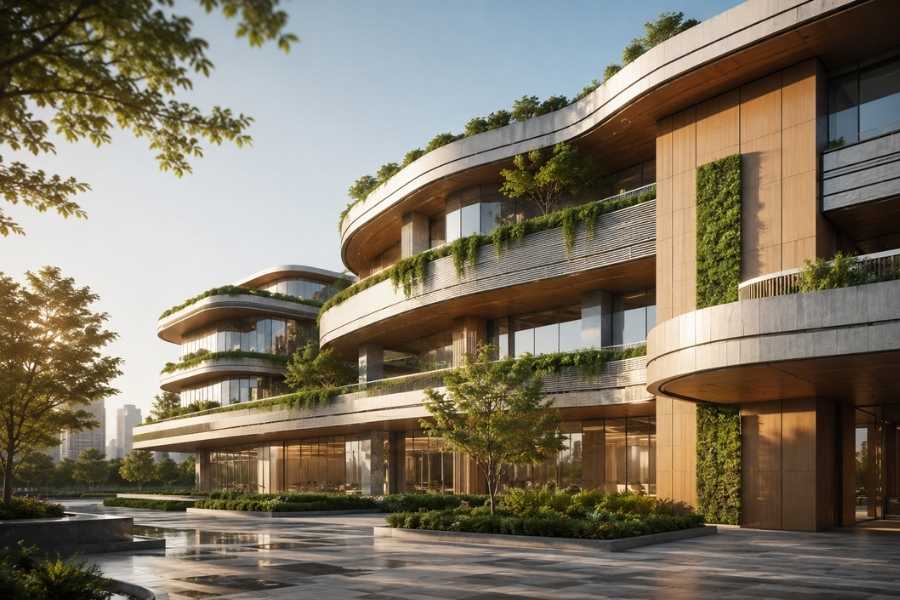
Nature-responsive architecture is no longer a niche movement. It is becoming a long-term direction for modern building envelopes.
As cities continue to densify and sustainability expectations increase, exterior systems are expected to deliver more than enclosure and weather protection. They must now support environmental responsiveness, human wellbeing, long-term durability, and stronger urban experience.
This shift is reshaping how architects evaluate materials for contemporary exterior applications.
Across commercial architecture, healthcare developments, hospitality projects, and mixed-use urban environments, designers increasingly seek solutions capable of combining:
Natural aesthetics
Low-maintenance durability
Lightweight construction
Climate-responsive performance
Precision fabrication
Human-centered design
Through the Aluwell® brand, ALUMAX Composite Material Co., Ltd. continues supporting this transition through integrated manufacturing, façade collaboration, coating technology, CNC processing, and modular project support developed through decades of composite material experience.
In modern architecture, the exterior envelope is no longer separated from nature. It is becoming a carefully engineered layer that reconnects buildings, environments, and human experience through material innovation and performance-driven design.