

11 Mar
How Delta E Helps Control Color in Aluminum Composite Panel Projects
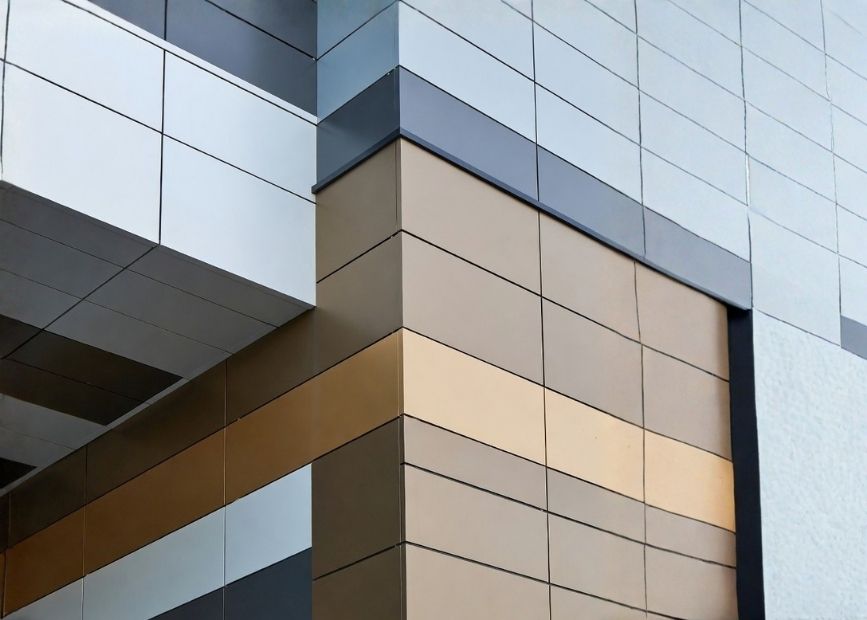
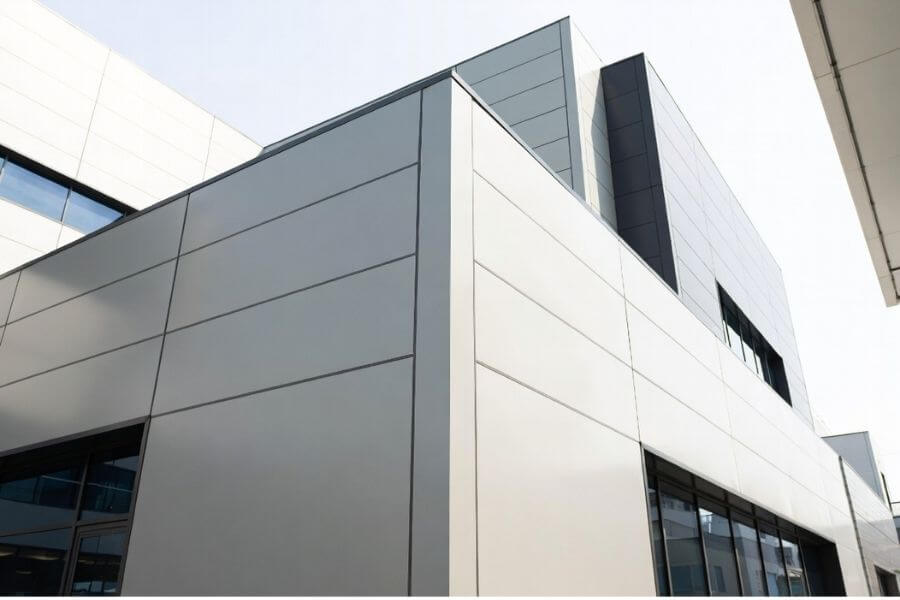
Color is one of the first things people notice on a building. On an aluminum composite panel façade, it does more than add visual interest — it defines brand identity, supports architectural composition, and affects how the finished building is judged from the street.
That is why color control matters in aluminum composite panel projects. A color that looks acceptable on a small sample can read very differently across a large elevation, especially when panel sequencing, daylight exposure, gloss level, and joint layout begin to interact.
For architects, contractors, and developers, the challenge is practical. How do you confirm that a panel color is close enough to the approved target before fabrication, during installation, and years after the project is complete?
This is where Delta E becomes useful. It provides a measurable way to compare color difference, helping project teams move beyond visual guesswork and make better decisions about façade materials, coatings, and long-term appearance.
For Aluwell®, this topic is directly connected to how aluminum composite panels perform in real projects. In exterior cladding, signage, and interior architectural applications, color accuracy is not an isolated lab issue — it is part of design execution, production control, and project delivery.
Why color accuracy matters in aluminum composite panel applications
In architecture, color is rarely judged as a single isolated sample. It is judged as part of a façade system, where panel size, repetition, shadow lines, and adjacent materials all influence the final result.
A slight shift in tone may not seem significant on one panel. Across a full rainscreen elevation, retail storefront, transit canopy, or branded commercial façade, that same shift can interrupt visual rhythm and make the building look inconsistent.
This is especially important when a project uses aluminum composite panels to express a clear design intent. Architects may rely on color to reduce the apparent scale of a large façade, distinguish public and private zones, or reinforce a tenant or corporate identity across multiple elevations.
Color control also becomes critical in phased construction. If one façade zone is installed months after another, or if replacement panels are required later, the project team needs a way to compare the new material with the original approved finish using more than visual judgment alone.
What Delta E means for panel color matching
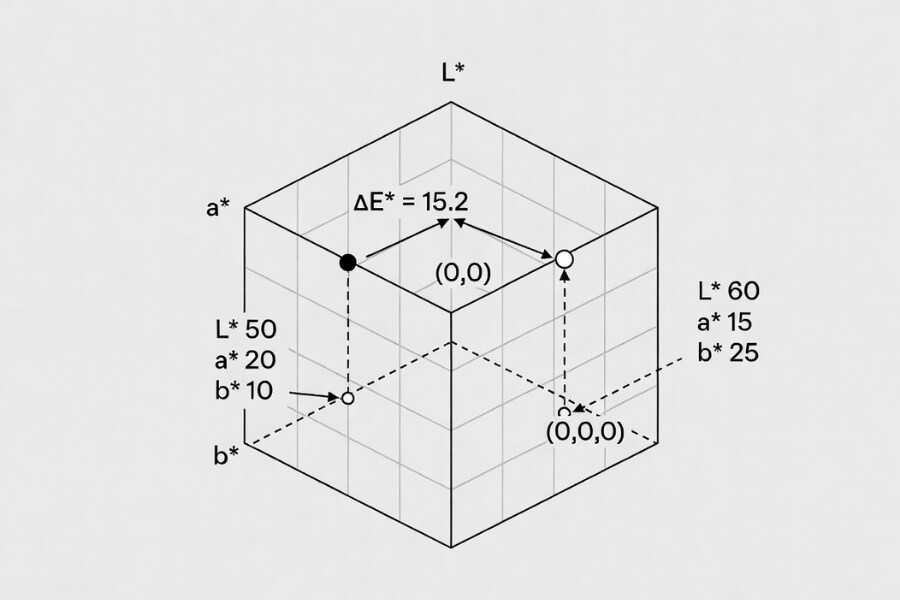
Delta E, often written as ∆E, measures the difference between two colors in a three-dimensional color space. Lower values indicate greater color consistency, while higher values indicate a more visible difference.
The most common reference system for this discussion is Lab*. In simple terms, that system gives each color a numeric location based on three measurable characteristics.
L* measures lightness, from dark to light
a* measures position on the green-to-red axis
b* measures position on the blue-to-yellow axis
You can think of Lab* as a coordinate system for color. Once two colors have measurable positions in that space, Delta E describes the distance between them.
That matters because visual review alone can be unreliable. The same aluminum composite panel may appear slightly different under direct sun, under overcast daylight, or when viewed next to glass, stone, concrete, or a darker panel finish. Delta E creates a common technical language for discussing whether those differences are acceptable.
How panel color is measured
Panel color is usually measured with a spectrophotometer. This instrument reads the surface and records numerical color values, allowing a panel finish to be compared against an approved reference sample.
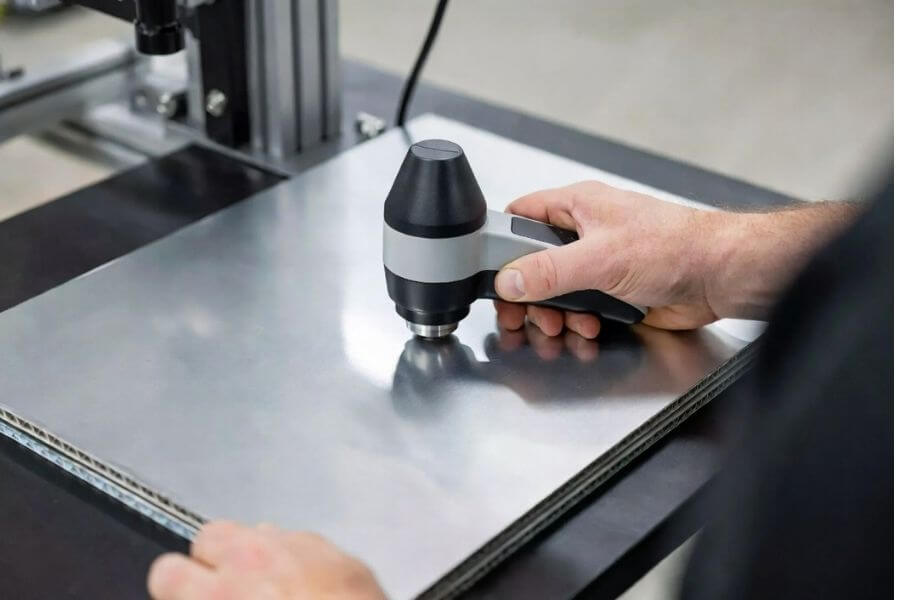
At a basic level, Delta E is calculated from the difference between the two sets of L*, a*, and b* values. The exact formula does not need to be worked out by hand in most projects. What matters is that the measurement converts visual difference into a documented quality control value.
In aluminum composite panel work, this helps answer practical questions.
Does the production panel match the approved sample closely enough?
Can panels from different production dates be installed on the same elevation?
Is a replacement panel suitable for an existing façade?
Has exterior exposure caused the coating color to drift beyond the project’s acceptable range?
More advanced formulas such as CIEDE2000 are often preferred in modern color management because they align more closely with human visual perception. For many architectural readers, however, the key point is straightforward — Delta E helps turn color approval into a measurable process.
What Delta E numbers actually mean
A Delta E number only becomes useful when it is connected to what people can actually see. While perception depends on finish type, light, and viewing distance, the following guide is widely used as a practical reference.
∆E below 1.0 — the difference is extremely small and often difficult to detect
∆E 1.0 to 2.0 — the difference is slight and often acceptable for tight visual standards
∆E 2.0 to 3.0 — the difference may be visible in closer comparison
∆E 3.0 to 5.0 — the difference is noticeable in normal viewing conditions
∆E above 5.0 — the color difference is clear to most observers
In façade projects, acceptable tolerance is never just a number on its own. A solid corporate red on a low-rise entrance feature may require tighter control than a metallic champagne finish on an upper-story screen wall viewed from across a plaza.
That is why Delta E should be considered alongside design intent. Architects and fabricators need to look at finish type, panel location, façade scale, and expected viewing distance, not just the measurement result in isolation.
Why Delta E matters in aluminum composite panel projects
Color consistency affects more than appearance. It affects how accurately a project reflects the original design concept and how confidently the material can be approved, fabricated, installed, and maintained.
Brand-driven architecture needs tighter color control
Many commercial projects use aluminum composite panels as part of a larger branded environment. In these cases, the façade is expected to align with signage, storefront elements, canopy finishes, and sometimes interior feature walls.
If the panel color shifts too far from the approved brand standard, the finished building may still function technically but fail visually. Delta E helps reduce that risk by giving project teams a way to verify color against the approved target before large quantities are fabricated.
Large façades make small color shifts easier to see
A building-scale surface behaves differently than a sample chip. Repetition amplifies inconsistency.
When hundreds of panels are installed across one elevation, even a small variation in lightness or undertone can break the intended reading of the façade. What was meant to look crisp and unified can begin to look patchy or uneven.
This is one reason architects often care about more than the color itself. They are also concerned with how color interacts with panel module size, reveals, shadows, and horizontal or vertical sequencing.
Replacement and phased delivery require measurable comparison
Many buildings are not fabricated in one continuous sequence. Value engineering, construction phasing, logistics, or tenant revisions can result in later panel orders.
In these situations, Delta E helps compare new panels against existing ones. That is especially useful in façade renovation, tenant refresh programs, transportation projects, and retail rollouts where continuity matters across phases.
Long-term façade performance depends on coating stability
Color accuracy at delivery is only part of the picture. Exterior aluminum composite panels must also maintain visual consistency over time.
UV exposure, humidity, industrial pollution, and coastal air all influence long-term color retention. That is why coating technology matters as much as initial sample matching. High-performance PVDF coating systems are widely specified for exterior applications because they support stronger weather resistance and more stable long-term color performance.
What affects color accuracy in real projects
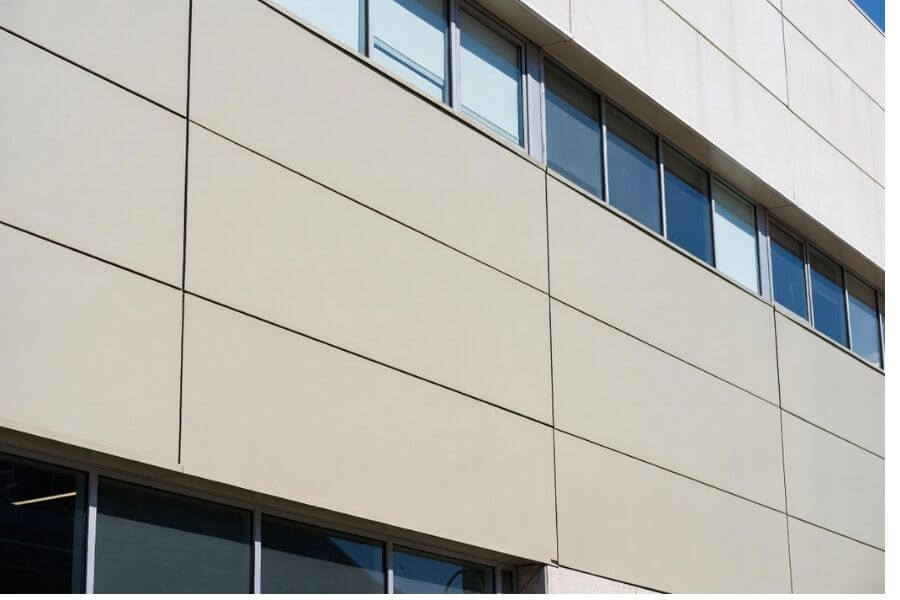
Even when a panel has the correct measured color, several project variables can affect how that color is perceived once installed. Understanding those variables helps teams avoid avoidable disputes.
Lighting changes how color is read
A panel reviewed in a showroom may look different on the building. Daylight intensity, sun angle, reflected surroundings, and seasonal conditions all change how color is perceived.
Standard lighting conditions help during sample approval because they reduce subjectivity. Even so, exterior mockups remain valuable when the project involves a sensitive brand color or a finish that changes with angle and reflection.
Finish and gloss affect visual consistency
Color is not experienced separately from surface finish. A matte panel and a gloss panel with similar coordinates can appear noticeably different because they reflect light differently.
This becomes even more important with metallic, mica, and pearlescent finishes. These finishes may meet a measured target and still require careful visual review because reflectivity influences how the façade reads across the day.
The move from screen color to coated panel creates risk
Architects and owners often begin with screen-based references, but digital color and coated panel color are not equivalent systems. Screen colors are made with light, while panel finishes depend on pigments, resins, gloss, and substrate behavior.
That is why final approval should not rely on a digital file alone. Physical samples, measured values, and mockup review remain the most reliable path for color-critical aluminum composite panel work.
Site exposure is not uniform across a building
One elevation may face stronger sun, while another may remain shaded for much of the day. Upper façade zones may weather differently than sheltered lower areas.
For long-term performance, project teams need to think about orientation, climate, coating choice, and maintenance expectations. A good initial color match has greater value when the finish is designed to remain stable under the building’s real exposure conditions.
How Aluwell® supports color-focused panel projects
This is where the discussion becomes specific to Aluwell®. In aluminum composite panel projects, good color performance is not created by one decision alone. It depends on how design intent, material selection, coating technology, production control, processing, and installation planning work together.
Aluwell® is produced by ALUMAX Composite Materials Co., Ltd., a manufacturer with long-standing experience in composite materials. That background includes not only panel production, but also broader technical experience in equipment development, manufacturing integration, and application support.
For architects and contractors, that matters because color control is rarely just a coating question. It is often a coordination question.
Color targets need to be practical, not just attractive
A custom color may look right in concept, but it must also be producible, repeatable, and suitable for the finish type and project conditions. Aluwell® supports this process through collaborative design communication, helping reduce the gap between what is drawn, what is specified, and what can be delivered consistently in fabricated panels.
Production consistency affects façade consistency
On a large façade, visual success depends on more than one good sample. It depends on whether the panel system can maintain acceptable consistency through production and across the project schedule.
ALUMAX’s manufacturing background helps support that requirement. In real terms, this means paying attention to the relationship between sample approval, material processing, panel fabrication, and final installation sequence.
Fabrication capability influences the final visual result

Color consistency can still be undermined if the fabrication process is not well coordinated. Panel cutting, routing, bending, assembly, and modularization all affect how the façade comes together on site.
Aluwell® benefits from access to machining and processing capabilities that help connect material supply with practical project execution. That is especially relevant where customized shapes, modular systems, or installation-sensitive panel layouts are involved.
The real value is in reducing disconnects across the project chain
In many façade projects, the biggest problems do not come from one dramatic failure. They come from small disconnects between design, approval, fabrication, and site installation.
Aluwell® is well positioned in this discussion because the company’s service structure goes beyond panel supply alone. Collaborative design support, customized solution development, machining service, and modularized service all help address the handoff points where color-sensitive projects often become more difficult.
That gives Aluwell® a more specific role than simply being a panel brand. It supports color-focused aluminum composite panel projects by helping align visual intent with manufacturing and construction reality.
What Delta E means for architects, contractors, and owners
Delta E is not just a technical number for laboratory staff. In aluminum composite panel projects, it has direct value for the people making design, procurement, fabrication, and approval decisions.
For architects
It helps protect design intent. Color is often used to organize façade composition, support visual rhythm, and express brand identity across large-format building surfaces.
When the material is measured and reviewed properly, architects gain better control over how the façade will actually read once installed.
For contractors and fabricators
It provides a clearer approval reference. That can help reduce disputes about whether panels are close enough to the sample, whether later shipments can be mixed into the same elevation, and whether replacement panels are visually acceptable.
For owners and developers
It supports long-term confidence in the building appearance. On commercial and public-facing projects, façade inconsistency can affect perceived quality long after construction is complete.
Measured color control helps owners understand that the visual finish is being managed with the same seriousness as other performance requirements.
FAQ
Is one Delta E tolerance suitable for every aluminum composite panel finish?
No. Acceptable Delta E tolerance depends on the finish type and project context. Solid colors usually require tighter control, while metallic, mica, or textured finishes may need broader evaluation. Viewing distance, façade scale, and the panel’s position within the overall design should all be considered before setting a tolerance target.
Why can an approved sample still look different after installation?
Because installed panels are seen under changing daylight, shadow, gloss conditions, and surrounding material reflections. A sample that looks consistent in review may read differently when repeated across a full façade. That is why mockups, site-specific visual checks, and controlled sample approval remain important in color-sensitive projects.
How should replacement panels be evaluated against an existing façade?
Replacement panels should be checked against the original approved sample and the current installed façade. Older panels may have changed slightly due to weathering, UV exposure, or pollution. In practice, both measured color comparison and on-site visual review are needed to determine whether the replacement will read consistently.
Does viewing distance change what is considered acceptable?
Yes. A color difference that is noticeable at eye level may be far less visible on an upper façade or large-screen wall. Acceptable tolerance should reflect how the panel will actually be viewed in use, including distance, angle, façade scale, and whether the area serves as a focal point.
Why is coating choice so important for long-term color consistency?
Because long-term color performance depends on how well the coating resists UV exposure, moisture, pollution, and other environmental stress. Even a strong initial color match can shift over time if the coating system is not suitable for exterior use. PVDF coatings are commonly specified for better long-term color retention.
Final thoughts
Delta E helps turn color from a subjective opinion into a measurable project standard. In aluminum composite panel applications, that makes it easier to manage sample approval, production consistency, replacement matching, and long-term façade appearance.
For architects, the value lies in protecting design intent. For contractors and fabricators, it lies in clearer quality control. For owners, it lies in visual consistency over the life of the building.
For Aluwell®, the importance of Delta E sits within a larger understanding of how aluminum composite panels perform in architecture. Good color results come from more than coating selection alone. They come from connecting design goals, material knowledge, fabrication planning, and project execution into one coordinated process.
That is why color measurement matters. It helps the façade look the way it was meant to look — not only in the sample room, but on the finished building.