

19 Mar
How to Choose the Right ACM Panel Thickness – 4mm vs 6mm Explained for Real Projects
Why ACM Thickness Impacts Cost, Installation, and Façade Performance
Aluminum Composite Material is widely used in façade systems, signage, and interior cladding due to its balance of weight, strength, and fabrication flexibility. ACM Panel thickness directly affects structural behavior, installation efficiency, and long-term performance.
In façade engineering, thickness is not only a material parameter. It influences how panels interact with substructure systems, resist wind loads, and maintain visual consistency across large elevations. Selecting an inappropriate thickness can increase cost, complicate installation, or limit system compatibility.
What Determines ACM Panel Thickness and How It Is Built
Basic Panel Structure
An ACM panel consists of:
Two aluminum skins
A core material, typically PE or fire-retardant FR
A coating system, commonly PVDF for exterior durability
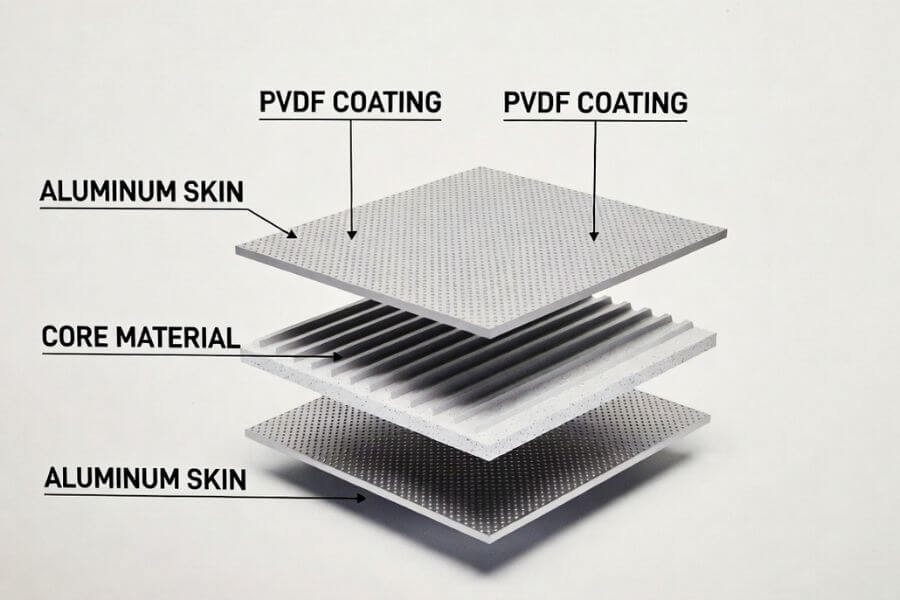
The total thickness is mainly determined by the core layer, while aluminum skin thickness typically remains consistent across products.
Standard Thickness Options
Common architectural thicknesses include:
3mm, used for signage and interior applications
4mm ACM panels, the industry standard for façade systems
6mm ACM panels, used in limited structural or high-load scenarios
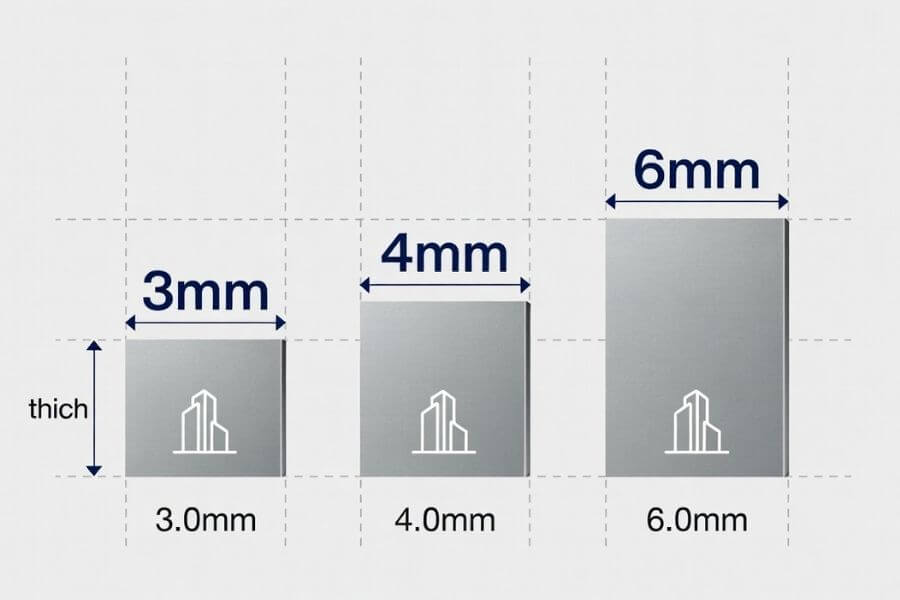
Among these options, 4mm panels are the most widely specified because they provide reliable performance while maintaining compatibility with standard façade systems.
4mm vs 6mm ACM Panels – What Actually Changes in Real Projects
Performance Comparison in Practical Conditions
Laboratory testing such as ASTM C393 shows higher stiffness values for thicker panels. However, façade performance depends on system-level behavior rather than isolated material testing.
Under ASTM E330 wind load conditions, the difference in deflection between 4mm and 6mm panels is typically within 10 percent when installed in a complete façade system.
Key differences include:
Weight, 6mm panels are approximately 30 to 40 percent heavier
Cost, including higher material, transport, and installation expenses
Handling, heavier panels require more labor and slower installation
System compatibility, most extrusion and fixing systems are designed for 4mm panels
Flatness and Visual Consistency
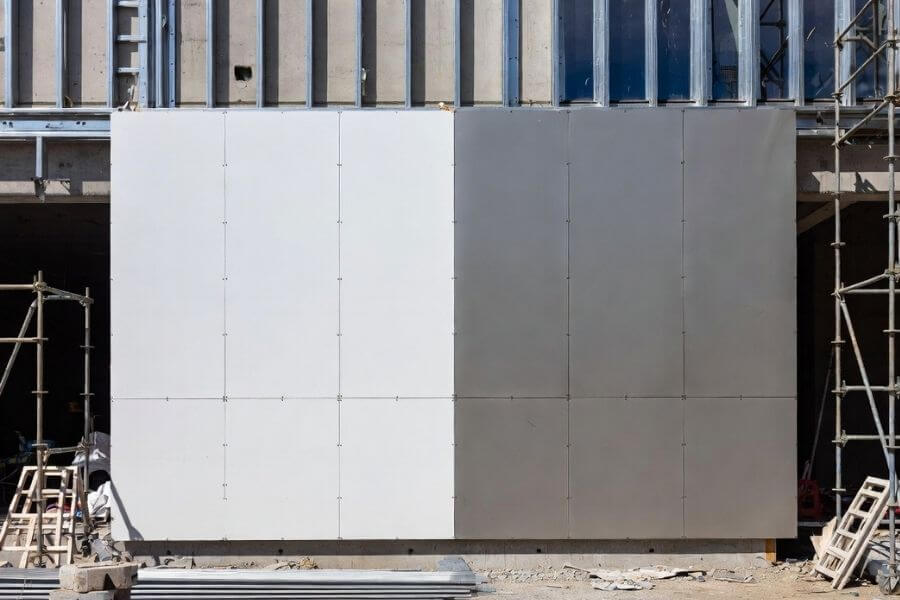
Panel flatness is controlled by manufacturing quality, coil consistency, and fabrication precision. Increasing core thickness does not inherently improve flatness.
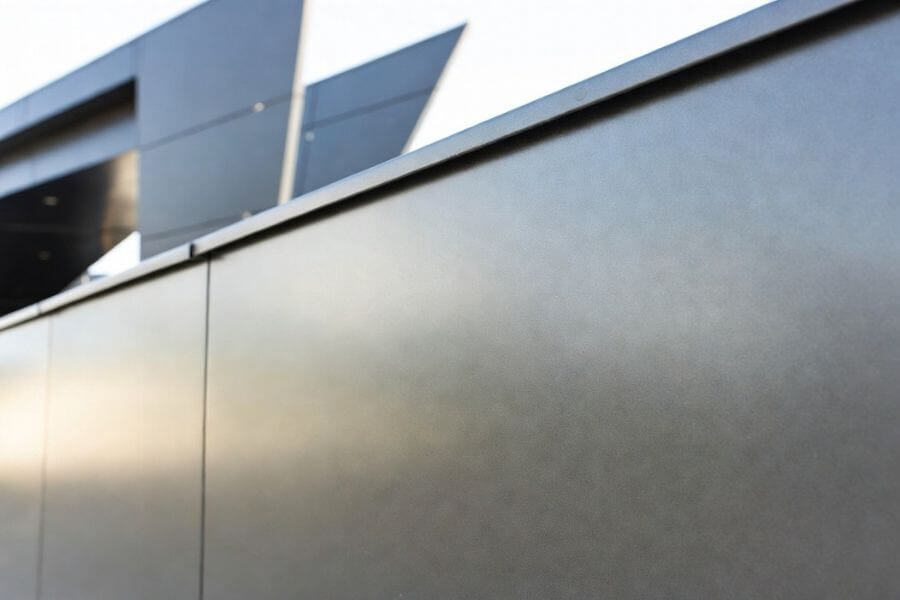
When properly fabricated and installed, both 4mm and 6mm panels can achieve consistent façade appearance across large surfaces.
Why Panel Thickness Alone Does Not Define Façade Performance
ACM panels function as part of a complete façade assembly, often within a ventilated rainscreen system.
A typical system includes:
ACM panels
Subframe and support brackets
Extrusions or perimeter framing systems
Mechanical fasteners
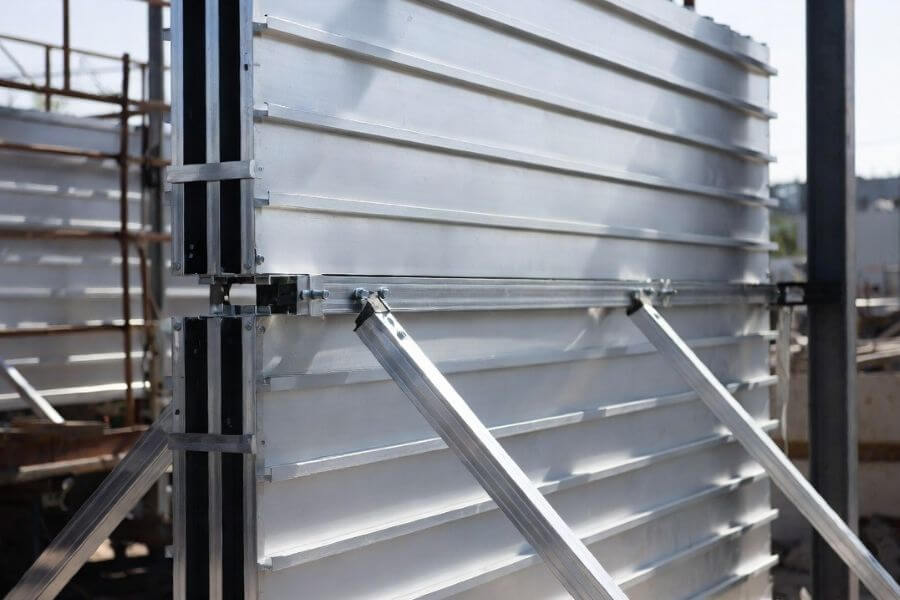
Rear stiffeners for large panel formats
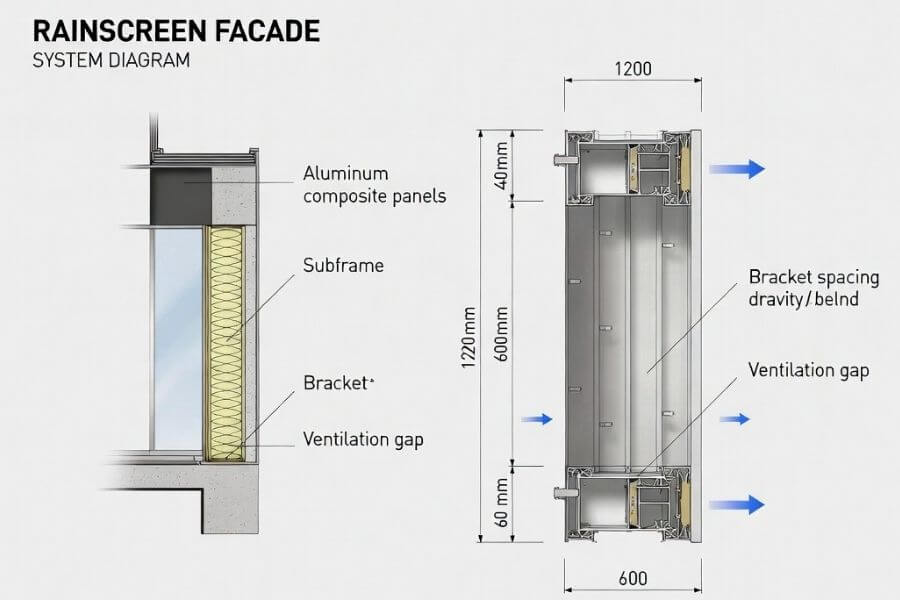
ACM panel thickness is only one variable within this system.
Stiffeners are commonly used regardless of panel thickness
Extrusion profiles are typically designed around 4mm panels
System rigidity depends on the interaction between panel, framing, and support structure
This explains why increasing thickness alone does not significantly improve overall façade performance.
How to Choose the Right ACM Thickness Step by Step
Step 1, Evaluate Building Height and Wind Load
Low-rise buildings typically perform well with 3mm to 4mm panels. Mid-rise commercial façades commonly use 4mm as a standard solution.
High-rise buildings or projects in high-wind regions may require reinforced systems. In these cases, thickness selection is often secondary to substructure design and fixing strategy.
Step 2, Consider Panel Size and Span
Larger panels are more sensitive to deflection. Instead of increasing thickness, designers typically reduce panel module size, introduce stiffeners, or optimize support spacing.
In most façade layouts, properly supported 4mm panels meet both structural and visual requirements.
Step 3, Review Façade System Design
System compatibility is critical for both performance and constructability.
Most extrusion systems, joint geometries, and return details are standardized around 4mm panels. Deviating from this thickness can require redesign of attachment systems and may affect previously tested system configurations.
Step 4, Balance Cost and Installation Efficiency
Panel thickness has a direct impact on logistics and installation.
4mm panels allow faster fabrication cycles and easier handling. 6mm panels increase panel weight, reduce transport efficiency, and may require additional labor.
From a project delivery perspective, 4mm panels often provide the most efficient balance between performance and cost.
Recommended ACM Thickness for Different Building Types
Typical Use Cases
Signage and interior applications, 3mm panels for lightweight solutions
Standard exterior façades, 4mm panels for most commercial buildings
Specialized conditions, 6mm panels for large spans or extreme environments
Climate Considerations
In coastal or high-wind regions, fixing systems and anchoring methods are more critical than thickness alone. In areas with large temperature variation, joint design must allow for thermal movement.
In high-humidity environments, coating durability and sealing performance are typically more influential than panel thickness.
Common Mistakes When Choosing ACM Panel Thickness
Thicker panels always perform better
Performance depends on façade system design rather than thickness alone
6mm panels are significantly flatter
Flatness is determined by manufacturing control and fabrication precision
Thickness determines fire performance
Fire resistance depends on core composition, not overall thickness
All façade projects require 6mm panels
Most projects achieve optimal results using 4mm systems
How a Real Project Used 4mm ACM to Control Cost and Performance
In a mid-rise commercial development in Southeast Asia, approximately 12,000 square feet of façade area was clad using 4mm ACM panels within a ventilated rainscreen system.
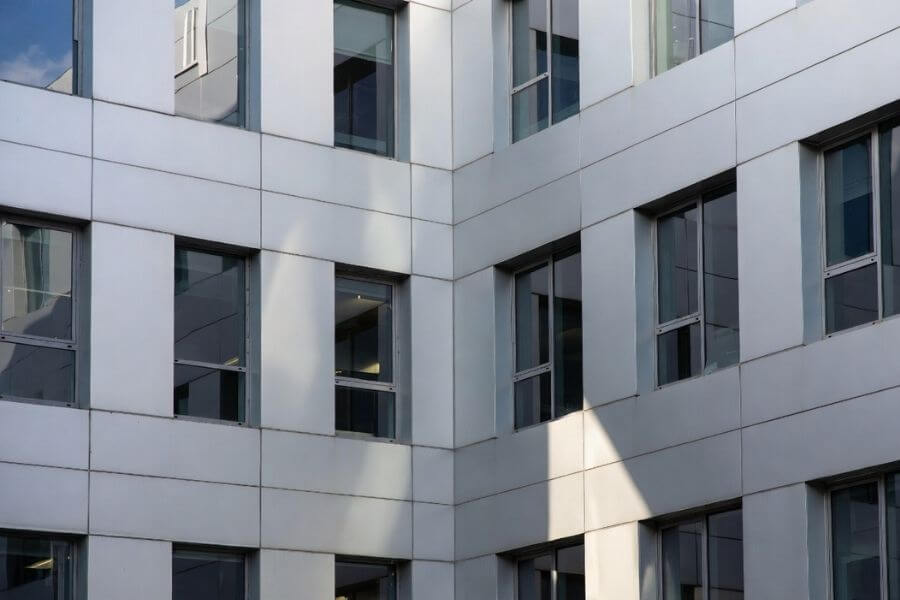
The project required consistent color matching and controlled panel deflection across long elevations. Instead of increasing panel thickness, the design team optimized panel module size, subframe spacing, and stiffener placement.
This approach allowed the façade to maintain visual flatness and structural stability while reducing installation complexity and overall project cost.
What Affects ACM Panel Quality Beyond Thickness
Consistent ACM performance depends on multiple manufacturing factors:
Aluminum coil quality and temper control
Core material composition and bonding stability
Coating systems such as PVDF for long-term weather resistance
Continuous lamination process control
In practice, manufacturers with integrated production lines and strict process control are better positioned to deliver consistent panel flatness, coating durability, and fabrication reliability across large façade projects.
Systems developed under controlled manufacturing environments, such as those used for Aluwell® panels, are designed to maintain these performance characteristics across different thickness options without relying on increased panel thickness alone.
Conclusion – Selecting ACM Thickness Based on System Performance
Selecting ACM panel thickness should be approached as a system-level decision rather than a simple material upgrade.
While 6mm panels provide higher stiffness in isolated testing, most façade systems achieve optimal performance using 4mm panels when combined with appropriate substructure design and installation methods.
Architects, contractors, and developers should evaluate building conditions, panel layout, façade system design, and project cost together. A well-designed façade system consistently delivers better results than increasing panel thickness alone.
Understanding how thickness interacts with the full construction system enables more efficient, reliable, and visually consistent building envelopes.
FAQ
Is 4mm ACM suitable for most façade projects?
Yes. For most commercial façades, 4mm ACM panels provide sufficient rigidity, wind resistance, and system compatibility. They align with standard extrusion systems and fabrication processes, making them the most widely specified thickness for achieving balanced structural performance, installation efficiency, and cost control.
When should 6mm ACM panels be considered?
6mm ACM panels may be considered for large panel formats, high-rise façades, or areas exposed to extreme wind conditions. However, in many projects, similar performance can be achieved through optimized substructure design, support spacing, and stiffener integration rather than increasing panel thickness alone.
Does thicker ACM improve façade flatness?
No. Façade flatness is primarily controlled by manufacturing precision, aluminum coil quality, and fabrication accuracy. Increasing panel thickness does not inherently improve surface flatness when panels are installed within a properly engineered façade system with appropriate support and alignment.
Does ACM thickness affect fire performance?
No. Fire performance depends on the core material, such as fire-retardant or mineral-filled cores, rather than overall panel thickness. Compliance should be evaluated based on system-level fire testing standards, including how the panel performs within a complete façade assembly.
How does panel thickness impact installation cost?
Thicker panels increase weight, which affects transportation efficiency, handling complexity, and installation speed. In many cases, 6mm panels require additional labor and stronger support systems, resulting in higher overall installation costs compared to standard 4mm façade applications.
Can 3mm ACM be used for exterior façades?
3mm ACM panels are generally limited to signage and interior applications due to lower rigidity. For exterior façades, 4mm panels are typically recommended to ensure adequate structural performance, compatibility with façade systems, and long-term durability under environmental exposure.