

08 Apr
Matte vs Gloss ACP Finishes – Which One Works Best for Your Facade
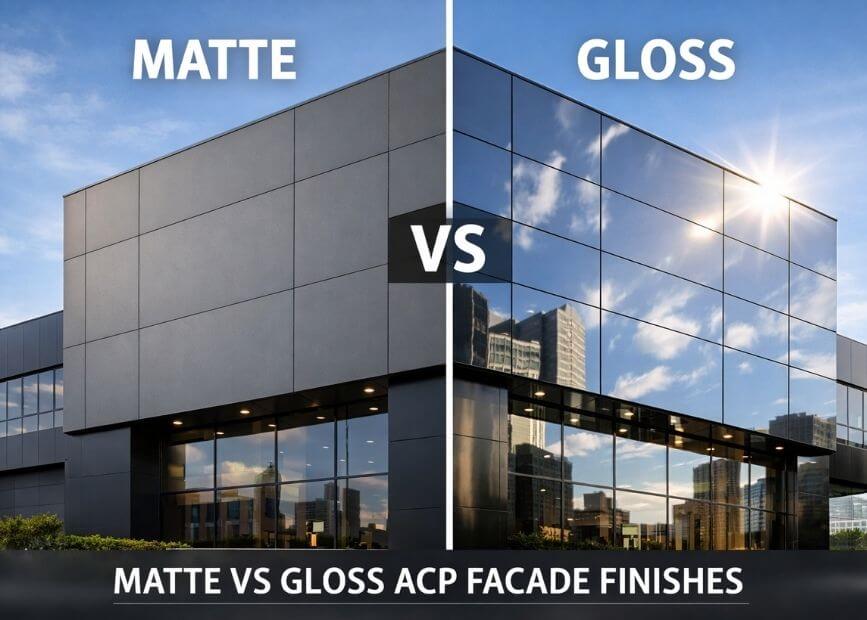
Choosing between matte vs gloss ACP finishes comes down to three practical factors - how the surface reflects light, how much maintenance the façade will require, and how stable the building will look over time.
In most large-scale façade projects, matte finishes are preferred for visual consistency and lower maintenance. Gloss finishes are typically selected when strong reflection and brand visibility are part of the design intent.
This guide explains how each finish performs in real construction environments, not just how it looks in a sample.
What Gloss Level Really Means in ACP Finishes
In aluminum composite panels, surface appearance is defined by gloss units (GU), which measure how much light is reflected from the surface.
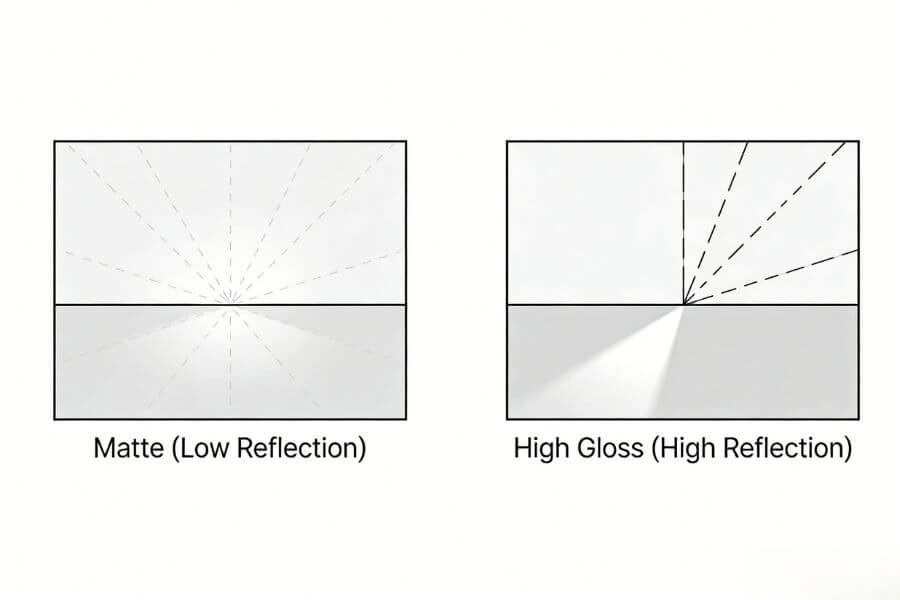
Matte finishes - typically 6–30 GU, diffuse reflection
Standard finishes - typically 30–70 GU, moderate reflection
High-gloss finishes - typically 80–95 GU, mirror-like reflection
This is not a visual preference. It is a measurable parameter that directly affects façade perception, especially under changing daylight conditions.
Lower gloss reduces glare and stabilizes color perception. Higher gloss increases brightness, contrast, and visual movement across the façade.
Matte vs Gloss ACP – What Actually Changes in Design and Performance
Light Behavior and Visual Impact
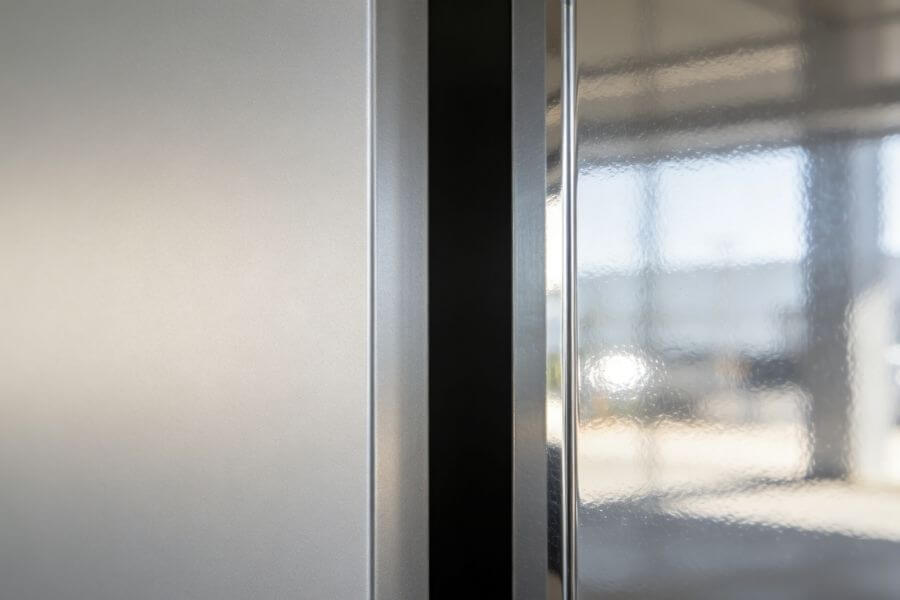
The primary difference is how each finish interacts with light.
Matte surfaces scatter light, producing a controlled and uniform appearance
Gloss surfaces reflect light, creating dynamic and sometimes unpredictable visual effects
This difference becomes more pronounced at scale. On a single panel, the effect is subtle. On a full façade, it defines how the building is perceived.
Color Expression and Perception
Surface finish directly changes how color is perceived.
Matte finishes soften color saturation and reduce visual intensity
Gloss finishes amplify color brightness and make tones appear more vivid
The same RAL or custom color can look noticeably different depending on gloss level. For brand-driven architecture, this distinction is critical.
In practice, matte finishes are often used for neutral palettes and natural textures, while gloss finishes are used where visibility and contrast are required.
Surface Tolerance and Visual Flatness
Finish selection influences how imperfections appear.
Gloss finishes highlight substrate irregularities and panel waviness
Matte finishes reduce visual distortion by diffusing reflected light
In façade systems with large panel modules, this difference becomes highly visible. What appears flat in matte may appear uneven in gloss under direct sunlight.
How Matte and Gloss Finishes Change Facade Performance
At the façade system level, finish selection affects more than appearance. It impacts installation tolerance, visual alignment, and long-term consistency.
Panel Alignment and Joint Visibility
In rainscreen and curtain wall systems, panel joints and alignment define façade rhythm.
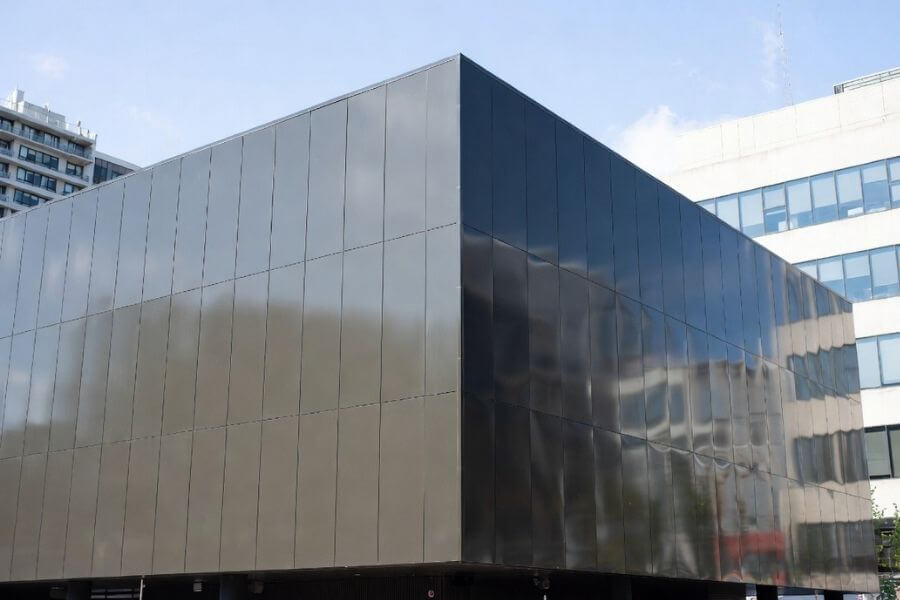
Gloss finishes increase contrast at panel edges, making joint lines more pronounced
Matte finishes reduce contrast, creating a more continuous surface
For large façades, matte finishes help maintain visual uniformity even when minor installation deviations occur.
Subframe Tolerance and Installation Deviation
All façade systems have tolerances in subframe alignment.
With gloss finishes, small deviations in substructure can become visible due to reflection
Matte finishes provide higher tolerance by minimizing reflected distortion
In projects exceeding 10,000 square feet of façade area, this difference can significantly affect perceived quality after installation.
Light Reflection in Urban Environments
Gloss finishes can introduce unintended reflections in dense urban settings.
Reflected sunlight may affect pedestrians or adjacent buildings
Changing reflections throughout the day alter façade appearance
Matte finishes eliminate these issues by maintaining a stable visual response under varying light conditions.
Why Coating Systems Matter More Than Finish Alone
Gloss level defines appearance, but coating systems define durability.
PE Coating – Interior Use
Suitable for interior walls, ceilings, and signage
Offers strong color vibrancy and smooth finishes
Limited UV resistance for exterior applications
PVDF Coating – Exterior Standard
Designed for façade applications exposed to weather
Provides UV resistance, corrosion protection, and color stability
Typical performance lifespan of 15–20 years with proper specification
High-performance systems often use coating thicknesses in the range of 25–30 μm to maintain long-term surface integrity.
In exterior applications, both matte and gloss finishes must be paired with PVDF or equivalent fluoropolymer systems to ensure durability.
Which Finish Is Easier to Maintain Over Time
Maintenance is a critical factor in finish selection.
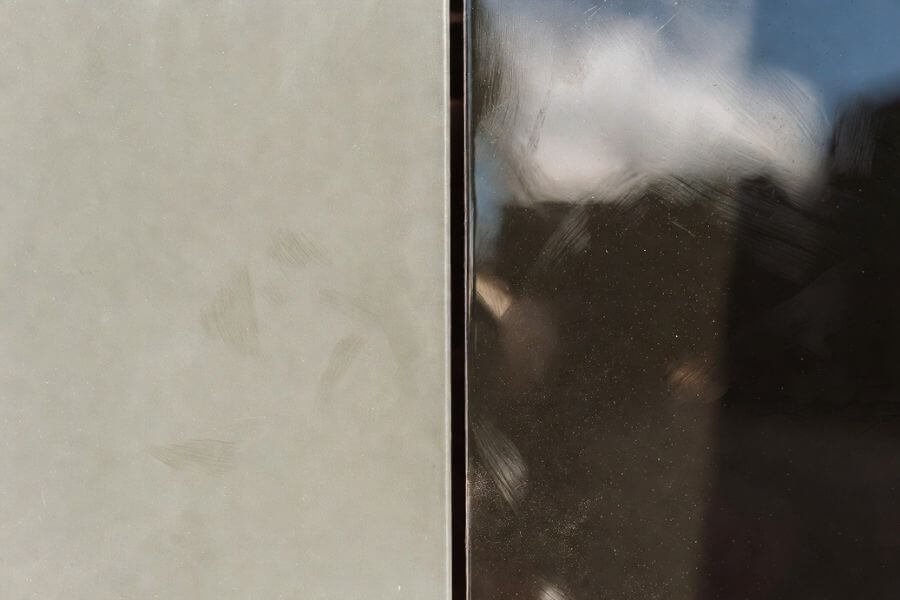
Matte Finishes
Hide dust, fingerprints, and minor scratches
Require less frequent cleaning
Suitable for high-traffic and public environments
Gloss Finishes
Show contamination more easily
Require regular cleaning to maintain appearance
Sensitive to handling and surface damage
Over the lifecycle of a commercial building, maintenance cost differences can become significant, especially for large façade areas.
Where Matte vs Gloss ACP Works Best in Real Projects
Matte Applications
Office buildings and corporate headquarters
Healthcare and educational facilities
Large façades requiring visual consistency
Projects integrating natural or neutral color palettes
Gloss Applications
Retail façades and commercial branding environments
Showrooms and feature walls
Signage systems requiring high visibility
Controlled interior environments
In many façade designs, both finishes are combined to create hierarchy and visual contrast.
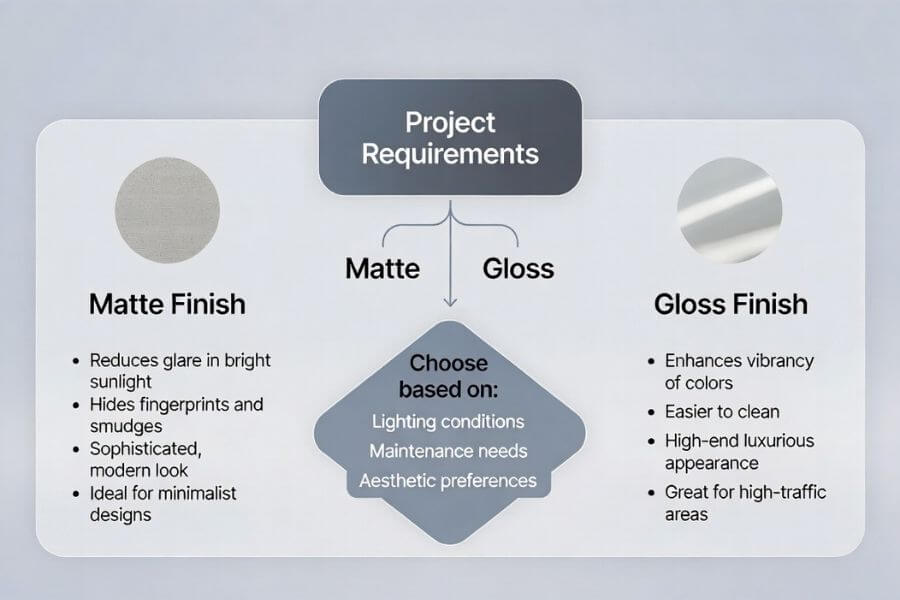
Matte or Gloss – A Quick Decision Guide for Your Project
Choose Matte If
You need consistent appearance across large façade areas
Glare reduction is important
Maintenance needs to be minimized
The design intent is subtle, natural, or architectural
Choose Gloss If
Visual impact and reflection are part of the design concept
Brand visibility is a priority
The project involves smaller or controlled surfaces
Lighting interaction is intentionally used as a design feature
Always Consider
Exterior exposure – PVDF coating is required
Panel size and installation tolerance
Color consistency across production batches
Long-term maintenance expectations
FAQ
Why do high-gloss panels sometimes appear uneven?
High-gloss surfaces reflect light like a mirror, which can amplify minor substrate irregularities or installation deviations. This is typically a visual effect rather than a material defect. Matte finishes diffuse light, reducing the visibility of waviness and improving perceived flatness across large façade areas.
Can PVDF coatings achieve high-gloss finishes?
Standard PVDF coatings typically produce medium gloss levels. Achieving high-gloss performance for exterior applications often requires modified PVDF or alternative fluoropolymer systems. It is important to verify coating specifications, as gloss level and long-term durability must be balanced in façade design.
Is matte finish lower quality than gloss?
No. Gloss level is a design parameter, not a measure of quality. High-end matte finishes often require precise coating control to ensure uniformity and consistency. In many façade applications, matte finishes are specified for their stability, durability, and ability to maintain consistent appearance over time.
Which finish is better for large façades?
Matte finishes are generally preferred for large façades because they reduce glare, minimize visual distortion, and improve consistency across wide elevations. Gloss finishes can highlight panel joints and surface variations, making them more suitable for smaller areas or design features rather than full-scale façades.
How long do ACP finishes last outdoors?
With properly specified PVDF coatings, ACP panels can maintain color stability and surface integrity for approximately 15–20 years under normal environmental conditions. Actual lifespan depends on factors such as UV exposure, pollution levels, installation quality, and ongoing maintenance practices.
Can gloss level be customized?
Yes. Gloss levels can be adjusted to meet specific project requirements. Custom finishes typically require sample approval and may involve minimum order quantities. Controlling gloss consistency across production batches is critical, especially for large façade installations requiring uniform visual performance.
Final Decision – Matching Finish to Design Intent and Performance
For most façade projects that require long-term visual stability, reduced maintenance, and consistent appearance, matte finishes are the safer and more widely used choice.
Gloss finishes should be specified when reflection, brightness, and visual impact are intentional parts of the architectural concept, particularly in branding or feature-driven designs.
In practice, selecting the right finish requires aligning material behavior with façade system design, installation conditions, and environmental exposure. This is where integrated material and engineering understanding becomes critical.
In projects where finish performance must remain consistent across large production batches and complex installations, manufacturers with controlled coating processes, flatness inspection, and collaborative design support can help reduce risk. Systems developed under brands such as Aluwell®, backed by ALUMAX’s experience in composite material production and fabrication integration, are typically specified in projects where both aesthetic control and construction reliability are required.
The goal is not to choose what looks better in isolation, but to ensure the façade performs as intended across its full service life.