

20 Mar
Fire Code Compliance for MCM Façades Explained
Why Fire Code Compliance Matters in Modern Façades
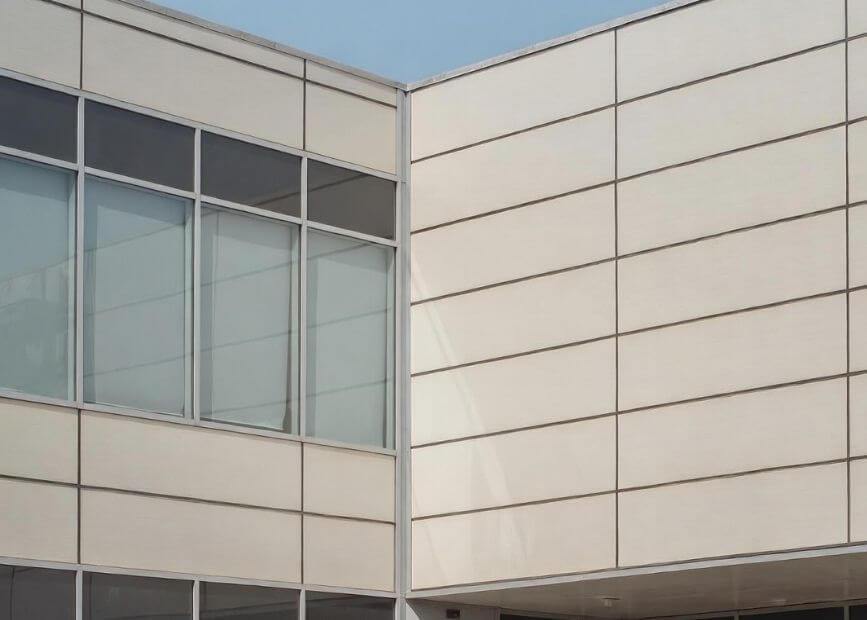
Modern façade design prioritizes flexibility, visual consistency, and long-term durability. Metal composite materials are widely used because they support complex geometries while maintaining lightweight structural performance.
However, fire code compliance remains a critical challenge in façade design. Many project teams understand MCM as a material, but fewer understand how complete wall assemblies are evaluated under real fire conditions.
A clear understanding of fire compliance helps reduce design risk, avoid costly redesign, and ensure smooth project approval.
What Is MCM in Façade Systems
Metal composite material, or MCM, consists of two thin metal skins bonded to a thermoplastic core under controlled heat and pressure.
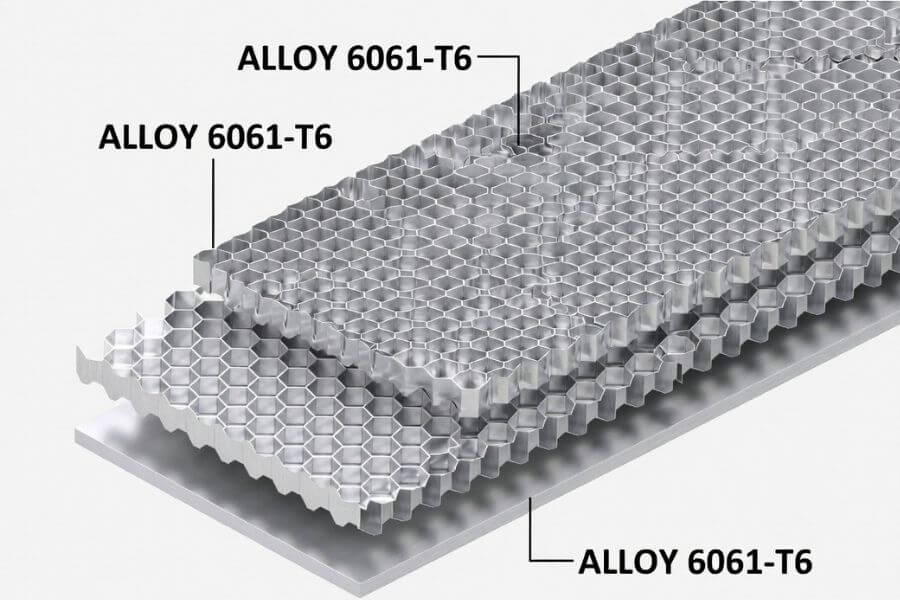
This engineered structure delivers key advantages:
Lightweight panels reduce structural load and simplify installation
High rigidity improves flatness and minimizes oil-canning
Standard thicknesses include 3mm, 4mm, and 6mm, with 4mm commonly used in façade systems
Wide finish options support consistent brand identity across large surfaces
In façade applications, MCM is typically used in ventilated rainscreen systems, where it contributes to both weather protection and architectural expression.
Aluminum-based MCM, also known as ACM, is the most widely specified configuration due to its balance of weight, durability, and fabrication flexibility.
PE vs FR Core - Which One Meets Code Requirements
The core material inside MCM panels directly influences fire performance.
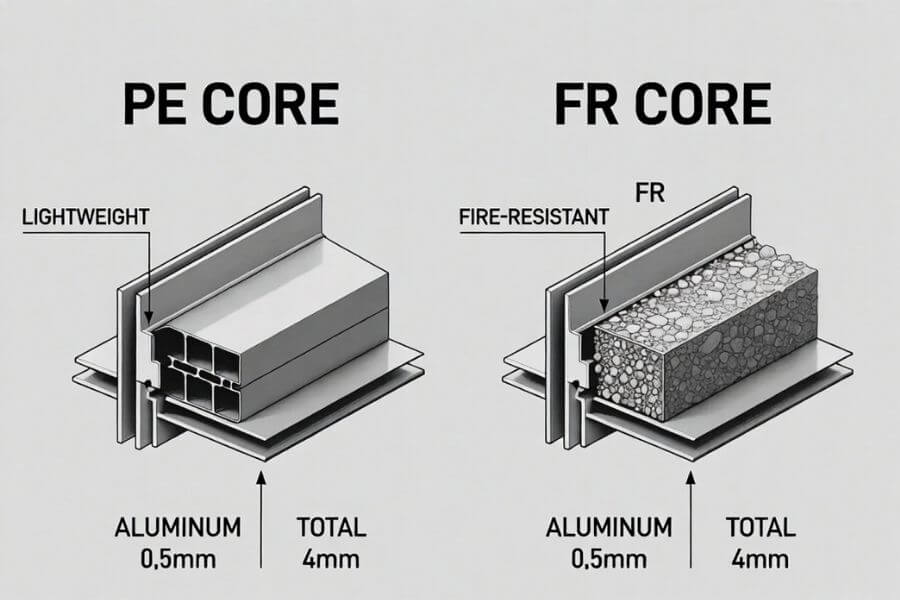
Both polyethylene (PE) and fire-retardant (FR) cores can achieve Class A surface burning ratings under ASTM E84 or CAN/ULC-S102. However, surface testing alone does not determine façade compliance.
PE core characteristics
Lower density and lighter weight
Commonly used for signage and low-rise applications
Not suitable for multi-story façade systems requiring full-scale testing
characteristics
Mineral-filled composition designed to limit flame spread
Required for wall assemblies subject to NFPA 285 or ULC S134 testing
Typically specified for buildings above approximately 40 feet (12 meters)
For most commercial façade systems, FR core panels are required to meet fire code compliance.
Aluwell® FR panels are developed to support these requirements as part of tested façade systems.
Fire Compliance Depends on the Wall Assembly
Fire code compliance is determined by the performance of the entire wall assembly, not by the panel alone.
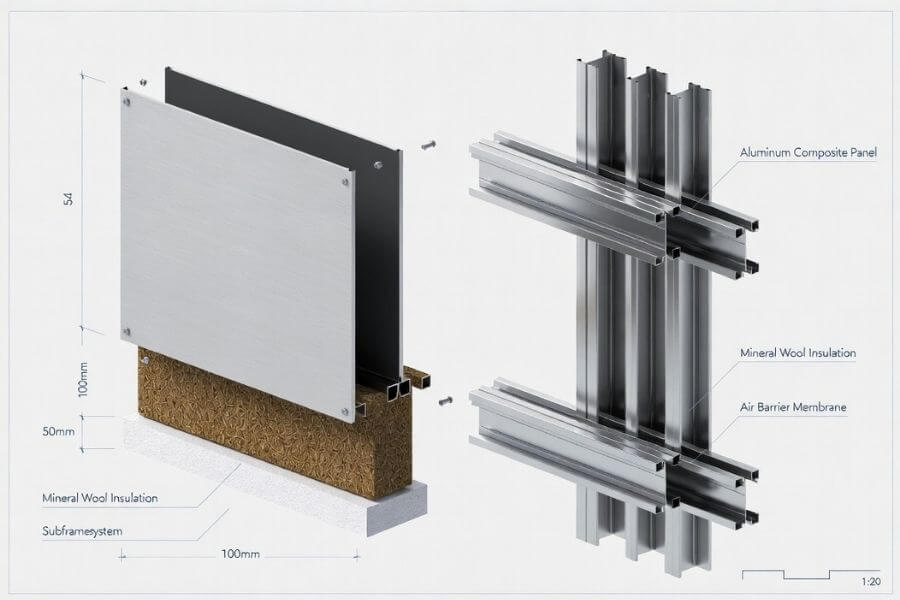
A typical façade system includes:
MCM panels
Sub-framing and attachment systems
Insulation layers
Air and water barriers
Joint and cavity design
A single component can influence the outcome of a fire test. Even if individual materials perform well, the complete system must be validated under full-scale conditions.
This system-based approach is central to modern building codes.
Fire Testing Standards for MCM Façades
NFPA 285 - United States
NFPA 285 is a full-scale fire test required under the International Building Code for certain exterior wall assemblies.
The test evaluates fire propagation in a two-story wall assembly over a 30-minute exposure period.
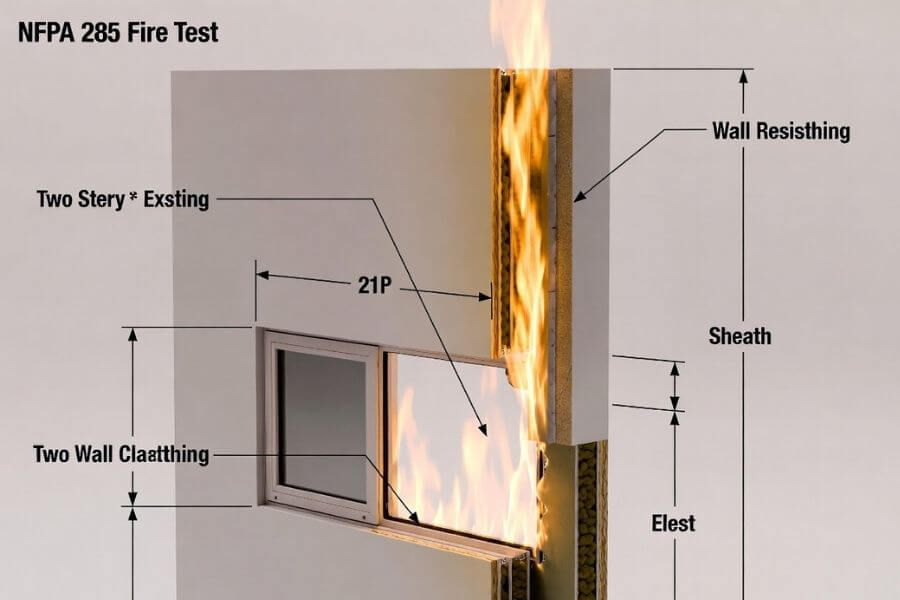
Key parameters include:
Fire originates at a simulated window opening
Flame spread must not exceed approximately 10 feet above the opening
Temperature at critical points must remain below defined limits, typically around 1000°F
The objective is to prevent vertical fire spread and re-entry into upper floors.
ULC S134 - Canada
ULC S134 is the Canadian standard for evaluating fire performance of exterior wall assemblies.
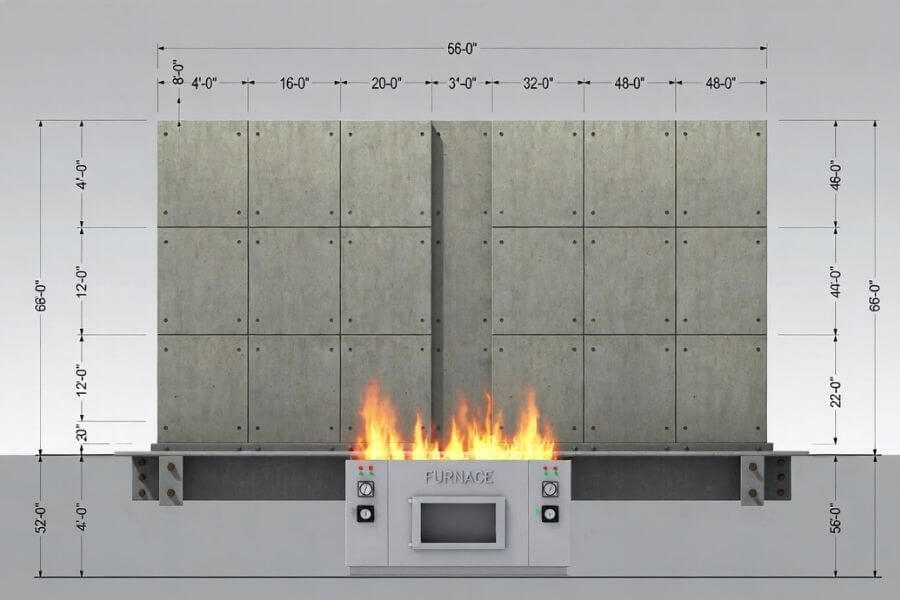
The test uses a large-scale wall setup, typically around 9.8 meters in height, with a furnace simulating fire exiting a window.
Measured factors include:
Flame spread along the façade
Surface temperature
Heat flux at multiple points
Unlike NFPA 285, S134 focuses primarily on exterior wall behavior.
Important considerations
NFPA 285 and ULC S134 are not interchangeable
Compliance must match the project location and governing code
Test results apply only to the specific wall assembly configuration
Changes in insulation, barriers, or framing may require new validation
What Defines a Non-Combustible Material
Non-combustibility is defined through standardized testing.
ASTM E136 in the United States
CAN/ULC S114 in Canada
These tests expose materials to temperatures around 750°C under controlled conditions.
Evaluation criteria include:
Flame presence
Mass loss
Temperature increase
For composite systems such as MCM, each component must be evaluated individually to qualify as non-combustible.
If a system contains combustible elements, compliance may still be achieved through successful full-scale wall assembly testing.
How to Select a Code-Compliant MCM System
Selecting the right MCM façade system requires a structured evaluation process.
Key decision factors include:
Building height and occupancy classification
Local building codes and jurisdiction requirements
Façade system type, including rainscreen configuration
Compatibility of insulation and air barrier materials
Availability of tested wall assembly systems
Practical decision guidelines
Buildings above 40 feet should use FR core panels
Projects in the United States should verify NFPA 285 compliance
Projects in Canada should verify ULC S134 compliance
Any system design changes should match validated test configurations
Early coordination between architects, façade engineers, and material suppliers helps ensure compliance from the design stage.
Aluwell® supports this process by providing technical information aligned with current testing standards and façade system requirements.
Case Example - Mid-Rise Commercial Façade System
A mid-rise commercial office project demonstrates how MCM systems achieve fire compliance in practice.
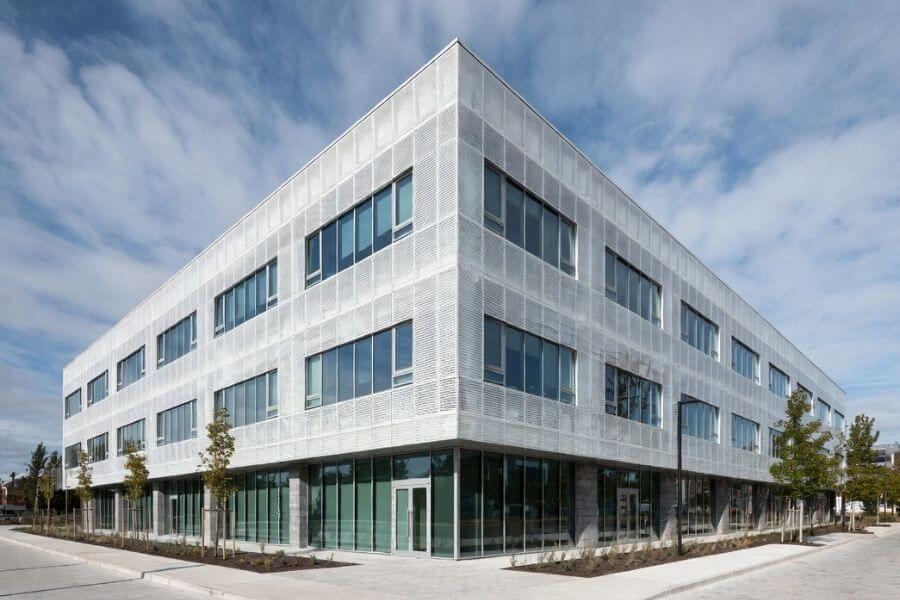
Project overview
Building type commercial office
Height 12 stories
Façade system ventilated rainscreen
Panel specification 4mm aluminum composite panels with FR core
System configuration
Aluminum sub-framing system
Mineral wool insulation
Air and water barrier layer
Ventilated cavity design
Compliance approach
Wall assembly tested under NFPA 285 conditions
Fire spread remained within allowable limits
System maintained structural integrity during testing
This example shows that compliance depends on the coordination of all system components rather than panel selection alone.
FAQ
What is MCM used for in architecture
MCM is widely used in façade cladding, interior wall systems, and architectural features. Its lightweight structure reduces installation load, while consistent surface flatness and flexible fabrication allow designers to achieve precise geometry and uniform visual appearance across large building envelopes.
What is the difference between PE and FR core in MCM
PE core is typically used in low-rise or non-structural applications due to its lower density. FR core contains mineral-filled fire-retardant materials and is required for façade systems that must pass full-scale fire tests such as NFPA 285 or ULC S134.
What is NFPA 285 testing
NFPA 285 is a full-scale fire test used in the United States to evaluate vertical fire spread in multi-story wall assemblies. It simulates fire exiting a window and ensures flames do not propagate along the façade or re-enter upper levels.
What is ULC S134 testing
ULC S134 is a Canadian fire test that evaluates flame spread, temperature rise, and heat flux on exterior wall assemblies. It simulates fire exposure from a window opening and is required for compliance with the National Building Code of Canada.
When is FR core required in MCM systems
FR core is typically required for buildings above approximately 40 feet or when local building codes mandate full-scale fire testing. It is commonly specified for commercial and multi-story façade systems where fire propagation control is critical.
Is MCM considered non-combustible
MCM is a composite material and may not be classified as non-combustible unless all components meet specific test standards. In most façade applications, compliance is achieved through full wall assembly testing rather than individual material classification.
Designing Safer MCM Façade Systems
Fire code compliance in MCM façade design is based on system performance, validated through full-scale testing and aligned with regional building codes.
Successful projects depend on selecting the right materials, designing compatible wall assemblies, and verifying compliance through tested configurations.
Aluwell® provides technical data, system compatibility guidance, and documentation aligned with current fire testing standards, helping project teams move from concept to compliant façade execution with greater confidence.