

08 Apr
Why Metal Composite Materials Are Preferred for Modern Façade Systems
Choosing the Right Façade Material — Why Traditional Options Fall Short in Modern Projects
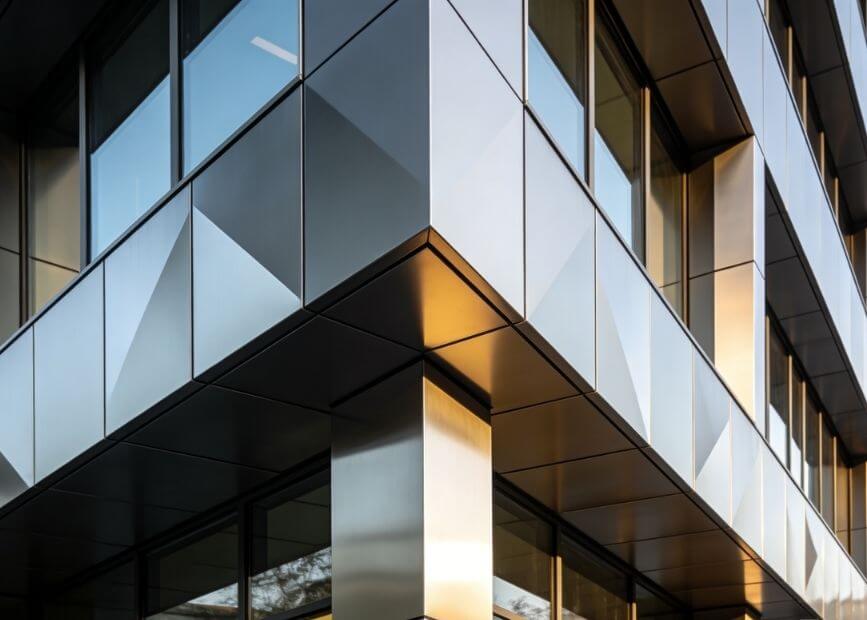
Selecting a façade material directly impacts structural cost, installation efficiency, and long-term building performance. Traditional systems such as stone, precast concrete, and solid aluminum panels often introduce trade-offs between weight, durability, and design flexibility. Heavy cladding materials increase structural load and require additional steel support, while rigid materials limit geometric expression and extend installation timelines. Surface distortion such as oil canning further affects façade quality in large panel applications. Metal composite materials address these issues by combining lightweight structure with engineered rigidity, enabling more efficient construction while maintaining precise visual performance.
What Are Metal Composite Materials and Why They Matter in Façade Design
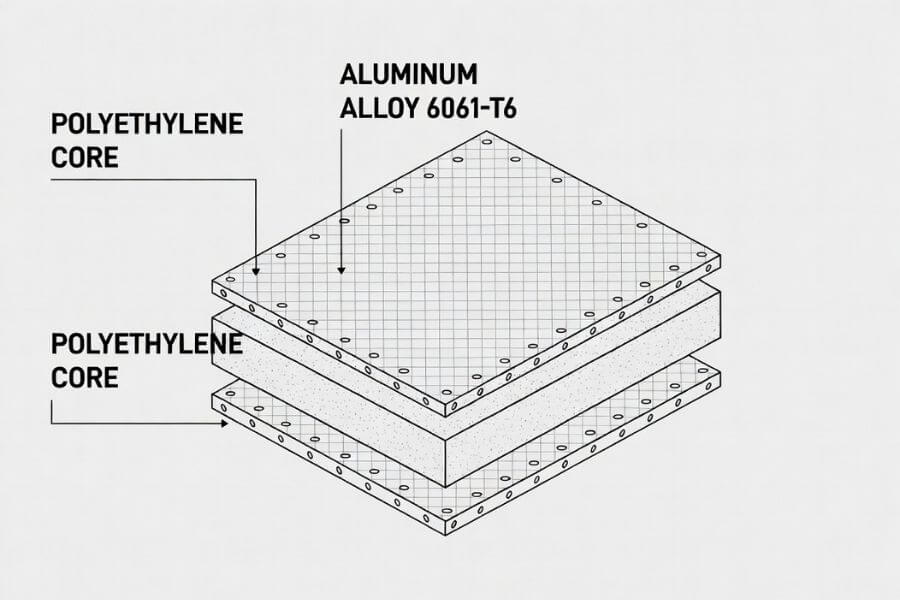
Metal composite materials are engineered panels formed by bonding thin metal sheets to a thermoplastic or fire-resistant core under heat and pressure. This sandwich structure creates a stable panel that balances stiffness, flatness, and weight efficiency. Unlike single metal sheets, the composite structure distributes stress across the panel, reducing deformation and improving long-term dimensional stability. In façade applications, panels are typically fabricated into cassette systems with folded edges, allowing secure attachment to substructures while maintaining alignment across the building envelope. Within a complete façade system, MCM panels are integrated with substructure framing, fixing systems, ventilated air cavities, and insulation layers, forming a rainscreen system that improves moisture control and extends façade lifespan.
Design Flexibility — More Freedom in Façade Colors, Shapes, and Finishes
Modern façade design requires materials that support both architectural intent and construction feasibility. Metal composite materials offer a high level of flexibility that supports aesthetic control and fabrication efficiency. MCM panels are available in a wide spectrum of coil-coated finishes, including PVDF and FEVE systems designed for long-term color stability. Custom color matching enables alignment with corporate identity requirements across large building surfaces. In projects such as retail headquarters or transportation hubs, maintaining color consistency across more than 10,000 square feet becomes critical, as variations can disrupt façade rhythm and weaken visual coherence. Delta E measures color difference in a three-dimensional color space, where lower values indicate better consistency, making it essential for large-scale façade applications.
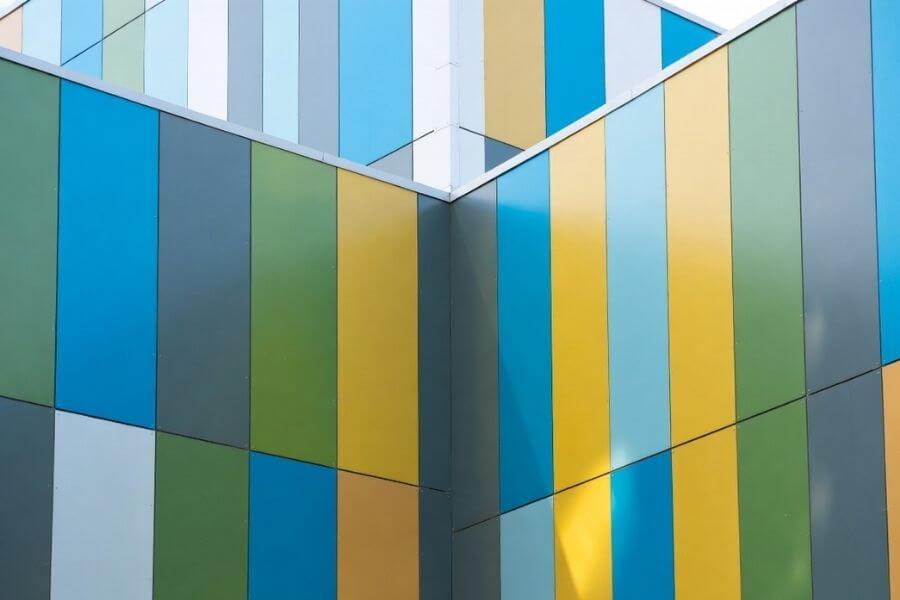
Beyond color, MCM supports architectural composition through façade rhythm and scale control. Alternating panel tones or finishes can reduce perceived building scale while reinforcing brand identity across large façades. Compared to precast concrete or stone systems, MCM panels can be fabricated into curved surfaces, folded cassette systems, and large-format panels with controlled joint spacing. This allows architects to prioritize design intent without being constrained by material limitations. In practice, manufacturers such as Aluwell® support this process through collaborative design, ensuring that aesthetic concepts align with fabrication feasibility and installation requirements.
Lightweight Yet Rigid — How MCM Improves Structural Efficiency
One of the most important metal composite materials benefits is the ability to reduce weight while maintaining rigidity. MCM panels are significantly lighter than traditional cladding materials such as stone or precast concrete, which reduces structural load and can lower steel requirements in the building frame. This is particularly valuable in mid- to high-rise projects where structural efficiency directly impacts project cost. Compared to solid aluminum panels, MCM also offers improved stiffness due to its composite structure.
The bonded panel construction minimizes surface distortion, eliminating oil canning commonly seen in single metal sheets. This ensures consistent flatness across large façade surfaces and improves overall visual quality. In large commercial façades exceeding 10,000 square feet, panel flatness becomes a defining factor in how the building is perceived, especially for corporate and high-visibility architectural projects.
Durability and Weather Resistance — Built for Long-Term Façade Performance
Façade systems must perform reliably under continuous environmental exposure. Metal composite materials are engineered to maintain both structural integrity and visual appearance over time. MCM panels provide resistance to UV radiation, corrosion, and temperature fluctuations, making them suitable for coastal, industrial, and high-exposure environments. High-performance coating systems compliant with AAMA 2605 standards protect the panel surface against environmental degradation and maintain long-term color retention.
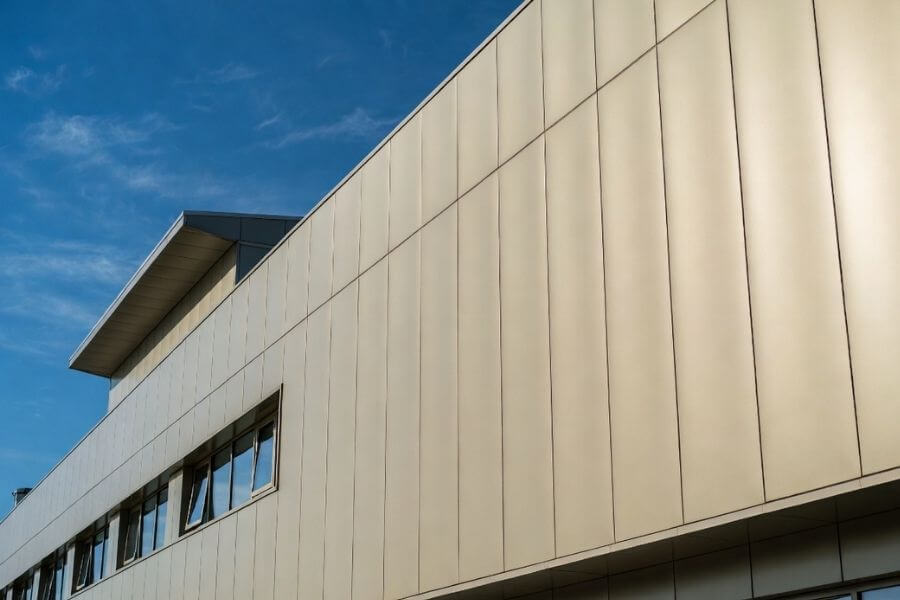
Different core materials allow MCM systems to meet varying fire requirements. PE core panels are typically used in standard applications, while FR core panels are designed for fire-rated systems and can meet standards such as NFPA 285 when integrated into tested wall assemblies. Compared to traditional painted materials, MCM panels retain their finish and structural performance for decades, reducing the need for frequent maintenance or replacement.
Cost Efficiency — Lower Installation and Lifecycle Costs
Façade material selection should be evaluated based on total project cost rather than initial material price. Compared to precast concrete or masonry systems, metal composite materials are easier to handle and install due to their lightweight structure. Prefabricated cassette panels reduce on-site labor and improve installation speed, which is critical in projects with tight construction schedules.
The reduced weight of MCM panels lowers structural demand, decreasing steel usage and transportation costs. Durable coating systems minimize maintenance requirements, while smooth surfaces simplify cleaning. Over the lifecycle of the building, these factors contribute to lower overall costs compared to heavier or less durable façade materials.
Sustainability — Supporting Green Building and LEED Certification
Sustainability is an increasingly important factor in material selection. Metal composite materials support green building objectives through both composition and performance. MCM panels often contain a high percentage of recycled material and can contribute to LEED certification. Environmental Product Declarations are available to support project documentation, while the lightweight nature of the panels reduces transportation energy consumption. Their long service life further reduces the need for replacement, improving overall material efficiency.
How MCM Works in Real Façade Systems — From Panels to Installation
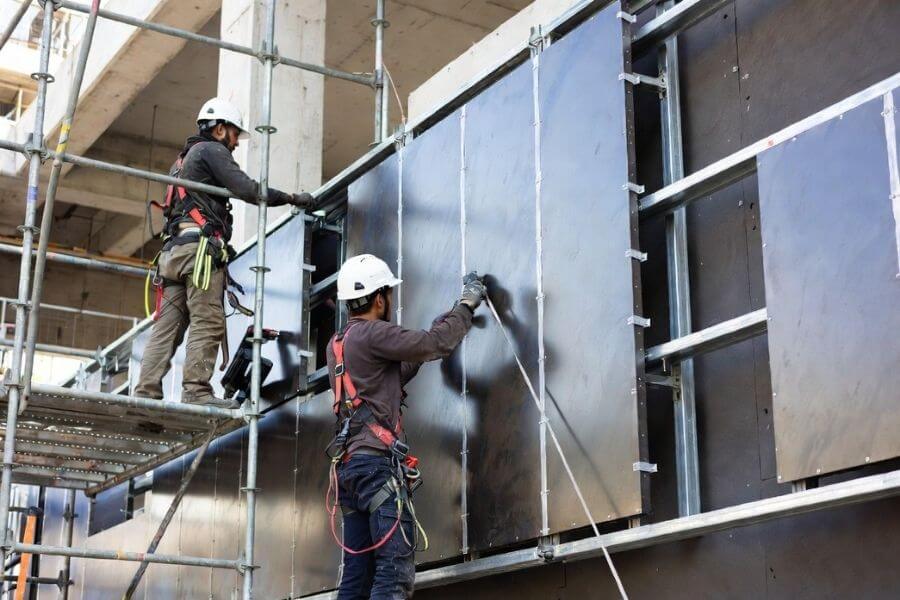
To fully understand metal composite materials benefits, it is necessary to consider the complete façade system rather than the panel alone. In large commercial projects such as office towers or airport terminals, MCM panels are typically installed as part of ventilated rainscreen systems. These systems allow water to drain and air to circulate behind the panels, improving moisture control and thermal performance.
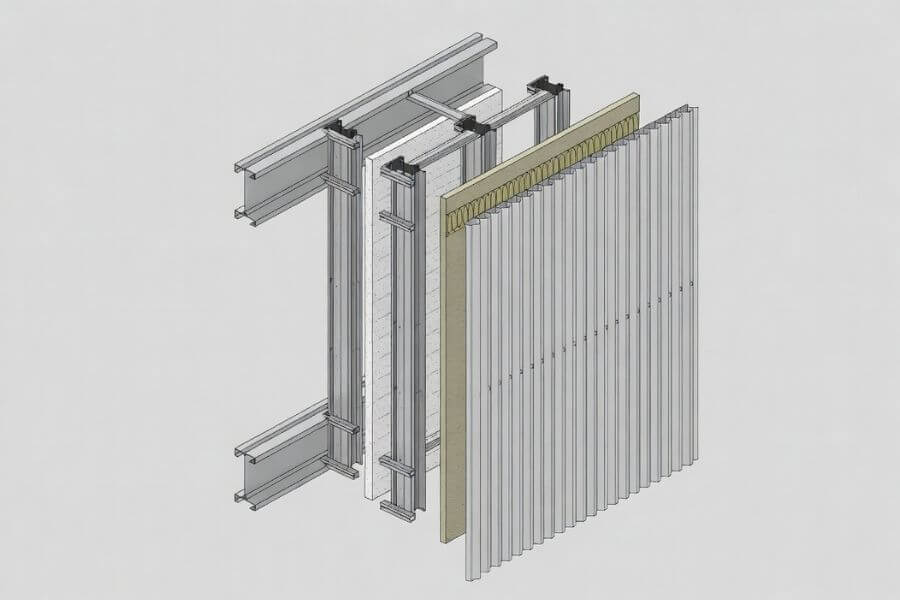
Fabrication plays a critical role in system performance. Panels are cut, routed, and folded into cassette forms, then mounted onto substructures with precise alignment to ensure façade continuity. Proper fabrication ensures dimensional accuracy and system compatibility, directly affecting installation efficiency and long-term performance. Through modularized service approaches, companies like Aluwell® support pre-installation verification, including mock-ups and 1:1 system testing, helping reduce on-site errors and improve construction efficiency.
FAQ
What is the difference between metal composite materials and solid aluminum panels?
Metal composite materials use a bonded core structure that increases rigidity while reducing weight. Compared to solid aluminum sheets, MCM panels maintain better flatness and are less prone to oil canning. This makes them more suitable for large façade applications requiring consistent visual appearance and dimensional stability.
When should FR core panels be used instead of PE core panels?
FR core panels are typically required in high-rise buildings or projects with strict fire safety regulations. They are designed to meet standards such as NFPA 285 when used within tested wall systems. PE core panels are generally used in low-rise or non-critical applications where fire performance requirements are lower.
How does MCM reduce overall building cost compared to traditional materials?
MCM panels reduce structural load, which lowers steel requirements in the building frame. Their lightweight design simplifies handling and speeds up installation, reducing labor costs. Over time, durable coatings reduce maintenance needs, making MCM systems more cost-effective than heavier façade materials across the full lifecycle.
Can metal composite materials maintain color consistency on large façades?
Yes. Coating systems such as PVDF and FEVE provide stable, long-term color performance. Color variation is measured using Delta E, where lower values indicate better consistency. This is critical in large façade applications where uneven color can disrupt visual continuity and reduce overall architectural quality.
Are metal composite materials suitable for complex architectural designs?
MCM panels can be fabricated into curved, folded, and custom geometries, allowing architects to achieve complex façade designs. Their flexibility supports creative freedom while maintaining structural performance, making them compatible with modern façade systems that require both precision and design adaptability.
How do MCM panels perform in harsh environmental conditions?
MCM panels are designed to resist UV exposure, corrosion, and temperature changes. Protective coating systems prevent surface degradation, allowing panels to maintain performance in coastal, industrial, and high-exposure environments. This durability supports long-term façade reliability with minimal maintenance requirements.
Do metal composite materials support sustainable building requirements?
Yes. MCM panels often contain a high percentage of recycled content and can contribute to LEED certification. Environmental Product Declarations are available to support project documentation. Their long service life also reduces replacement frequency, improving overall material efficiency and sustainability performance.
What role does fabrication play in MCM façade performance?
Fabrication defines how panels are cut, routed, and formed into cassette systems that integrate with substructures. Proper fabrication ensures dimensional accuracy, consistent alignment, and system compatibility, which directly affects installation efficiency and the long-term performance of the façade system.
Conclusion — Why MCM Is a Smart Choice for Modern Building Projects
The increasing use of metal composite materials reflects a shift toward façade systems that balance performance, efficiency, and design flexibility. Compared to traditional materials, MCM systems offer lower structural load, faster installation, greater design freedom, and long-term durability with reduced maintenance. For architects, contractors, and developers, the value of MCM lies not only in its material properties but also in its ability to support the entire construction process from design through installation. In complex building projects where performance and aesthetics must align, metal composite materials provide a reliable and scalable solution.