

12 Mar
Polyester vs Fluoropolymer Coatings – Choosing the Right Finish for Architectural Panels
A Comprehensive Guide by Aluwell® Composite Materials – From AAMA Standards to Real-World Applications
Why Coating Selection Matters in Architectural Projects
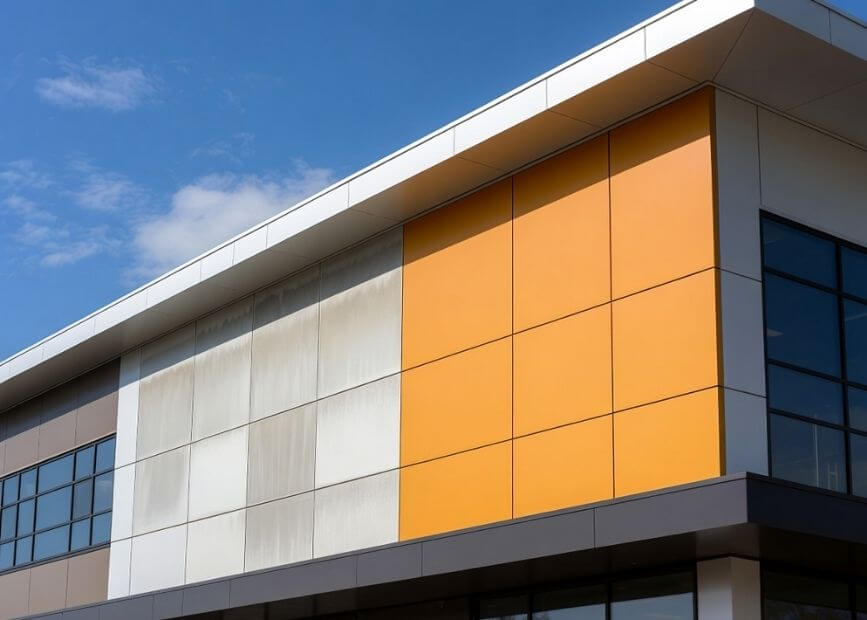
Selecting the wrong coating system can cause a façade to lose its visual impact within only a few years. Panels that once appeared vibrant may begin to fade, chalk, or peel. In many cases, the panel material remains structurally sound, while the coating becomes the limiting factor in façade performance.
In modern façade design, polyester coating systems and fluoropolymer coating systems are among the most widely used finishes for architectural panels and aluminum composite panels. At the time of installation, these finishes can look nearly identical. Over years of exposure to sunlight, temperature changes, moisture, and pollution, however, their performance differences gradually become visible.
Architects and developers therefore face an important design decision — selecting a coating system that balances appearance, durability, and long-term building performance.
At Aluwell®, this discussion is a routine part of façade material consultation. With more than two decades of manufacturing experience, the Aluwell® team works with architects and contractors to ensure that coating selection aligns with the project’s design intent, environmental exposure, and lifecycle expectations.
Understanding Polyester and Fluoropolymer Coating Systems
How Different Coating Technologies Work
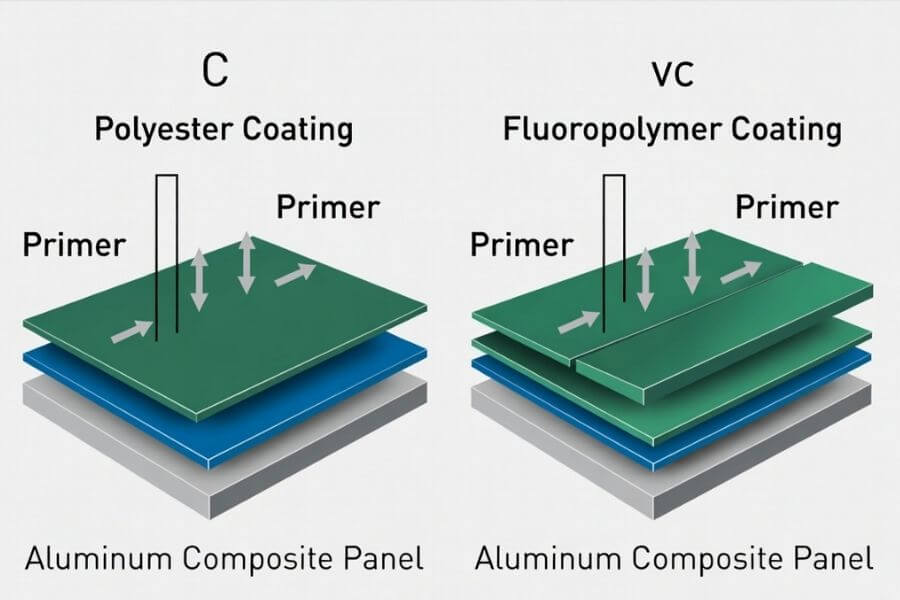
Architectural metal panels are typically finished using two major coating technologies — polyester coatings and fluoropolymer coatings. Each system uses different resin chemistry, which affects color appearance, weather resistance, and long-term durability.
Polyester coating systems belong to the thermoset coating family. These coatings use transparent resin bases that allow pigments to display vivid colors and a wide gloss range. If red dye is dropped into a glass of clear water, the color remains bright and visible. Polyester coatings behave in a similar way, which explains why they are often used for projects requiring vibrant color options.
Once cured during the coil coating process, thermoset coatings form a stable chemical structure. The finish remains firm even under moderate heat and pressure, which helps maintain consistent surface appearance during fabrication and installation.
Fluoropolymer coatings, particularly PVDF coatings such as Kynar® and FEVE coatings such as LUMIFLON®, use a dispersion of fluoropolymer resin combined with clear binders. This mixture produces a slightly milky base that softens color intensity but significantly improves resistance to UV radiation and environmental degradation.
A commonly used analogy helps illustrate the difference. Fluoropolymer coatings behave like ice — when exposed to heat they soften slightly but can return to their original form after cooling. Thermoset polyester coatings behave more like a cooked egg — once cured, their structure remains fixed.
In façade engineering, both technologies play valuable roles when applied in the appropriate architectural context.
At Aluwell®, aluminum composite panels can be manufactured with either polyester coating or fluoropolymer coating systems depending on project requirements. This flexibility allows architects to match façade materials with the environmental conditions and visual goals of each building.
Performance Differences Between Polyester and Fluoropolymer Coatings
While polyester and fluoropolymer finishes may look similar during installation, their performance characteristics diverge significantly over time.
Weather Resistance and AAMA Coating Standards
Architectural coatings are evaluated according to standards established by the American Architectural Manufacturers Association (AAMA).
| Standard | Performance Requirement | Typical Coating Types |
|---|---|---|
| AAMA 2605 | 10-year South Florida exposure, color variation ≤ Delta E5 | Fluoropolymer coatings such as PVDF or FEVE |
| AAMA 2604 | 5-year exterior durability test | High-performance polyester or fluoropolymer |
| AAMA 2603 | Basic coating performance standard | Standard polyester coatings |
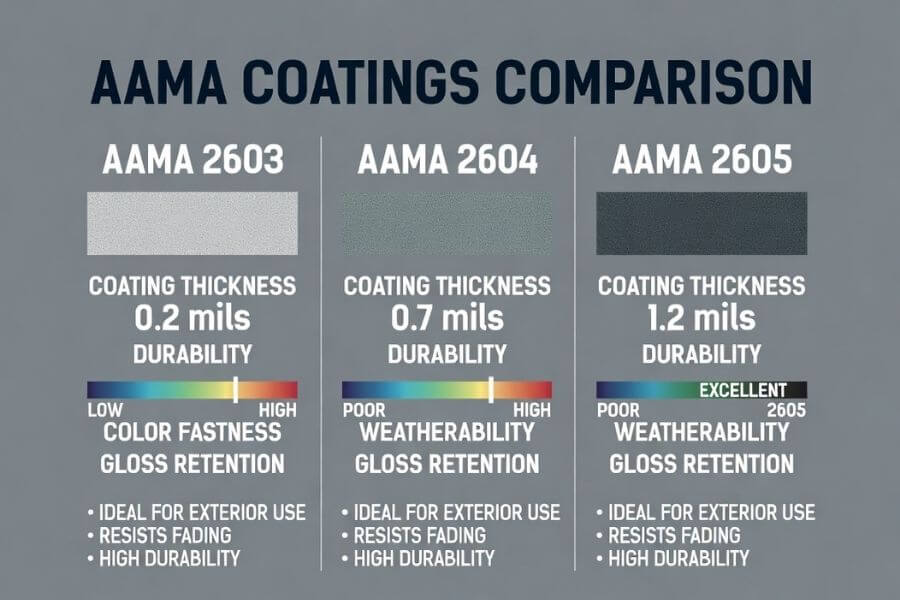
The AAMA 2605 standard represents the highest level of performance for architectural aluminum coatings. Panels must withstand a decade of outdoor exposure in South Florida’s intense UV environment while maintaining a color difference within Delta E5.
Delta E measures the difference between two colors in a three-dimensional color space. Lower Delta E values indicate greater color consistency. For large façades, maintaining a low Delta E value is critical to preserving visual uniformity across thousands of square feet of panel surfaces.
Most polyester coatings meet the requirements of AAMA 2603, and some enhanced formulations reach AAMA 2604. However, fluoropolymer coatings such as PVDF coating and FEVE coating systems are typically required to achieve the demanding AAMA 2605 standard.
Application Recommendations for Different Building Types
Because of these performance differences, architects select coatings according to the building’s environment and design lifespan.
| Application | Recommended Coating | Reason |
|---|---|---|
| High-rise building façades | Fluoropolymer coating (PVDF or FEVE) | Maximum UV resistance and color retention |
| Commercial storefronts | High-performance polyester coating | Balanced durability and cost efficiency |
| Interior architectural panels | Standard polyester coating | Minimal UV exposure |
| Coastal or high-pollution environments | Fluoropolymer coating | Superior chemical and weather resistance |
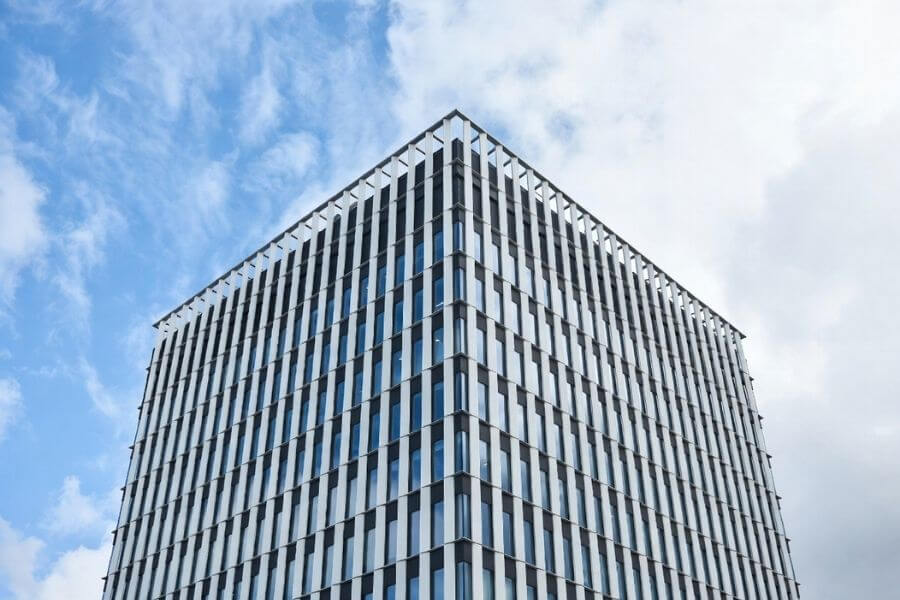
Large façade surfaces often require extremely stable coatings to maintain consistent appearance. For example, a commercial headquarters project may install more than 10,000 square feet of aluminum composite panels as part of a rainscreen façade system. Even slight color fading can disrupt the architectural rhythm of the façade and weaken the building’s visual identity.
For this reason, many landmark projects specify fluoropolymer coating systems to ensure long-term color stability.
Aluwell® composite panels are used globally in façade systems, signage architecture, and interior design applications. With annual production capacity exceeding six million square meters, Aluwell® maintains strict process control during coil coating and panel fabrication to ensure consistent coating quality.
Other Factors Architects Should Consider
Why Warranty Terms Matter
Coating durability is not only a technical issue — it also affects project economics.
Some manufacturers provide long warranty periods that appear reassuring but only cover replacement materials. In façade remediation projects, however, material costs represent only a small portion of total expenses.
Industry data suggests that 75–85 percent of façade repair costs come from labor, removal, fabrication, and installation. Material replacement may represent less than a quarter of the total project cost.
This means a coating failure could require building owners to spend several times the material value on reconstruction and installation work. Architects therefore evaluate coating systems not only by price but also by long-term reliability.
Printing and Post-Fabrication Considerations
Another design consideration is how the coating interacts with post-fabrication processes such as printing or graphics application.
Fluoropolymer coating systems are extremely resistant to ink adhesion. They are difficult to print on, which contributes to their natural resistance to graffiti. Polyester coating systems, in contrast, accept UV printing and graphic applications. This makes them suitable for signage panels and branded architectural elements.
Retail storefront architecture often integrates graphics into façade panels. In these situations, polyester coatings may be preferred because they allow direct printing. Conversely, high-rise façades that prioritize durability often rely on PVDF coating systems to ensure weather resistance and color stability.
The Aluwell® manufacturing system supports both requirements. Backed by the engineering expertise of Taiwan Alumax Industrial Co., which has developed composite panel production equipment since the 1980s, Aluwell® integrates architecture, engineering, and manufacturing knowledge throughout the project process.
Key service capabilities include collaborative design support that connects architectural design with engineering feasibility, customized composite material solutions developed through decades of research and development, modular fabrication services including full-scale installation mock-ups, and precision machining supported by advanced CNC processing centers.
These integrated services allow architects, contractors, and developers to streamline project coordination and reduce construction risks.
Why Architects Work With Aluwell® Composite Materials
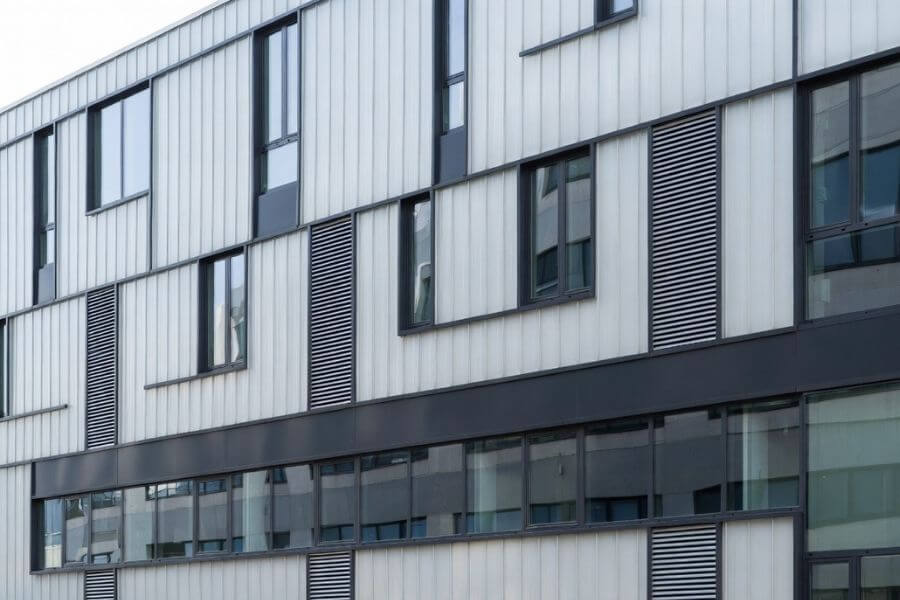
Aluwell® at a Glance
| Item | Details |
|---|---|
| Company | ALUMAX Composite Materials Co. |
| Founded | 1999 |
| Total Investment | 25 million USD |
| Site Area | 63,000 m² |
| Production Area | Over 30,000 m² |
| Annual Capacity | 6 million m² |
| Brand | Aluwell® |
Engineering and Manufacturing Expertise
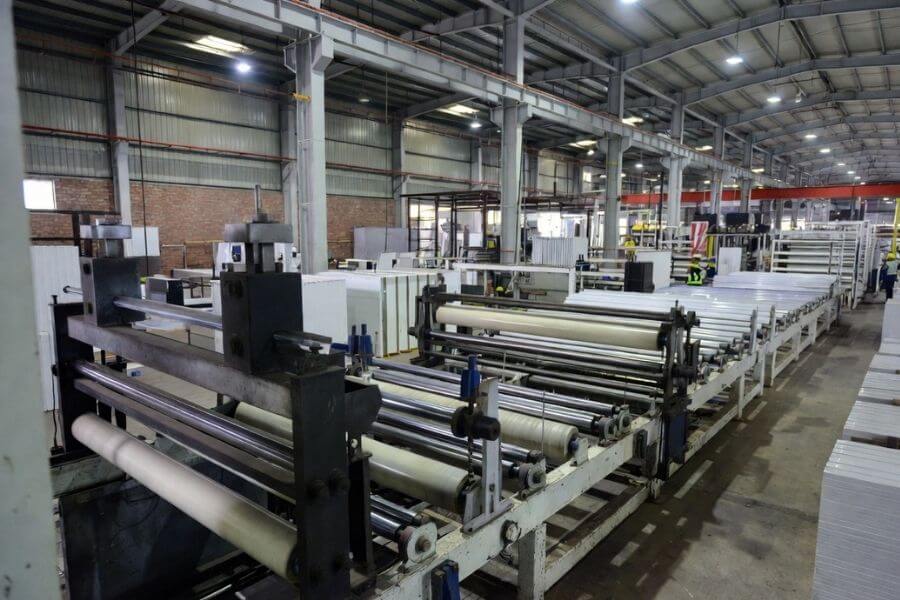
ALUMAX’s parent company, Taiwan Alumax Industrial Co., began developing composite panel production equipment in the 1980s by integrating German engineering technologies with proprietary manufacturing knowledge. The company now holds more than 20 patented technologies, and its equipment has been exported worldwide.
Today, more than 80 percent of aluminum composite panel manufacturers in China use production equipment developed by Taiwan Alumax, demonstrating the company’s strong technological foundation.
Where Aluwell® Panels Are Used
The Aluwell® brand provides a wide range of composite panel solutions used across architectural and industrial applications.
Typical uses include architectural façade systems for commercial buildings and high-rise towers, signage and branding panels for retail and corporate environments, interior architectural cladding for airports, shopping centers, and office buildings, aluminum honeycomb panels for large-span structures, stainless steel composite panels for premium façade finishes, truck body panels, and aluminum composite furniture systems.
Our Approach to Quality and Responsibility
ALUMAX operates under the principles of integrity, innovation, and responsibility. The company focuses on sustainable manufacturing practices while producing durable façade materials that contribute to comfortable and visually appealing built environments.
FAQ
Which coating is better for exterior façades?
For exterior façades, fluoropolymer coatings such as PVDF or FEVE are typically recommended. They meet the AAMA 2605 standard and provide superior resistance to UV exposure, weathering, and long-term color fading compared with standard polyester coatings.
What is the difference between PVDF and FEVE coatings?
Both PVDF and FEVE are fluoropolymer coatings capable of meeting AAMA 2605 performance. PVDF offers excellent weather resistance, while FEVE coatings allow brighter colors and a wider gloss range for architectural façade design.
Can Aluwell® panels support UV printing?
Yes, depending on the coating system. Polyester-coated panels accept UV printing and graphic applications, making them suitable for signage or branding panels. Fluoropolymer coatings resist ink adhesion and prioritize long-term durability.
Why is the AAMA 2605 standard important?
AAMA 2605 is the highest architectural coating standard for aluminum panels. It requires coatings to maintain color stability and film integrity after long-term outdoor exposure, ensuring reliable façade performance in demanding climates.
Can polyester coatings be used outdoors?
Polyester coatings can be used outdoors in certain low-exposure environments or short lifecycle projects. However, high-performance façades and buildings with long service expectations usually require fluoropolymer coatings.
How should architects choose the correct coating?
Architects typically evaluate environmental exposure, façade design goals, maintenance expectations, and project budget. Selecting the appropriate coating helps ensure long-term color stability and reliable performance of architectural panels.
Choosing the Right Coating for Your Project
Polyester and fluoropolymer coatings may look similar at the beginning of a project, but their long-term performance differences become clear over time.
Architects typically evaluate several factors when selecting façade coatings, including environmental exposure conditions, desired service life of the building envelope, façade design and color consistency requirements, and long-term maintenance costs.
For projects that demand long-term color stability and weather resistance, fluoropolymer coatings such as PVDF or FEVE are often the preferred choice. Polyester coatings remain valuable for interior architecture, signage, and applications where printing flexibility and cost efficiency are important.
At Aluwell®, the focus extends beyond supplying aluminum composite panels. The company works closely with architects, contractors, and developers to ensure that material selection supports the architectural vision and long-term performance of the building envelope.
By combining advanced manufacturing capabilities, extensive coating expertise, and collaborative design support, Aluwell® helps transform architectural concepts into durable façade systems that perform reliably for decades.