

30 Apr
How Aluminum Composite Panels Improve Sustainable Façade Performance
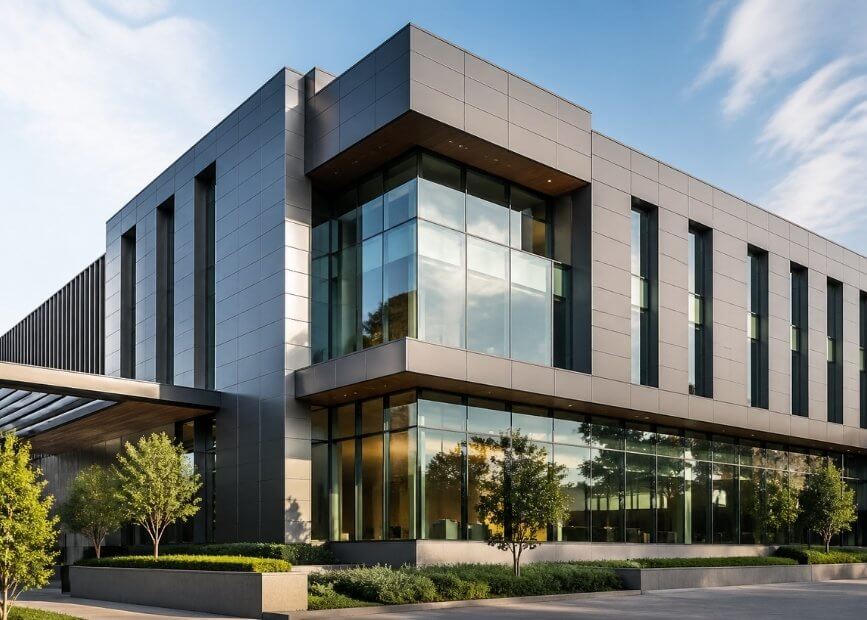
Sustainable construction now focuses on how building envelopes perform across their full lifecycle. Composite façade panels have become a practical solution for architects and developers seeking to balance environmental performance, cost control, and façade design.
As a lightweight composite system, composite panel systems integrate structural stability, energy efficiency, and design flexibility. This makes them highly effective in modern façade applications where performance and sustainability must align.
Why Aluminum Composite Panels Are a Sustainable Building Material
Recyclability and Resource Efficiency
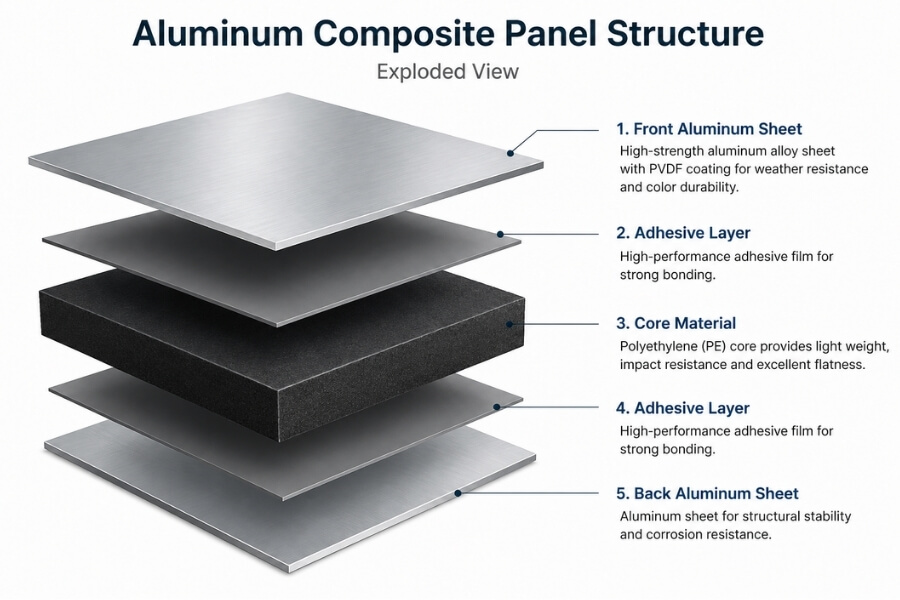
One of the main advantages of architectural composite panels is their ability to support circular material use.
Aluminum is fully recyclable without loss of performance
Recycling consumes about 5% of the energy required for primary production
Composite structures reduce total aluminum usage compared to solid sheets
This reduces embodied carbon while maintaining structural efficiency.
Thermal Performance in Building Envelopes
Façade panel systems improve building envelope performance by reducing heat transfer.
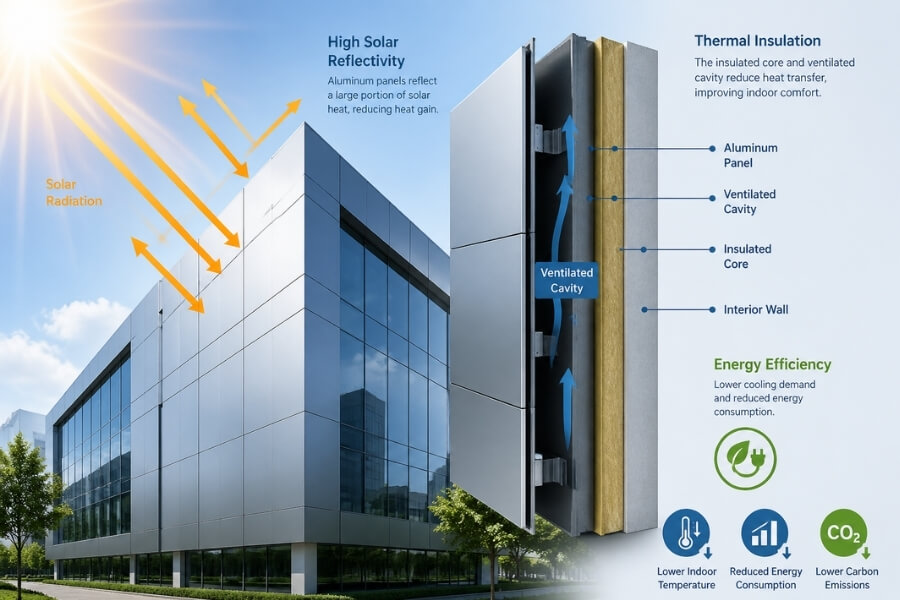
Aluminum surfaces reflect solar radiation and limit heat gain
Panel systems reduce thermal exchange between exterior and interior spaces
Lower heat load reduces HVAC energy demand
In ventilated façade systems, an air cavity further enhances insulation performance and moisture control.
Long-Term Durability and Lifecycle Value
Durability is a key factor in sustainable material selection.
PVDF-coated aluminum composite panels maintain performance for 15–20 years or longer
Resistance to UV exposure, corrosion, and pollutants reduces degradation
Low maintenance requirements reduce resource use over time
Extended service life directly lowers lifecycle environmental impact.
How ACP Panels Improve Building Façade Systems
Composite cladding systems function as part of a complete façade system rather than as standalone materials.
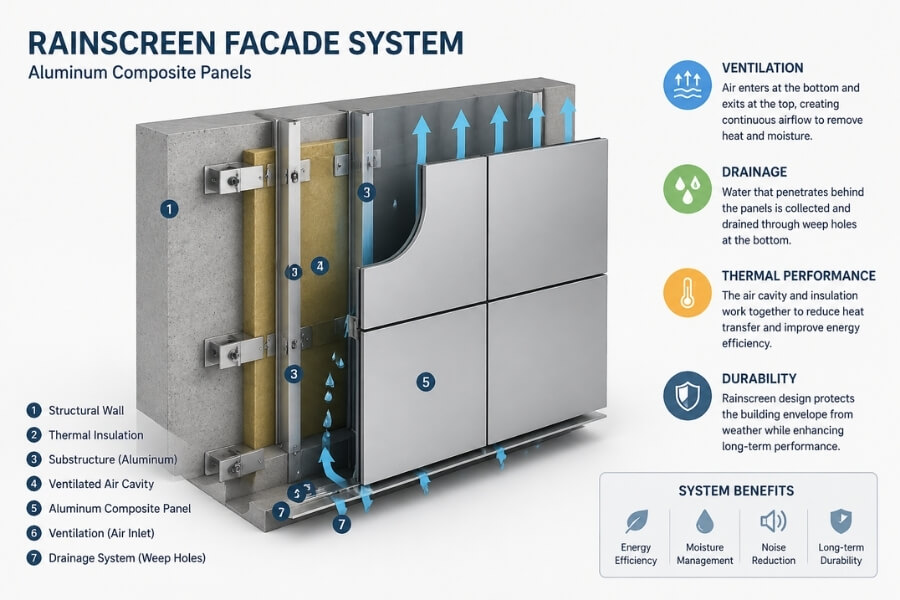
In a typical rainscreen façade:
Panels are installed using cassette or tray systems
A ventilated cavity allows drainage and airflow
Thermal bridging is minimized through system design
This improves envelope durability, moisture management, and energy efficiency.
In commercial projects, more than 10,000 square feet of ACP façade panels are often installed, where panel flatness and alignment are critical for both performance and visual quality.
As one façade contractor noted, ACP systems simplify installation sequencing while maintaining consistent joint alignment across large surfaces.
ACP Panels vs Traditional Façade Materials
Compared with conventional cladding materials, aluminum composite panels offer measurable advantages.
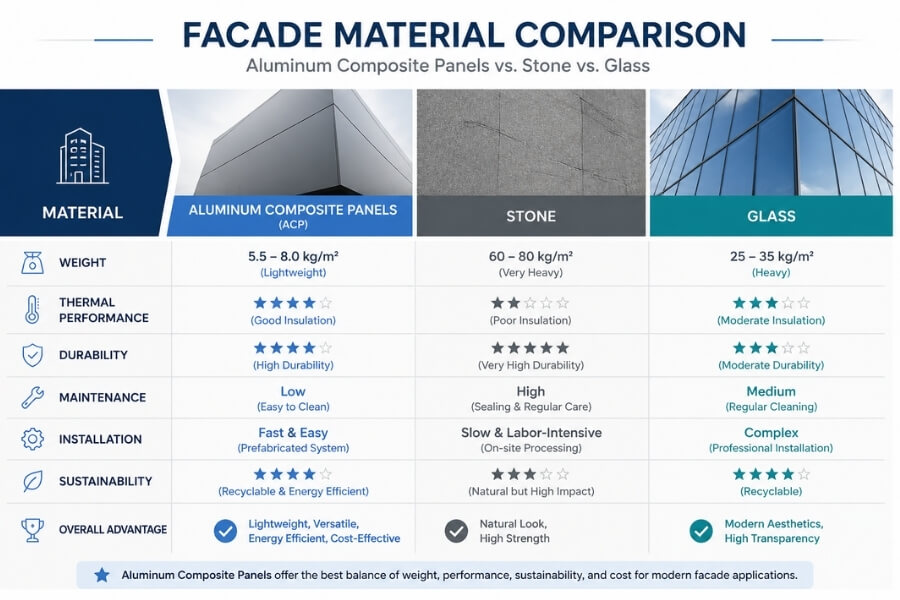
Versus stone
Up to 80% lighter, reducing structural load
Lower transportation and installation impact
Versus glass curtain walls
Better thermal control in opaque façade zones
Reduced solar heat gain
Versus solid aluminum sheets
Lower material consumption
Improved stiffness-to-weight ratio
This makes ACP panels a more efficient option for projects requiring both performance and cost balance.
Design Flexibility in Modern Façade Architecture
Modern architecture requires materials that support both performance and visual identity. Architectural cladding panels provide a wide range of design possibilities.
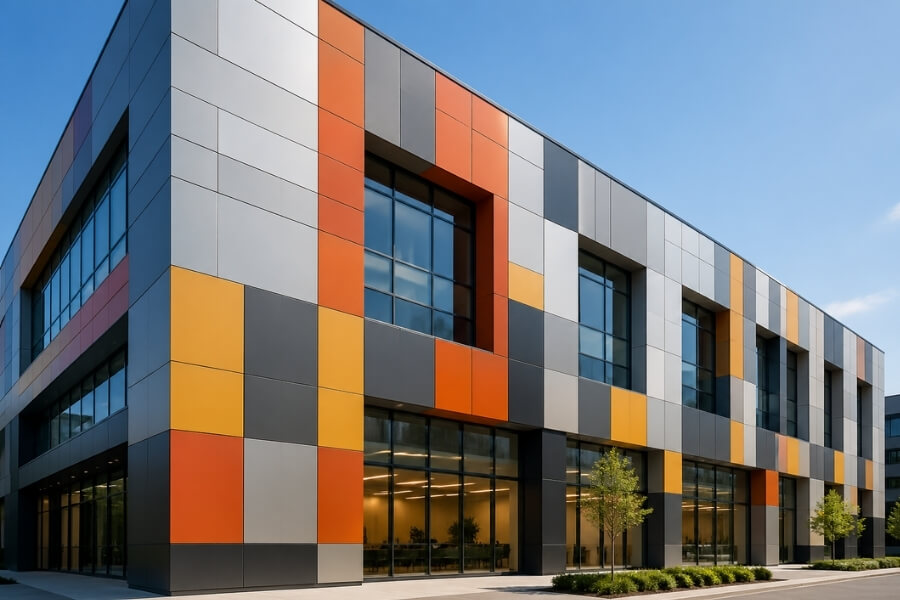
Solid colors, metallic finishes, wood grain, and stone textures
Large-format panels reduce joint density and simplify façade composition
Consistent color matching supports brand identity
Alternating panel tones can reduce the perceived scale of large façades while maintaining visual rhythm.
In practice, systems like Aluwell® are often specified when projects require consistent color control, scalable fabrication, and long-term façade stability.
Coating Systems and Environmental Performance
Coating technology directly affects both durability and environmental safety.
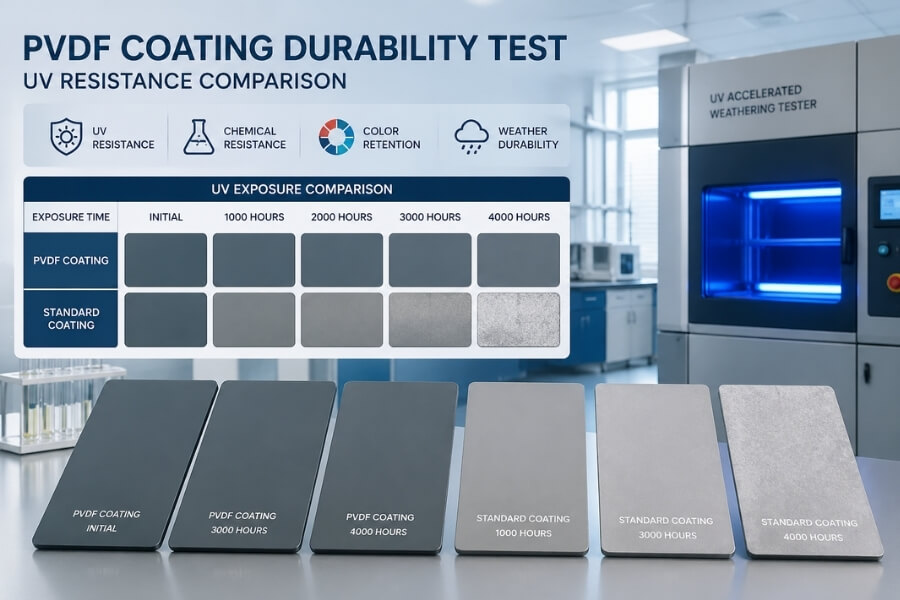
PVDF Coating Systems
PVDF coatings are widely used for exterior façade applications due to their long-term stability.
High resistance to UV degradation
Strong chemical resistance in polluted environments
Reliable color retention over time
Color Consistency and Delta E
Color variation is measured using Delta E (ΔE).
Delta E measures the difference between two colors in a three-dimensional color space. Lower values indicate higher consistency.
Maintaining low ΔE values ensures uniform façade appearance across batches and reduces visual inconsistency in large installations.
Heavy Metal-Free Pigments
Modern coating systems use safer formulations.
Lead-free and cadmium-free pigments
Low-VOC coating processes
Reduced environmental and health risks
These improvements align façade materials with current environmental standards.
How ACP Panels Are Manufactured Sustainably
Sustainability also depends on manufacturing processes.
Advanced production systems include solar-powered energy systems, water recycling systems, solvent recovery systems in coating lines, and thermal oxidizers that eliminate over 99% of airborne pollutants.
Aluwell®, produced by ALUMAX composite materials, integrates these practices into its manufacturing system. With decades of experience in composite panel production and equipment engineering, process control is applied at each stage to ensure consistent quality and reduced environmental impact.
Real Project Example – ACP Panels in a Sustainable Façade
Project Background
A commercial office development in Southeast Asia required a façade upgrade to improve energy performance and modernize its external appearance. The project covered approximately 12,000 square feet.
Architectural Design Concept
The design focused on a modular façade layout with controlled color variation to reduce visual mass while maintaining a consistent corporate identity.
Material Selection
4 mm aluminum composite panels
PVDF coating system for exterior durability
Custom neutral tones with controlled ΔE values
Fabrication and Installation
Panels fabricated using a cassette façade system
Installed as a ventilated rainscreen assembly
CNC processing ensured dimensional accuracy and consistent joint alignment
Final Building Impact
Reduced solar heat gain, improved indoor thermal stability, lower maintenance requirements, and enhanced façade uniformity and visual clarity demonstrate how ACP panels contribute to both environmental performance and architectural precision.
How ACP Panels Support Green Building Certifications
Aluminum composite panels can support certification systems such as LEED.
They contribute through improved energy efficiency, use of recyclable materials, reduction of urban heat island effects, and lower construction waste through prefabrication. These factors help projects achieve higher environmental ratings without increasing system complexity.
FAQ
Are aluminum composite panels environmentally friendly in real applications
Aluminum composite panels are considered environmentally responsible due to their recyclability, long service life, and energy-efficient performance. When integrated into façade systems, they help reduce operational energy demand while minimizing material waste across the building lifecycle, making them a practical solution for sustainable construction projects.
Do ACP panels contain harmful substances such as formaldehyde
High-quality ACP panels use non-toxic core materials and controlled coating systems. Certified products are free from formaldehyde and comply with environmental safety standards. Proper material selection and supplier qualification are essential to ensure consistent performance and avoid risks associated with low-quality or uncertified products.
How long can ACP panels maintain performance in outdoor environments
With PVDF coating systems, ACP panels can maintain structural integrity and color stability for 15 to 20 years or longer. Their resistance to UV exposure, corrosion, and environmental pollutants reduces degradation, making them suitable for long-term exterior façade applications with relatively low maintenance requirements.
Can ACP panels be recycled after use
Yes, ACP panels can be recycled by separating the aluminum layers from the core material. The recovered aluminum can be reused with significantly lower energy consumption compared to primary production. This supports circular material use and helps reduce the environmental impact associated with construction waste.
How do ACP panels compare with traditional façade materials in sustainability
Compared with materials such as stone, glass, or solid aluminum, ACP panels offer lower weight, improved thermal performance, and reduced structural demand. These advantages contribute to lower transportation impact, improved energy efficiency, and more resource-efficient construction, making them a practical option for sustainable façade design.
Why ACP Panels Are a Practical Choice for Sustainable Buildings
Sustainable construction requires materials that perform across structure, energy efficiency, and lifecycle value. Composite façade systems provide a balanced solution that integrates these requirements into a single building envelope approach.
For projects where weight, durability, and long-term cost must be carefully managed, ACP panels remain one of the most practical façade solutions available.
With continued innovation in coating systems, material engineering, and manufacturing processes, solutions such as Aluwell® demonstrate how sustainable performance can be achieved without limiting architectural design.