

11 Mar
What Is MCM? A Practical Guide to Metal Composite Panels in Modern Architecture
Why Metal Composite Panels Are Transforming Modern Architecture
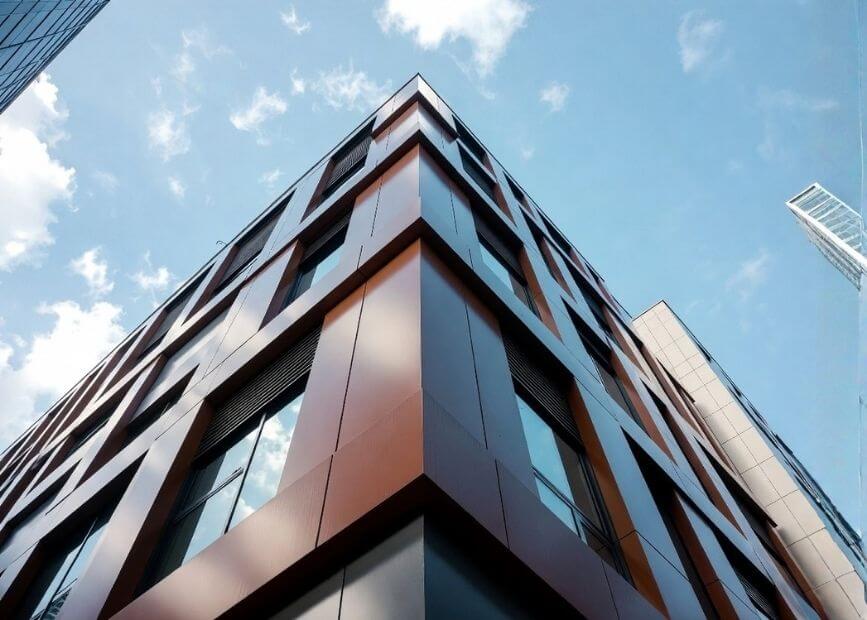
Walk through any contemporary city and you will notice buildings with clean lines, smooth surfaces, and carefully coordinated colors. Many of these façades rely on metal composite material, commonly known as MCM.
Metal composite panels have transformed façade engineering over the past several decades. They allow architects to create visually striking building envelopes while maintaining structural efficiency and long-term durability.
Manufacturers around the world contribute to this development. Among them, ALUMAX Composite Materials produces the Aluwell® brand of composite panels, supporting architectural projects that require reliable performance, precise color consistency, and flexible fabrication options.
What Is MCM and How Do Metal Composite Panels Work
Metal composite material refers to a layered panel system composed of thin metal skins bonded to a lightweight core. The International Building Code describes MCM as metal skins attached to both sides of a solid plastic core.
Most architectural MCM panels use aluminum as the outer metal layer. However, other metals such as copper, stainless steel, zinc, and titanium can also be used when specific visual or environmental properties are required.
The core material is usually a thermoplastic material such as polyethylene. Fire-resistant mineral cores are also available for projects requiring enhanced fire safety performance.
This composite structure combines the strength and durability of metal with the lightweight stability of engineered materials. The result is a panel that maintains rigidity while remaining significantly lighter than traditional solid metal sheets.
How Metal Composite Panels Are Manufactured
Metal composite panels are produced through a continuous lamination process that bonds metal skins to the core material under heat and pressure. This process ensures strong adhesion and consistent panel flatness across large surfaces.
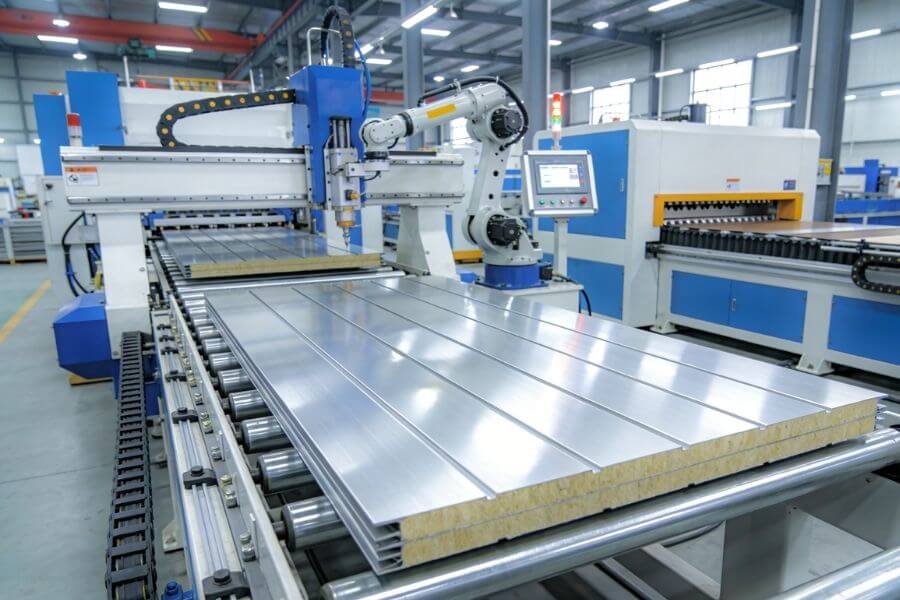
The manufacturing process typically includes aluminum coil preparation, surface cleaning and primer coating, application of architectural color coatings, lamination with the core material, and final cooling and trimming.
Most architectural panels are available in thicknesses such as 3 mm, 4 mm, and 6 mm. Among these options, 4 mm panels are widely used in façade systems because they provide a balanced combination of rigidity and fabrication flexibility.
Surface finishes are applied through coil coating technology before lamination. High-performance coatings such as PVDF or FEVE provide excellent resistance to ultraviolet radiation, weather exposure, and environmental pollutants.
Manufacturers such as ALUMAX combine advanced lamination equipment with strict quality control procedures. These production standards help ensure consistent bonding strength, panel flatness, and coating durability for Aluwell® metal composite panels.
Understanding the Structure of an MCM Panel
To understand how metal composite panels achieve their performance characteristics, it helps to examine their layered structure.
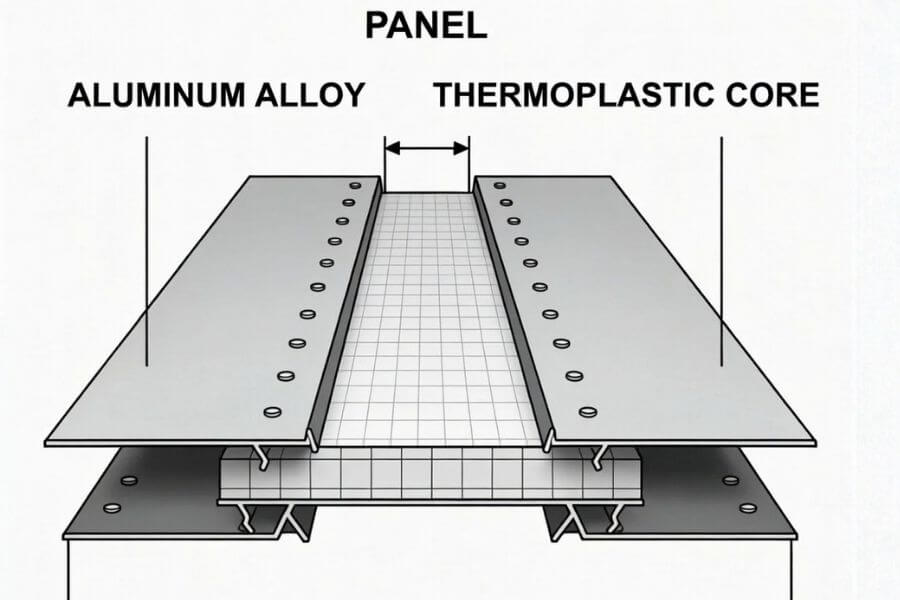
A typical architectural MCM panel consists of several functional layers. These include a protective surface coating, the architectural color layer, the outer aluminum skin, adhesive bonding layers, the composite core material, and the inner aluminum skin protected by primer.
The aluminum skins provide strength, corrosion resistance, and the visible architectural surface. The core material maintains panel thickness while keeping the overall weight low.
This balanced sandwich construction improves rigidity and reduces deformation compared with traditional metal sheets. It also helps panels maintain dimensional stability across large façade areas.
Panel structure diagrams are often used in architectural presentations to illustrate how these layers work together. Such diagrams help architects, engineers, and contractors better understand the performance of composite façade materials.
Why Architects Choose Metal Composite Panels
Architects often specify metal composite panels because they provide a strong balance between design flexibility and structural performance.
Metal composite panels are lightweight compared with solid metal sheets. In many cases they weigh only one quarter to one third as much as comparable sheet metal. This lower weight reduces structural loads and simplifies installation during construction.
The composite structure also improves flatness. Traditional metal sheets may develop visible distortion due to temperature changes. This effect is often called oil canning. The layered structure of MCM panels helps maintain smooth surfaces across large façade areas.
Durability is another key advantage. Architectural coating systems protect the metal surface from ultraviolet radiation, corrosion, and environmental pollutants. These coatings are designed to maintain color stability and surface performance for many years.
Maintenance requirements are relatively low. Exterior panels can typically be cleaned with water as part of routine building maintenance.
Metal composite panels also support sustainable building practices. Aluminum used in panel skins often contains recycled material and can be recycled again at the end of the building’s life cycle.
Maintaining these characteristics requires precise manufacturing control. ALUMAX emphasizes strict production standards so that Aluwell® panels provide consistent façade performance over time.
Design Possibilities with Metal Composite Panels
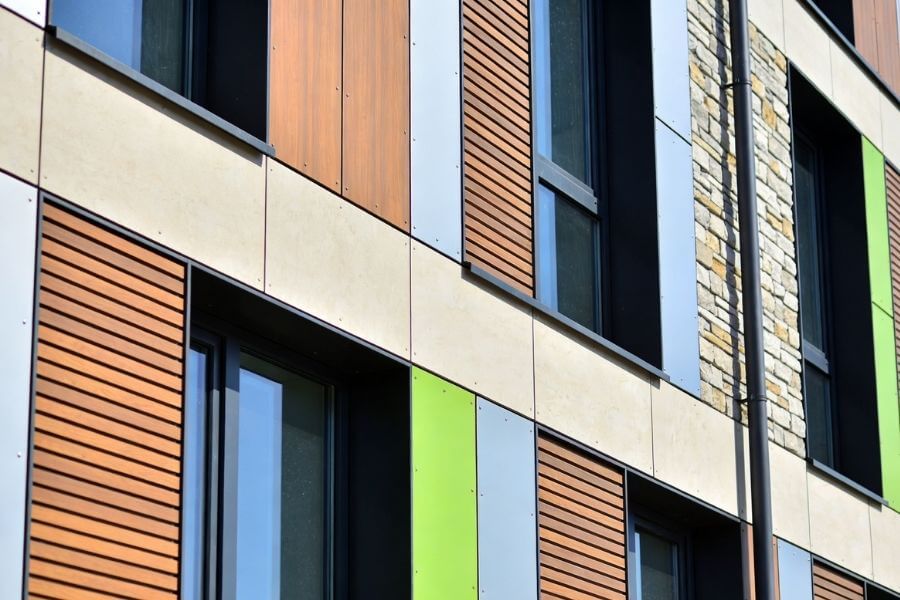
Metal composite panels are widely used in architecture because of their design versatility. Modern coating technologies allow panels to be produced in a wide range of colors and surface finishes.
Common architectural finishes include solid colors, metallic coatings, mica finishes, stone-like textures, wood grain patterns, and brushed metal appearances. These finishes allow designers to create building envelopes that combine color variation with architectural rhythm.
Large panel sizes also reduce visible joints, helping façades maintain a clean and unified appearance. This visual consistency is important for commercial projects where architectural branding and corporate identity are key design goals.
Precise color matching can also be achieved across large façade surfaces. This capability is especially valuable for buildings that require consistent brand colors across multiple locations.
To support architectural coordination, ALUMAX provides collaborative design support during early project planning stages. This process helps architects and contractors evaluate finishes, fabrication options, and installation strategies before construction begins.
How MCM Panels Can Be Fabricated into Complex Architectural Forms
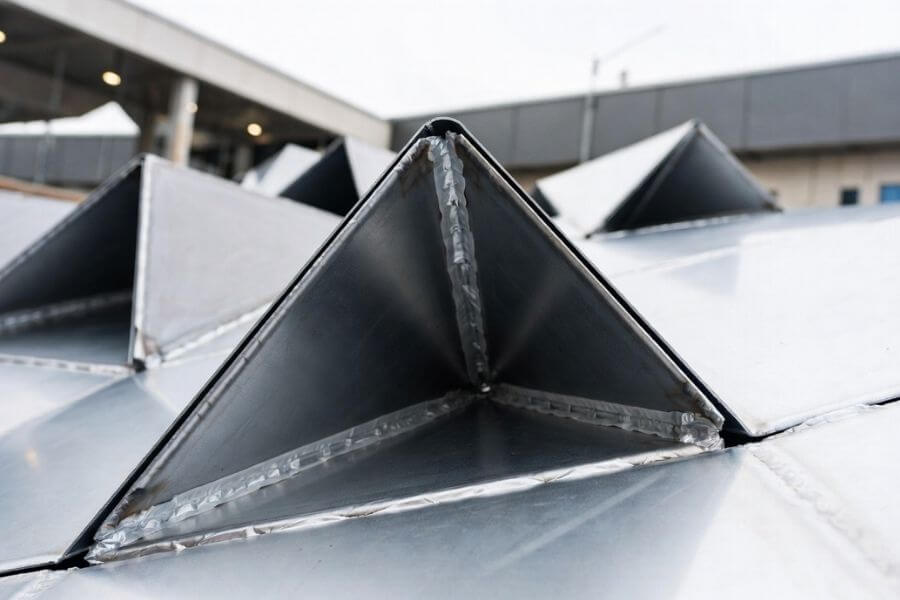
Metal composite panels are easier to fabricate than thick metal plates. Their composite structure allows them to be processed using standard fabrication tools.
Common fabrication operations include cutting, routing, folding, bending, rolling, drilling, and punching. These techniques allow flat panels to be transformed into complex architectural shapes.
Fabricated forms can include curved façade surfaces, folded geometric panels, custom sunshades, and decorative façade elements. These capabilities allow architects to explore distinctive building forms without excessive structural weight.
ALUMAX supports these fabrication needs through CNC machining and customized processing services. With automated machining centers and experienced engineering teams, the company can produce panels and components tailored to specific project requirements.
Where Metal Composite Panels Are Used in Architecture
Metal composite panels are widely used across many architectural applications because they combine durability with design flexibility.
One of the most common uses is exterior façade cladding. MCM panels are frequently installed as part of ventilated rainscreen systems that protect buildings from weather while improving thermal performance.
Commercial buildings also use metal composite panels to support corporate identity design. Consistent panel colors and finishes allow architects to reinforce brand recognition across multiple building locations.
Panels can also be fabricated into architectural elements such as canopies, soffits, sunshades, and decorative façade features. These elements add depth and dimension to building envelopes.
Signage systems represent another common application. Because of their smooth surface and color consistency, metal composite panels are widely used in architectural branding and building signage.
Interior design applications also benefit from MCM materials. Wall panels, ceiling systems, and decorative interior surfaces can all use composite panels to achieve a modern architectural appearance.
Real Architectural Project Example
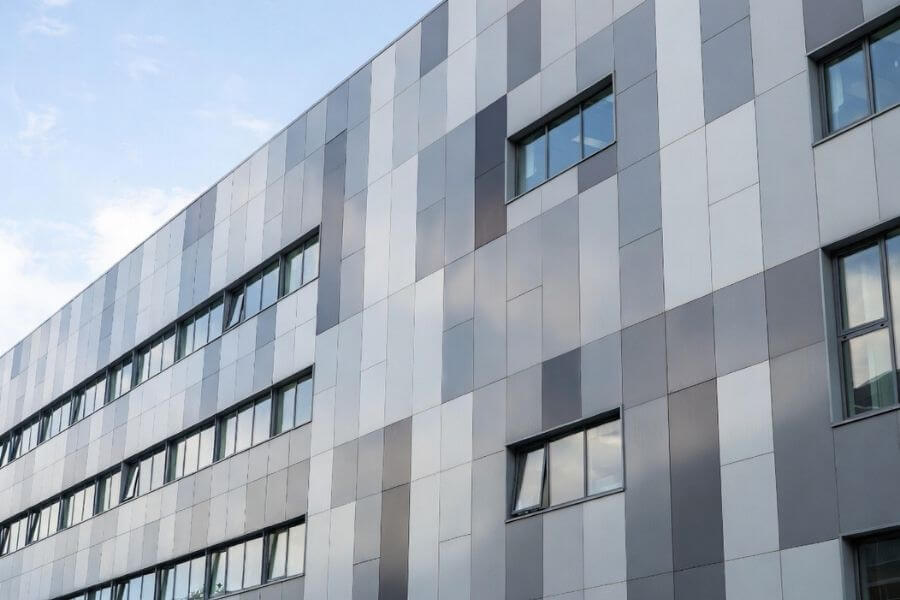
A commercial development in East Asia used more than 12,000 square feet of aluminum composite panels as part of a ventilated rainscreen façade system. The architectural design required a combination of metallic and matte finishes to create visual contrast across the building envelope.
The project specified 4 mm aluminum composite panels with a PVDF coating system to ensure long-term color stability and weather resistance. Panels were fabricated into angled forms that helped reduce the perceived scale of the façade while maintaining a clear visual rhythm.
Because of the lightweight nature of the composite panels, installation proceeded efficiently without increasing structural load requirements. The finished façade achieved the desired architectural expression while maintaining durability and ease of maintenance.
Projects like this demonstrate how metal composite panels combine engineering performance with architectural design flexibility.
Fire Safety and Building Code Requirements for MCM Panels
Fire safety is an essential factor when selecting façade materials for modern buildings.
Metal composite panels are manufactured with different core materials depending on the required fire performance. Standard polyethylene cores are typically used in low-rise applications. Fire-resistant mineral cores are used for projects that must meet stricter fire safety regulations.
Wall assemblies incorporating MCM panels are often evaluated under industry standards such as NFPA 285 for fire propagation in exterior wall assemblies. Additional testing standards include ASTM E84 for surface burning characteristics, ASTM E330 for structural wind load performance, and ASTM E331 for water penetration resistance.
These tests evaluate how the complete wall system performs under realistic conditions. Compliance with International Building Code requirements ensures that the façade assembly remains safe and durable throughout the building’s lifespan.
Why Many Projects Choose Aluwell® Metal Composite Panels
Choosing façade materials involves balancing design goals, engineering requirements, and long-term building performance.
Aluwell® metal composite panels produced by ALUMAX support these objectives through consistent manufacturing quality and technical collaboration. The company’s background in composite panel production and equipment engineering provides deep knowledge of materials, fabrication processes, and installation systems.
ALUMAX also provides design support, customized machining services, and modular project coordination. This integrated approach helps architects, contractors, and developers translate architectural concepts into practical façade solutions.
By combining engineering expertise with flexible manufacturing capabilities, Aluwell® panels support building envelopes that meet both structural performance expectations and architectural design goals.
FAQ
What is the difference between MCM and ACM?
ACM refers specifically to aluminum composite material. MCM is a broader category that includes panels made with aluminum as well as other metals such as copper, zinc, stainless steel, or titanium used in architectural cladding systems.
Can MCM panels be used on high-rise buildings?
Yes. When manufactured with fire-resistant cores and installed within tested wall assemblies that comply with NFPA 285 requirements, MCM panels can be safely used on mid-rise and high-rise buildings.
How long do MCM coatings typically last?
High-performance architectural coatings such as PVDF or FEVE are designed to resist ultraviolet exposure, weathering, and pollution. When properly installed and maintained, these coatings can maintain color stability and surface durability for several decades.
Can metal composite panels replicate natural materials?
Yes. Modern coating and printing technologies allow metal composite panels to replicate materials such as stone, wood grain, or brushed metal while maintaining the lightweight structure and durability of composite panels.
Can Aluwell® panels be customized for architectural projects?
Yes. ALUMAX provides customized panel dimensions, fabrication options, and machining services. These capabilities allow Aluwell® panels to support unique architectural designs, complex geometries, and project-specific façade requirements.