

20 Mar
How to Clean Aluminum Composite Panels for Long-Term Façade Performance
Cleaning aluminum composite panels is not only a maintenance task. It is part of façade performance management that directly affects durability, color consistency, and lifecycle cost.
In modern architecture, aluminum composite material and ACM panels are widely selected because they offer a balance between structural efficiency and low maintenance requirements. However, low maintenance depends on correct cleaning methods and appropriate material selection.
Why Aluminum Composite Panels Are Easy to Clean and Maintain
The ease of cleaning aluminum composite panels is not accidental. It is the result of coating technology, surface structure, and manufacturing consistency.
High-quality ACM panels such as Aluwell® aluminum composite panels are engineered with advanced coating systems.
Coating technology and dirt resistance
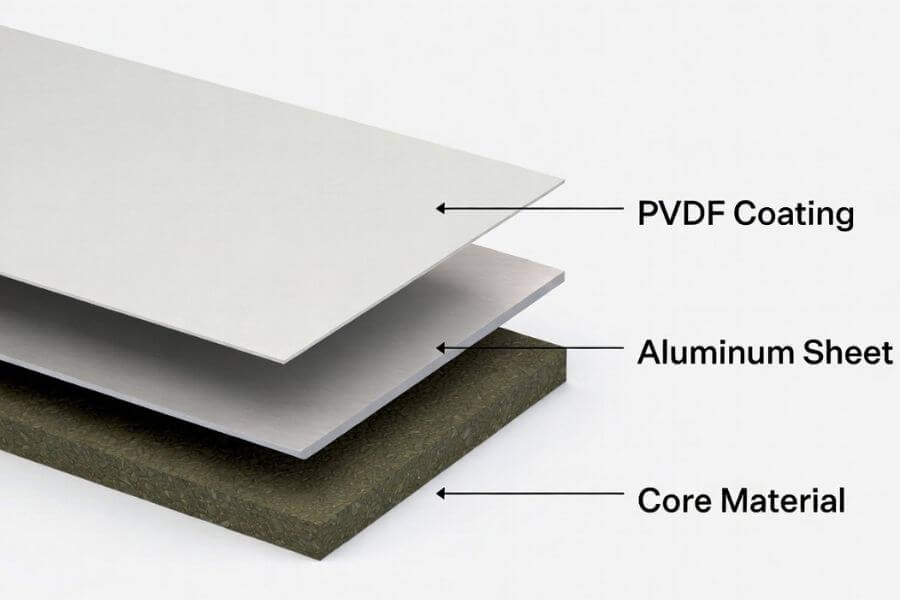
PVDF coatings provide long-term resistance to UV exposure and chemical degradation. Smooth, low-energy surfaces reduce the adhesion of dust and airborne pollutants. Stable coating layers prevent staining from penetrating into the panel surface.
This means most contaminants remain on the surface rather than bonding to it.
Natural cleaning effect in façade environments
In many building applications, aluminum composite material benefits from natural cleaning through rainfall.
Light dust is often removed by rainwater. Surface smoothness allows water to flow evenly without leaving marks. Regular exposure to weather reduces the need for manual cleaning.
This is why ACM panels are commonly used in large commercial façades where maintenance access is limited.
Step-by-Step Cleaning Methods for Aluminum Composite Panels
Proper cleaning of aluminum composite panels should follow a structured process that protects both the coating and the façade system.
Method 1 — Water Rinsing for Routine Cleaning
For most projects, cleaning aluminum composite panels begins with simple water rinsing.
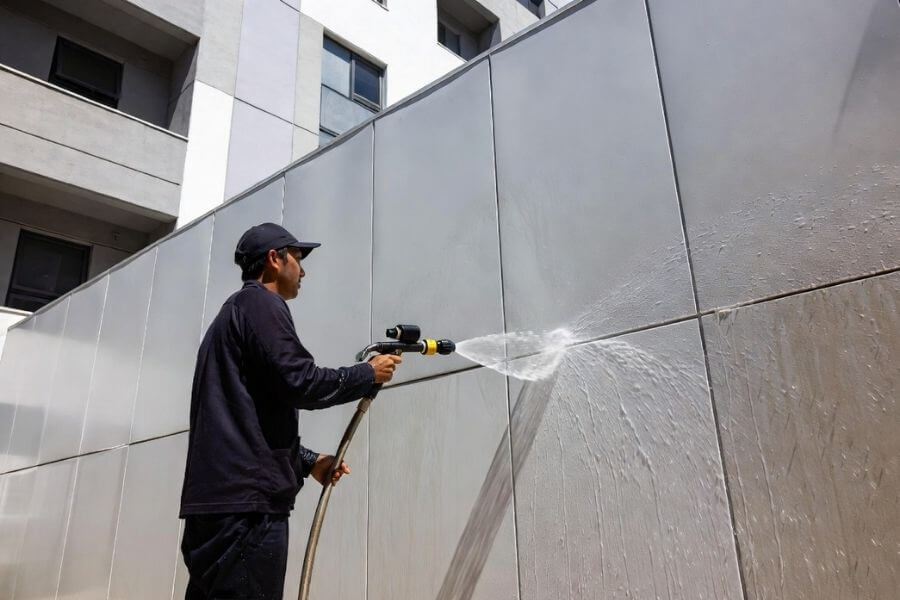
Use a hose or low-pressure washing system. Clean from top to bottom. Maintain distance to avoid forcing water into panel joints.
This method removes loose dust, airborne particles, and light residue.
Method 2 — Using Mild Detergents for Deeper Cleaning
When surface dirt builds up, a more controlled cleaning process is required.
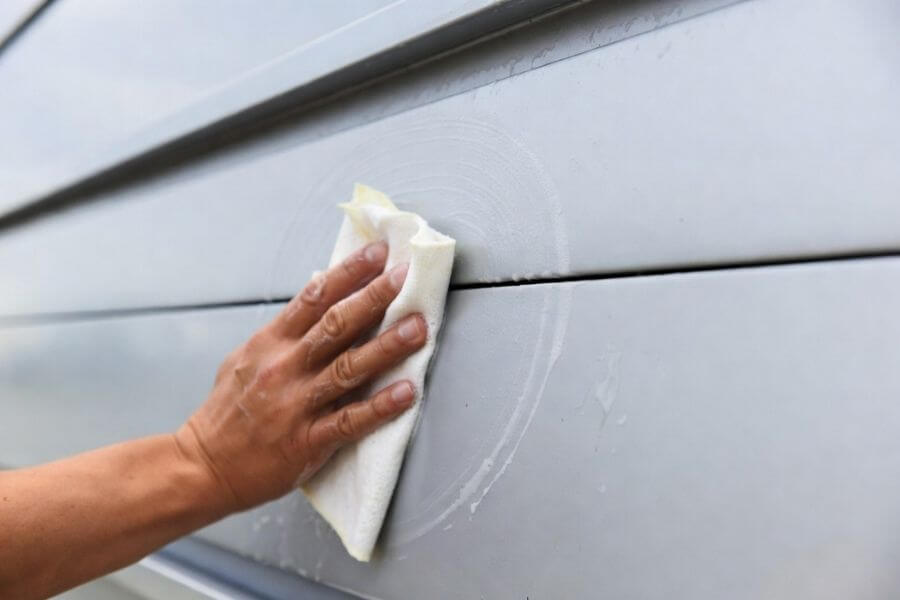
Mix warm water with a neutral detergent at a 1:5 ratio. Use a soft cloth or sponge to gently clean the surface. Work in small sections to prevent streaking. Rinse immediately with clean water.
This method is effective for removing accumulated dirt without damaging the coating.
Method 3 — Removing Stains and Stubborn Contaminants
In urban or industrial environments, ACM panels may be exposed to more persistent contaminants.
Mild solvent cleaners can be used for oil-based marks. Diluted solutions are suitable for mildew-prone areas. Compatible graffiti removers can be applied for coated surfaces.
Cleaning agents should always be tested on a small area before full application.
What to Avoid When Cleaning Aluminum Composite Panels
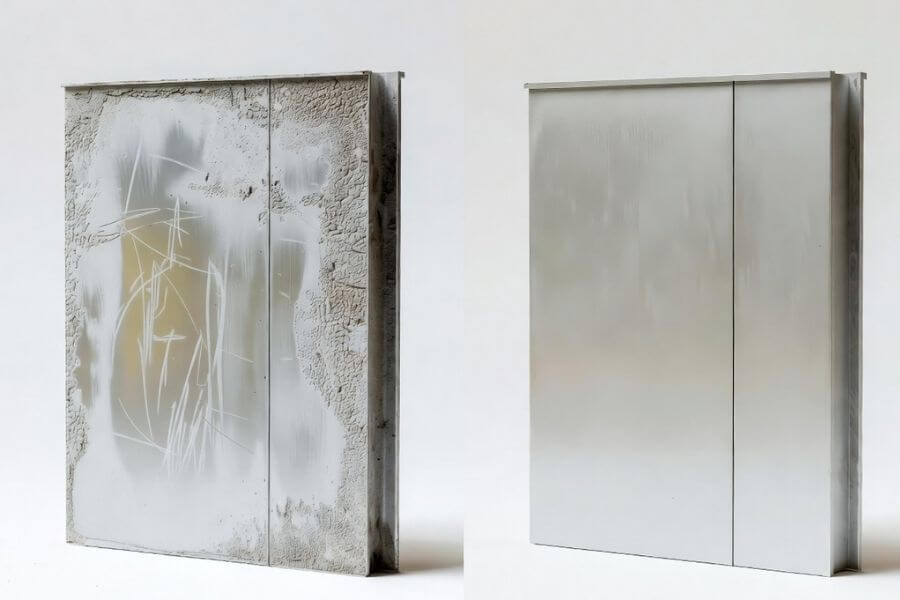
Incorrect cleaning methods can reduce the lifespan of aluminum composite material and increase long-term maintenance costs.
Avoid aggressive chemicals
Do not use strong alkaline cleaners such as caustic soda or highly acidic cleaning agents. These substances can damage the coating layer and lead to discoloration or surface degradation.
Avoid excessive pressure
High-pressure washing can damage coating surfaces and panel edges. Water may penetrate joints and affect the façade system. Controlled, low-pressure cleaning is always recommended.
Avoid abrasive tools
Do not use hard brushes or abrasive pads. Always use soft cloths or microfiber materials. Maintaining surface smoothness is essential for long-term ACM panel performance.
How Cleaning Fits into Façade Maintenance Planning
Cleaning aluminum composite panels should be part of a broader façade maintenance strategy rather than an isolated task.
Environmental impact on cleaning frequency
The required cleaning frequency depends on project location.
Urban environments require more frequent cleaning due to pollution. Coastal areas may introduce salt deposits that require periodic rinsing. Dry regions often require scheduled cleaning due to dust accumulation.
Typical façade maintenance plans include two to four cleaning cycles per year.
Relationship between coating quality and maintenance cost
The choice of coating system directly affects cleaning frequency and cost.
Lower-quality coatings may retain dirt and require frequent cleaning. High-performance coatings such as PVDF reduce adhesion of contaminants. Stable coatings maintain color consistency even after repeated cleaning.
This is where material selection becomes a long-term cost factor.
ACM Panels vs Other Façade Materials — Maintenance Comparison
When evaluating how to clean aluminum composite panels, it is useful to compare them with other façade materials.
Glass façades require frequent cleaning due to visible staining and water marks, which increases maintenance cost. Stone façades have porous surfaces that absorb contaminants and often require specialized cleaning and sealing.
Aluminum composite panels provide smooth, coated surfaces that resist contamination. Most dirt can be removed with water or mild cleaning, making maintenance more predictable and cost-efficient.
Real Project Example — Maintaining an ACM Façade
A commercial office building in Singapore used Aluwell® aluminum composite panels as part of a ventilated rainscreen façade system.
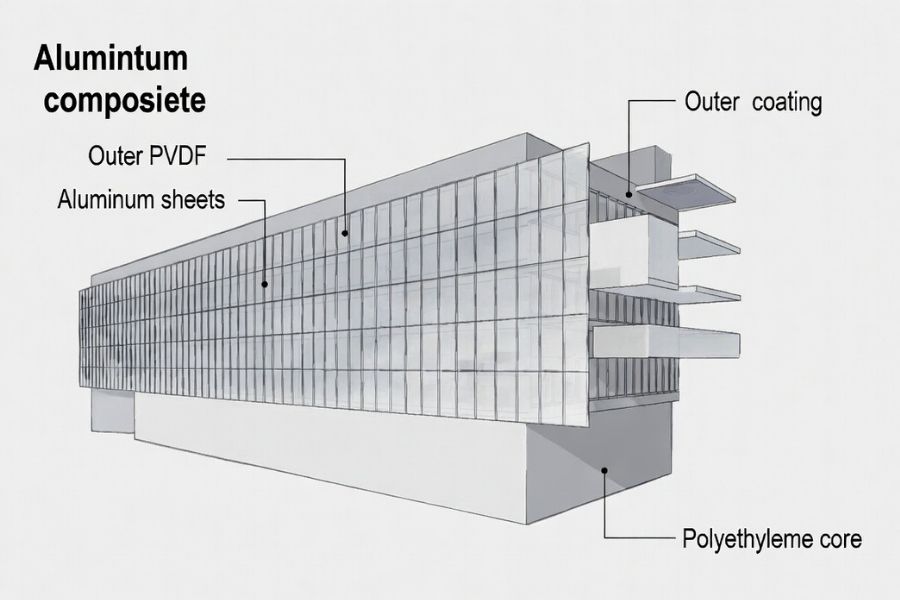
The project covered approximately 12,000 square feet using 4 mm ACM panels with PVDF coating in a high-humidity and urban pollution environment.
Maintenance strategy
Quarterly water rinsing was used for general cleaning. Semi-annual detergent cleaning was applied to high-exposure areas. Routine inspections ensured joints and drainage systems remained functional.
Long-term performance
After more than 8 years of service, the façade maintained consistent color appearance across elevations. Minimal staining was observed despite environmental exposure. The coating system remained stable without visible degradation.
This demonstrates how proper cleaning combined with high-quality ACM panels reduces long-term maintenance effort.
How Aluwell® Aluminum Composite Panels Reduce Long-Term Maintenance Effort
The effectiveness of cleaning aluminum composite panels depends heavily on material quality.
Aluwell® aluminum composite panels, produced by ALUMAX Composite Material Co., Ltd., are designed to improve maintenance outcomes at both material and system levels.
Coating performance and cleaning efficiency
High-performance coatings reduce dirt adhesion and improve surface stability. Surface consistency ensures uniform cleaning results across large façades. Long-term UV resistance maintains visual appearance even after repeated cleaning cycles.
Manufacturing precision and surface quality
Consistent panel flatness prevents uneven water flow and staining. Uniform coating thickness supports predictable cleaning results. Precision fabrication ensures better alignment within façade systems.
Integration with façade system design
Through collaborative design and engineering support, ALUMAX ensures panel systems support proper drainage and reduce contamination buildup. Installation details are optimized to improve long-term maintenance efficiency.
This approach connects material performance with real cleaning outcomes.
FAQ
How often should aluminum composite panels be cleaned?
Cleaning frequency depends on environmental exposure. In most architectural projects, aluminum composite panels are cleaned two to four times per year. Buildings in polluted urban areas or coastal environments may require more frequent cleaning to prevent accumulation of contaminants and maintain consistent façade appearance over time.
How does coating type affect cleaning frequency?
Coating systems play a critical role in maintenance planning. High-performance coatings such as PVDF reduce dirt adhesion and improve surface stability. As a result, aluminum composite panels with advanced coatings require less frequent cleaning while maintaining long-term color consistency and resistance to environmental pollutants.
Can improper cleaning damage ACM panels?
Yes. Improper cleaning methods can damage both the coating and the façade system. High-pressure washing, abrasive tools, or aggressive chemicals may cause surface degradation, joint failure, or water intrusion. Using controlled, low-pressure cleaning and compatible detergents is essential to protect long-term panel performance.
Why are aluminum composite panels easier to maintain than other materials?
Aluminum composite panels feature smooth, coated surfaces that limit dirt adhesion compared to porous or untreated materials. This allows most contaminants to be removed with simple cleaning methods. As a result, ACM panels offer more predictable maintenance cycles and lower long-term upkeep compared to glass or stone façades.
What is the best way to maintain long-term façade appearance?
Maintaining façade performance requires a combination of proper cleaning methods, scheduled maintenance, and high-quality materials. Regular inspections, appropriate cleaning frequency, and the use of durable coating systems help ensure consistent color, surface integrity, and overall façade performance throughout the building lifecycle.
Keeping Aluminum Composite Panels Clean Over the Long Term
Effective cleaning of aluminum composite panels is a combination of proper methods, environmental awareness, and material selection.
When integrated into façade maintenance planning, cleaning becomes a predictable and manageable process rather than a reactive task.
By selecting high-performance materials such as Aluwell® aluminum composite panels, architects and developers can reduce maintenance complexity while maintaining long-term façade quality.